
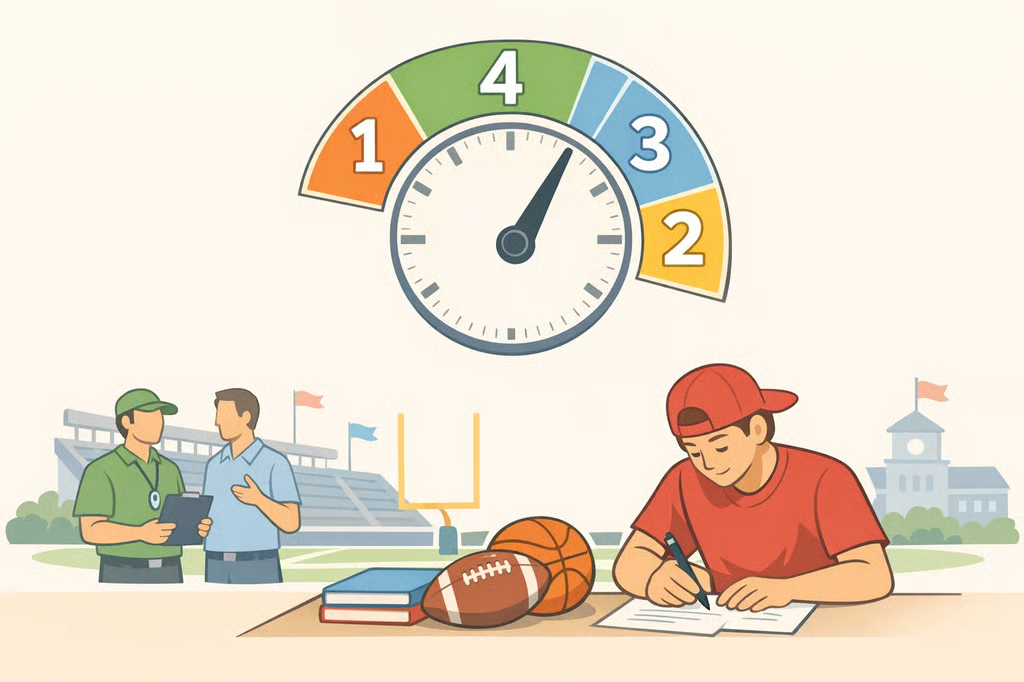
NCAA age-based eligibility rules: when the clock starts
NCAA age-based eligibility rules are rolling out in phases across Division I and Division II, and the association's own guidance carries a warning: the system does not guarantee five years of competition for everyone. Athletes who delay full-time college enrollment may end up with less time on the clock, according to NCAA Eligibility 101, published two weeks ago.
The Division I Cabinet unanimously approved the overhaul in June, with the changes set to take effect once the Cabinet's meeting wrapped up the following day, per NCAA's June announcement. The age-based model applies exclusively to prospects making their first full-time enrollment in fall 2027 or later; athletes enrolling sooner fall under transition rules that blend the old and new systems. The more recent Eligibility 101 guidance extends the same rule and waiver eliminations to Division II, though the formal June vote and the deadlines tied to it applied specifically to Division I. Families should confirm with their own compliance office whether Division II's transition timeline lines up exactly with Division I's.
The new model replaces season-of-competition limits, redshirt tracking and several waiver categories with one continuous, time-based eligibility period, per NCAA's June announcement. One deadline tied to that changeover has already closed for Division I: schools needed to submit season-of-competition or eligibility-extension waiver requests tied to circumstances from the 2025-26 academic year or earlier by July 31, 2026. The NCAA says waivers of the previous rules will no longer be available after that deadline.
When the NCAA eligibility clock starts
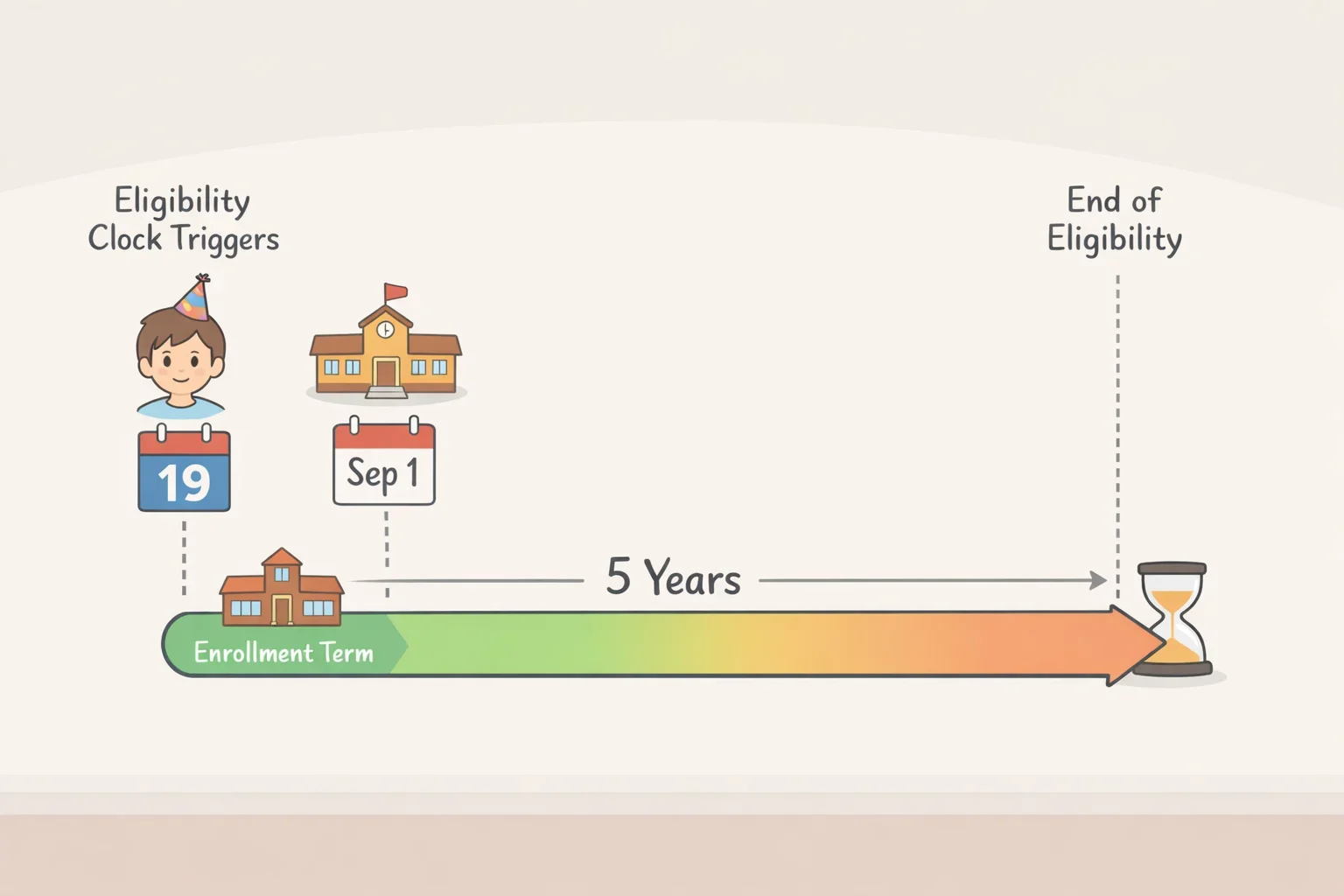
A student-athlete's five-year eligibility period begins at whichever comes first: the academic term the student first enrolls full time at any college, whether that's a domestic four-year school, an international college or university, or a two-year college, or the academic year following the athlete's 19th birthday, if that birthday falls before Sept. 1, per NCAA Eligibility 101.
Athletes who turn 19 on or after Sept. 1 get a different trigger. Their clock waits until the following academic year unless they enroll full time sooner, the guidance states.
Once the clock starts, it runs continuously. It does not pause for transfers, sitting out a season, changing teams or general nonparticipation, which is also why coaches and compliance staff no longer need to track athletic redshirts, according to the NCAA.
Three scenarios show how differently the calendar plays out for athletes who are close in age.
Traditional path. An athlete turns 19 in spring and enrolls full time that fall. Enrollment and the age trigger land in the same academic year, so the five-year window opens that fall and closes at the end of the fifth academic year.
Late birthday, no early enrollment. An athlete turns 19 in mid-September, after that academic year has already started, and hasn't enrolled anywhere yet. Under the rule, the clock waits until the following academic year, a full year later than the traditional-path athlete despite being roughly the same age.
Early enrollment before 19.
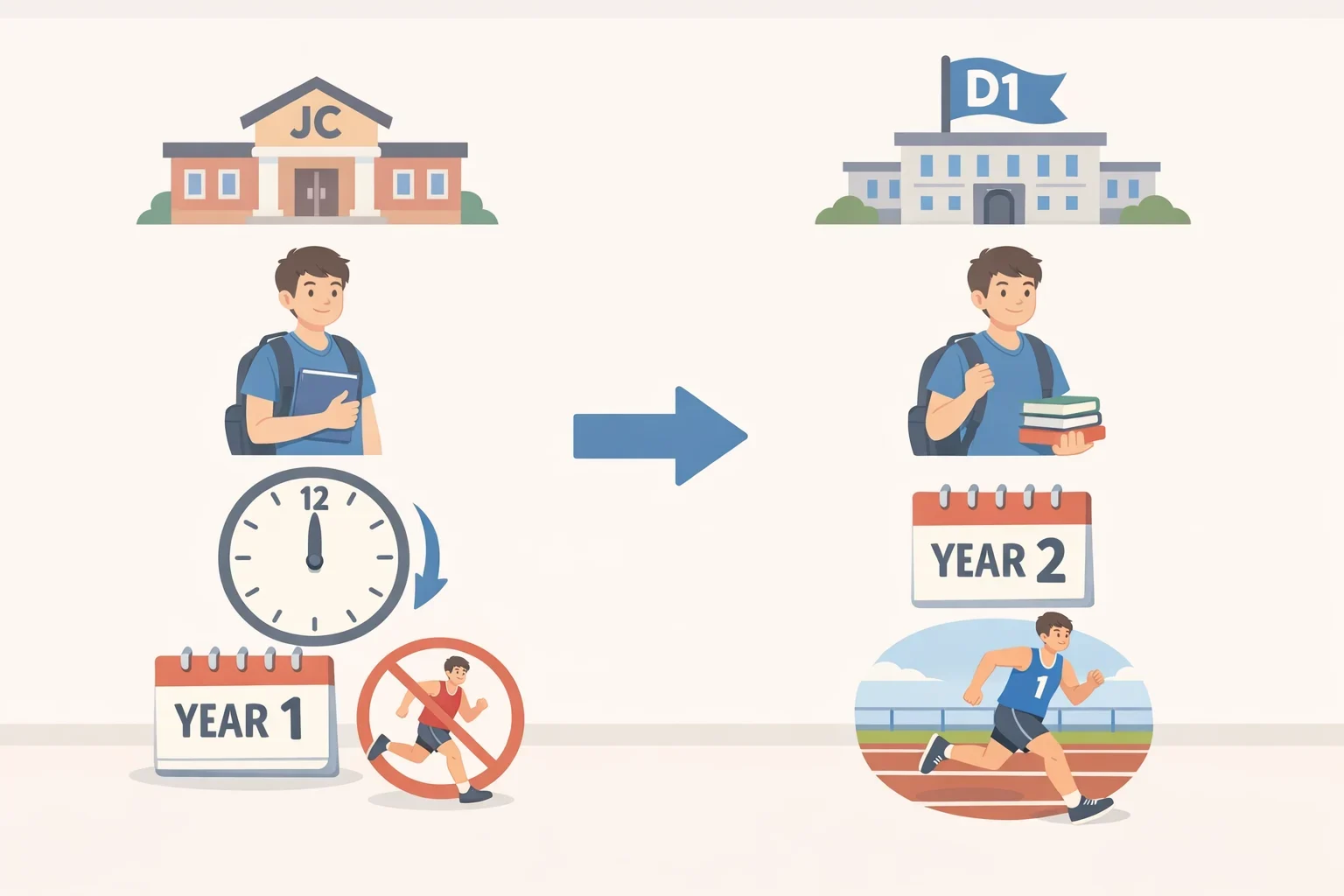
An 18-year-old enrolls full time at a junior college. Because initial full-time enrollment "at any college or university" starts the clock regardless of age, that window is already running before the athlete turns 19. If the same athlete later transfers to a Division I program, two years of the five-year period may already be spent before they ever compete at the four-year level.
Four transition groups, four sets of rules
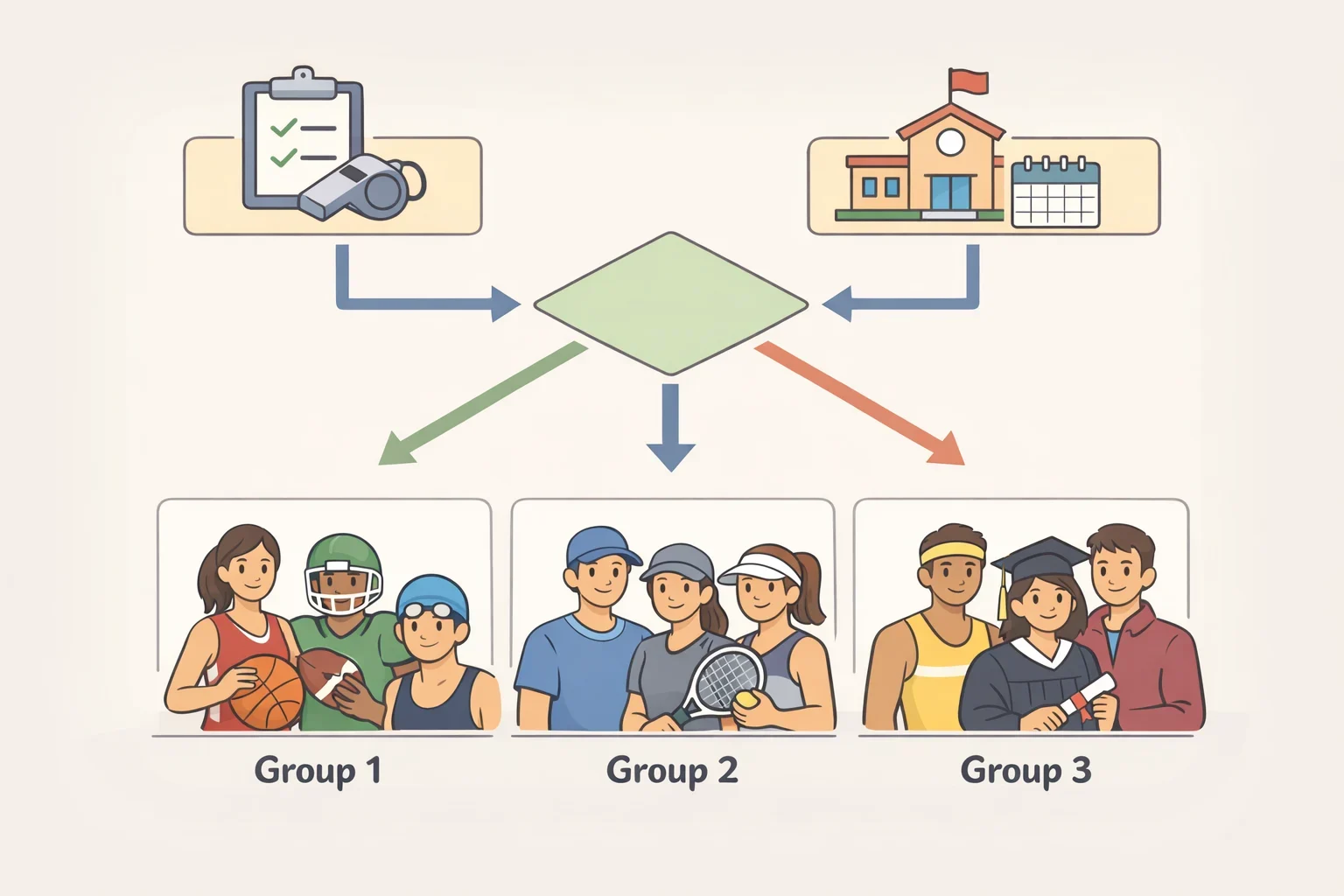
Athletes moving through the changeover fall into one of four groups, sorted by when their prior eligibility was used or when they first enroll full time, according to NCAA's June announcement and NCAA Eligibility 101.
Group Who it covers Which rules apply 1 Used final season of competition during 2025-26 No additional eligibility 2 Current athletes with eligibility remaining after 2025-26 Old rules or the new age-based model, whichever is more favorable 3 First full-time enrollment during 2026-27 Old rules or the new age-based model, whichever is more favorable 4 First full-time enrollment in fall 2027 or later Age-based model only
The rule and waiver eliminations behind this table apply to both the Division I and Division II manuals, per NCAA Eligibility 101. The transition schedule and the July 31 waiver deadline above, though, come from Division I's own announcement; treat the exact Division II timeline as a separate question for a compliance office to confirm.
The "whichever is more favorable" comparison in groups 2 and 3 weighs two different systems. The old model gave athletes four seasons of competition to use inside a five-year window, with hardship, extension and delayed-enrollment waivers available if that window needed stretching. The new model drops the seasons cap in favor of one continuous five-year (or shorter) period, but athletes who end up using the old rules won't get a second chance at those eliminated waiver categories later, per NCAA Eligibility 101.
NCAA leadership has framed the switch as a response to years of case-by-case disputes. "This change to an age-based model eliminates aspects of the rules that have proven difficult to administer in the current litigious environment and clearly defines the exceptions available in limited circumstances," NCAA President Charlie Baker said, according to NCAA's June announcement. Josh Whitman, Illinois athletics director and chair of the Division I Cabinet, added that the change gives "campus officials and coaches... rules that are simpler to administer and easier to predict for roster management decisions," per the same announcement.
For athletes in groups 2 and 3, the school's compliance office evaluates individual circumstances and applies whichever system benefits that athlete. For anyone whose first full-time enrollment lands in fall 2026 or later, the NCAA Eligibility Center separately administers and certifies the length of the eligibility period.
NCAA rules for delayed college enrollment
The NCAA names one group as potentially at risk: athletes who delay full-time enrollment beyond age 19 may end up with less than the standard five years of eligibility in Divisions I and II, according to NCAA Eligibility 101.
The same "any college or university" language works in the opposite direction for early enrollees. An athlete who enrolls full time at a junior college or an international college or university before turning 19 starts the clock before ever reaching a Division I or II roster, as the early-enrollment example above shows.
Some nontraditional-path athletes actually gain flexibility under the new system. The reform eliminates the old delayed-enrollment and organized-competition rules, along with sport-specific enrollment timelines, that previously stacked extra penalties on top of the season count for certain enrollment patterns, per the NCAA. Outcomes depend on an athlete's specific enrollment and birth-date timeline, not a blanket penalty tied to transferring, enrolling later or coming through a two-year college.
NCAA Eligibility 101 identifies three exceptions that can pause the age-based clock: active-duty military service, an official religious mission or similar service commitment during which the athlete does not compete, and pregnancy, which requires supporting medical documentation. Waivers tied to the old system, including medical hardship, extension-of-eligibility, season-of-competition and delayed-enrollment waivers, are gone under the age-based model going forward.
That does not eliminate the NCAA's broader student-athlete reinstatement process, which continues to review rules violations and other eligibility questions unrelated to the age-based clock on a case-by-case basis, per NCAA Student-Athlete Reinstatement. Academic progress-toward-degree rules and other athletics eligibility requirements also still apply independently of where an athlete sits on the five-year clock, the NCAA notes.
What to check before you assume your clock

Start with your own enrollment record rather than a memory of when you first set foot on a campus. The exact academic term of first full-time attendance at any college, along with your birthdate relative to the Sept. 1 cutoff, determines which trigger started your clock, per NCAA Eligibility 101.
If a pregnancy-related pause applies, the NCAA specifies that supporting medical documentation is required. For military service, a religious mission, a similar service commitment, or confirming a first enrollment date, ask the compliance office directly what documentation it needs to apply the exception correctly.
Athletes in transition groups 2 or 3 should ask their compliance office which system it applied, old or new, and why. That determination is the school's responsibility, and it directly affects how much competition time remains.
Before assuming any number, run through the sequence in order: pin down the exact term of first full-time enrollment at any college, compare that date against the 19th-birthday trigger, identify which of the four transition groups applies, and ask the compliance office or the NCAA Eligibility Center to certify the result in writing. Other eligibility requirements, including academic progress-toward-degree rules, still apply on top of whatever clock length gets certified, so a correct calculation is a starting point, not the final word on whether an athlete can compete.