
- NCAA Redshirt Rules 2026-27: New Age-Based Eligibility Model
- How many games can you play and still redshirt in the NCAA?
- The NCAA's five-year eligibility period and its exceptions
- Division II age-based eligibility model, explained
- Which NCAA redshirt rules 2026-27 apply to you
- What to check with your compliance office
NCAA Redshirt Rules 2026-27: New Age-Based Eligibility Model
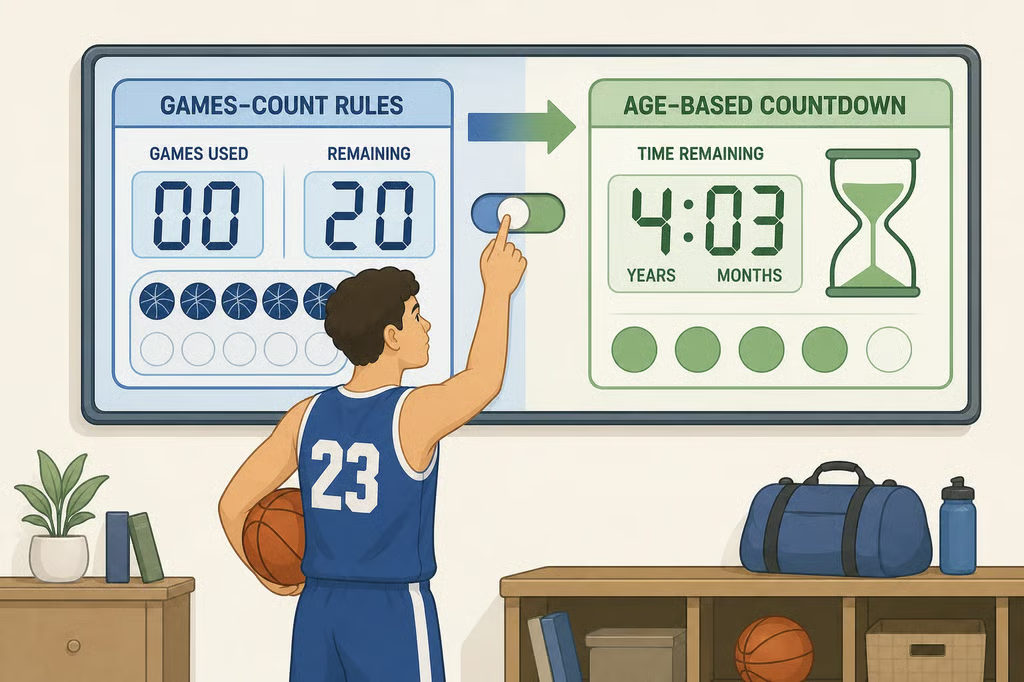
The question that used to drive redshirt strategy, how many games can an athlete play before burning a season, no longer works the same way. Starting with the 2026-27 academic year, both Division I and Division II have scrapped their season-count eligibility systems in favor of an age-based model built around a fixed five-year clock rather than games or seasons played, according to NCAA announcements (NCAA; NCAA).
Division I moved first. Its Cabinet unanimously approved the change in June, replacing the old four-seasons-in-five-years standard with a five-year eligibility window tied to enrollment or age. The NCAA says the new rule simplifys the rulebook by eliminating season-of-competition limits, sport-specific eligibility and redshirt rules, and eligibility extension waivers (NCAA).
Division II followed roughly six weeks later. Its Executive Board adopted emergency legislation, recommended by the Management Council earlier that summer, replacing the division's four-seasons-in-10-semesters-or-15-quarters framework with a five-year model that mirrors Division I's legislation (NCAA).
This explainer covers what changed for Division I and Division II athletes this year: how the new clock starts, which exceptions still apply, who falls under old rules versus new ones, and what to verify with a campus compliance office. It draws only on the Division I and Division II announcements; readers with Division III questions should check separately with their school, since that division's broader eligibility framework isn't addressed in this reporting.
How many games can you play and still redshirt in the NCAA?
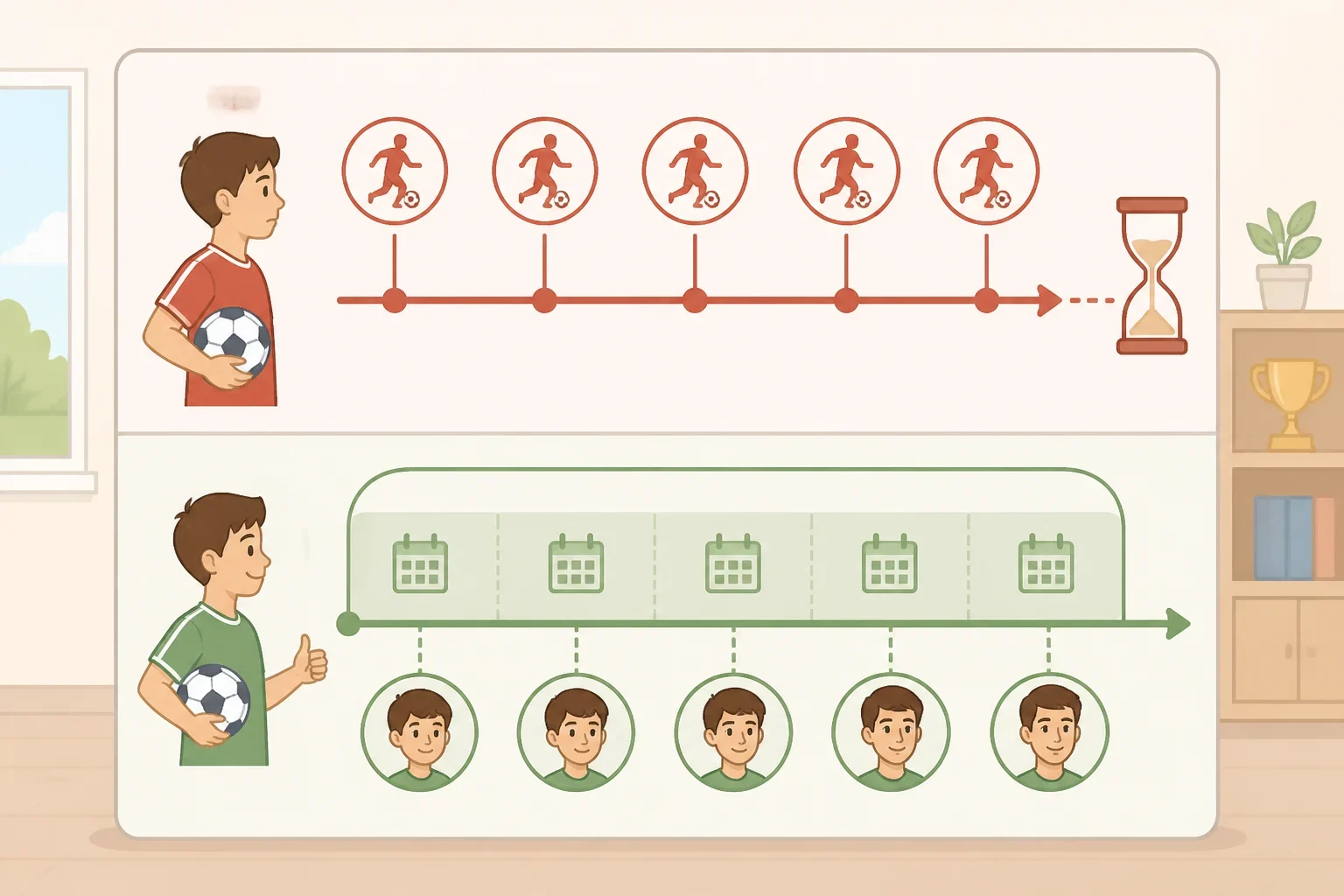
Under the new Division I rule, tracking games played to protect a redshirt year is gone. The NCAA's language is direct: the change eliminates "season-of-competition limits, sport-specific eligibility and redshirt rules" (NCAA).
Division II's announcement describes the shift a bit differently. It says the new model replaces the division's seasons-of-competition and semesters/quarters eligibility system entirely, without the same explicit language about sport-specific redshirt rules (NCAA). The practical effect points the same direction, games and seasons no longer sit at the center of eligibility tracking, but Division II athletes should confirm with compliance staff exactly how their sport's participation rules are being applied during the transition rather than assume the Division I details carry over word for word.
For context, the old Division I standard allowed four seasons of competition within five years. Division II's old standard allowed four seasons within 10 semesters or 15 quarters (NCAA; NCAA). Those frameworks are what made redshirt planning a season-by-season, sport-by-sport calculation. The five-year age-based clock replaces that math with a single start date.
The NCAA's five-year eligibility period and its exceptions

Division I's rule gives student-athletes up to five years of eligibility if they enroll in college no later than the academic year after their 19th birthday (NCAA). Division II spells out the clock's start point more precisely: the five-year period begins at whichever comes first, full-time enrollment at any domestic or international college or university, including junior colleges, or the beginning of the academic year immediately after the athlete's 19th birthday (NCAA).
That distinction matters for athletes who enroll straight out of high school. The NCAA says many of them could gain an additional season of competition compared to the old system, since the clock now starts at a fixed point rather than counting down four usable seasons (NCAA).
Three circumstances can delay or pause that clock in both divisions: pregnancy, active-duty military service, and official religious missions (NCAA; NCAA). Under Division I's rule specifically, those exceptions only apply if the athlete doesn't participate in organized competition for the duration of the exception (NCAA). The NCAA Eligibility Center administers all three exceptions across both divisions, which keeps the review process centralized rather than left to individual schools (NCAA; NCAA).
One more change specific to Division I: case-by-case waivers are gone. The NCAA states that clock extensions and waivers previously granted for hardships, seasons of competition, and delayed enrollment will no longer be available under the age-based model (NCAA).
Division II age-based eligibility model, explained
Division II's version didn't come through a routine legislative vote. The Executive Board adopted it as emergency legislation after the Management Council recommended the change earlier in the summer, and it took effect immediately for the 2026-27 academic year (NCAA).
The Division II Executive Board and Management Council explained why the change applies going forward rather than retroactively. In a joint statement, they said any rule change "should apply going forward, and not retroactively to student-athletes whose eligibility has been completed prior to the adoption of the change," adding that those athletes "have received the full period of eligibility permitted by NCAA bylaws and the life-changing benefits college sports provides" (NCAA).
They also pointed to practical fallout that retroactive eligibility would cause. Giving already-graduated or exhausted athletes another season, they said, "would disrupt expected roster spots and playing time ahead of the upcoming seasons and alter financial aid packages for countless student-athletes, including incoming freshmen who are beginning (or have begun) their college athletics experience" (NCAA).
That means athletes whose eligibility was already exhausted under the old four-seasons standard by the end of 2025-26 don't get extra eligibility, no matter how the new clock would have treated them (NCAA). For athletes still active, though, the transition works differently, and that's where the next section comes in.
Which NCAA redshirt rules 2026-27 apply to you
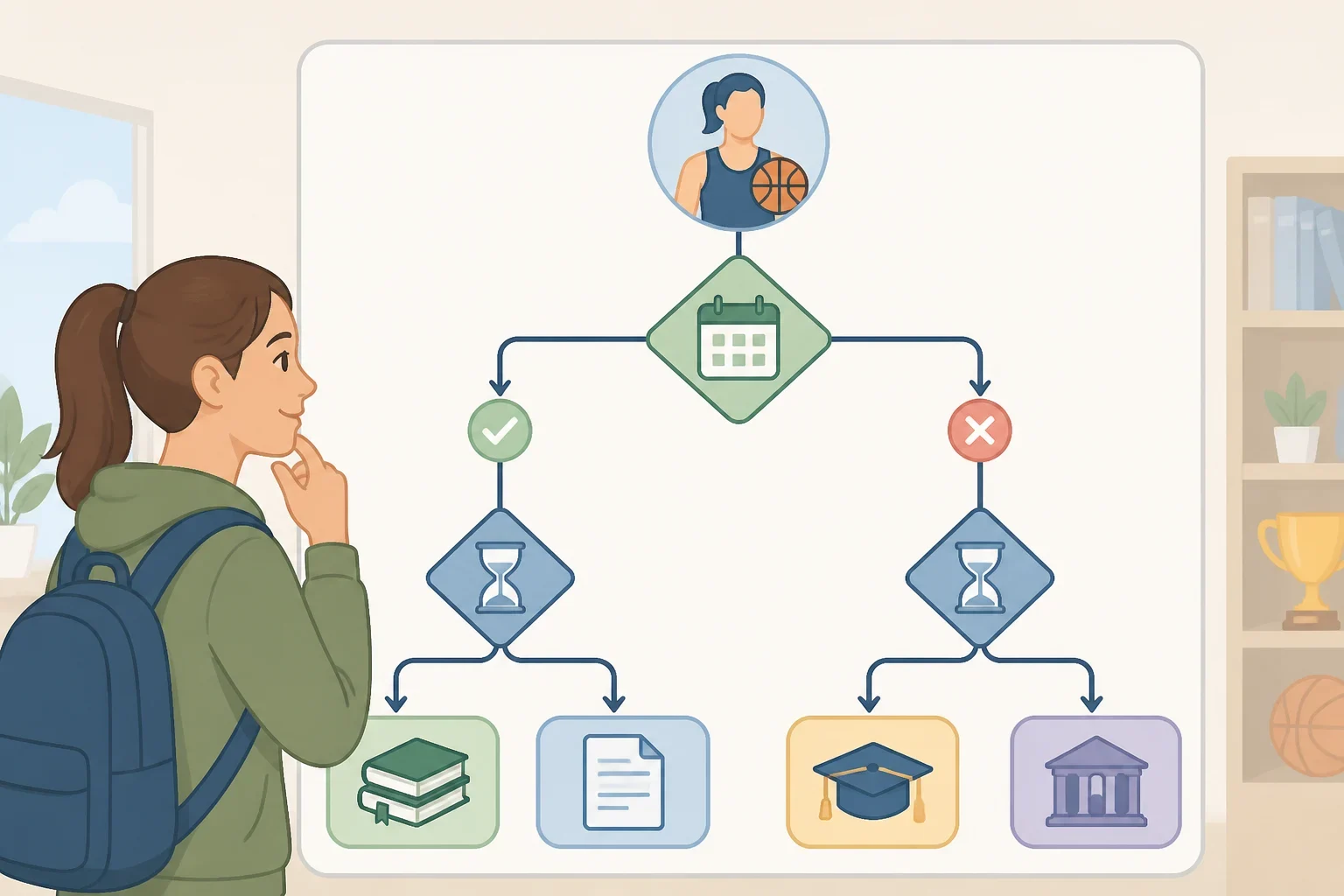
Eligibility outcomes for 2026-27 depend heavily on when an athlete first enrolled, and the two divisions handle the transition the same way.
Current student-athletes with eligibility remaining, along with prospects initially enrolling full time in 2026-27, get the more favorable of two outcomes. Compliance staff compare results under the old rules and the new age-based model and apply whichever benefits that individual athlete, in both Division I and Division II (NCAA; NCAA). For Division II prospects, that comparison runs through the NCAA Eligibility Center before a school applies it (NCAA).
That comparison window closes after this transitional class. Any prospect initially enrolling full time in fall 2027 or later falls under the age-based model only, with no side-by-side comparison to the old rules in either division (NCAA; NCAA).
Division I attached a hard deadline to the old rules for current athletes. Schools had to submit any season-of-competition or eligibility clock extension waiver request tied to circumstances from the 2025-26 academic year or earlier, along with supporting documentation, to the national office by July 31, 2026. That date has already passed, and waivers under the old rules are no longer available after it (NCAA).
One thing doesn't change no matter which model applies: athletes who used their final season of competition under the old rules during 2025-26 receive no additional eligibility under the new system. Division I confirms this for athletes who exhausted their last season last year, and Division II's language is broader still, covering any athlete whose eligibility was exhausted under the previous seasons-of-competition and semesters/quarters framework (NCAA; NCAA).
What to check with your compliance office
None of this gets applied automatically the same way for every athlete. Current and incoming Division I and Division II athletes should confirm their exact enrollment date with campus compliance staff, since that date determines whether the old rules, the new age-based model, or a comparison of both applies to their remaining eligibility.
Athletes considering one of the three exceptions, pregnancy, active-duty military service, or a religious mission, should route that request through the NCAA Eligibility Center rather than assume a school-level waiver still exists, since Division I has eliminated that path entirely and Division II's process runs through the same centralized review.
This article draws only on the Division I and Division II announcements. Athletes, coaches, or parents with questions about how a different division handles eligibility should raise them directly with a school's athletics compliance office rather than assume these rules extend beyond what the NCAA has published for Division I and Division II.