

- Fitness trainer job outlook 2024–2034: pay & certification
- Fitness trainer job outlook 2024–2034: what the 12% growth projection means
- What the fitness trainer occupation covers
- Personal training vs. group instruction: two certification timelines
- Fitness trainer salary and job outlook: what the pay data shows
- Fitness trainer certification requirements: what to verify before enrolling
Fitness trainer job outlook 2024–2034: pay & certification
The fitness trainer job outlook for 2024 to 2034 calls for 12% employment growth, nearly four times the 3.1% rate projected for the U.S. economy overall, according to the BLS Occupational Outlook Handbook and BLS Employment Projections report, both published last year. BLS classifies that pace "much faster than average" for the occupation.
The field is already sizable. Fitness trainers and instructors held about 370,100 jobs in 2024, and formal entry requirements are minimal on paper: a high school diploma, no prior related work experience, and only short-term on-the-job training, BLS reports.
Getting hired for client-facing work is a separate hurdle. Personal trainers usually must be certified before they start working with clients or gym members, BLS notes, but which certification counts and when it's required shifts by role and employer. A national growth number can't confirm whether a specific gym is hiring near you, what it pays, or which credential it accepts, and that limitation applies to every figure below.
Fitness trainer job outlook 2024–2034: what the 12% growth projection means
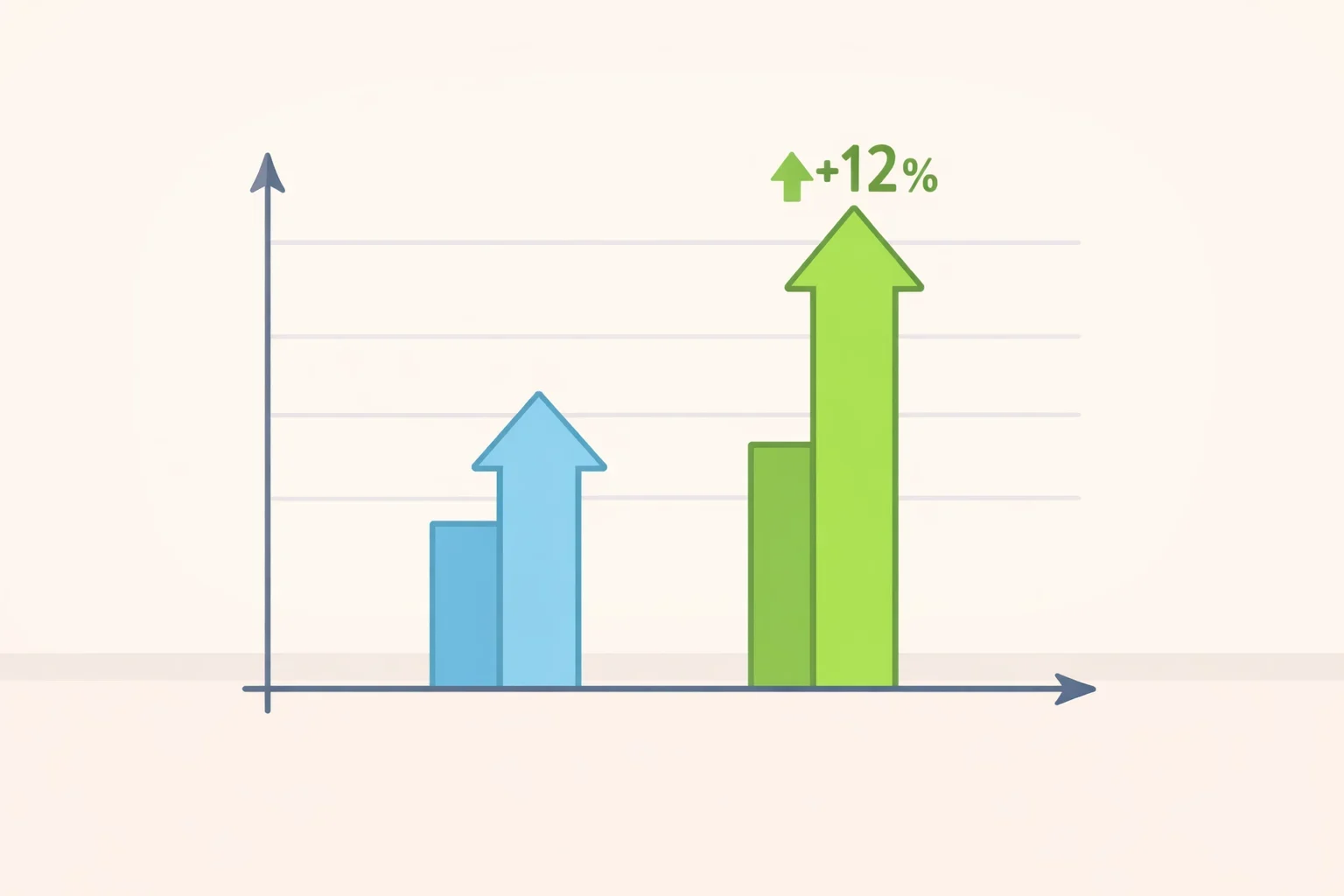
That 12% figure works out to 44,100 net new fitness trainer and instructor jobs between 2024 and 2034, per BLS. BLS also projects roughly 74,200 openings per year over the same stretch, a much larger number driven mainly by workers transferring to other occupations or leaving the labor force, including retirement, rather than by newly created positions.
BLS is direct about what these figures are and aren't. Projections describe what would be expected under a specific set of assumptions, not a guarantee of what will happen, according to BLS Employment Projections. The gap between 44,100 new jobs and 74,200 annual openings reflects turnover, not how many applicants compete for a posting in any given city.
What the fitness trainer occupation covers
BLS defines fitness trainers and instructors as workers who lead, instruct, and motivate individuals or groups in exercise activities, and the 12% projection applies specifically to that combined occupation, per BLS. Coaches and scouts and athletic trainers are classified separately and excluded from it, BLS's wage data confirms.
That combined occupation also gets measured differently across BLS datasets. A separate wage survey using 2023 data counted 279,450 workers in the exercise trainer and group fitness instructor occupation, well below the 370,100 figure the 2024 occupational profile reports. The two counts come from different surveys with different scope, so treat them as separate datasets rather than a sign of decline.
The 12% figure covers the specific duties BLS lists for this occupation, not every job title that happens to include "trainer" or "coach." Confirming a posting actually fits this occupational definition matters more than matching a title on paper.
Personal training vs. group instruction: two certification timelines
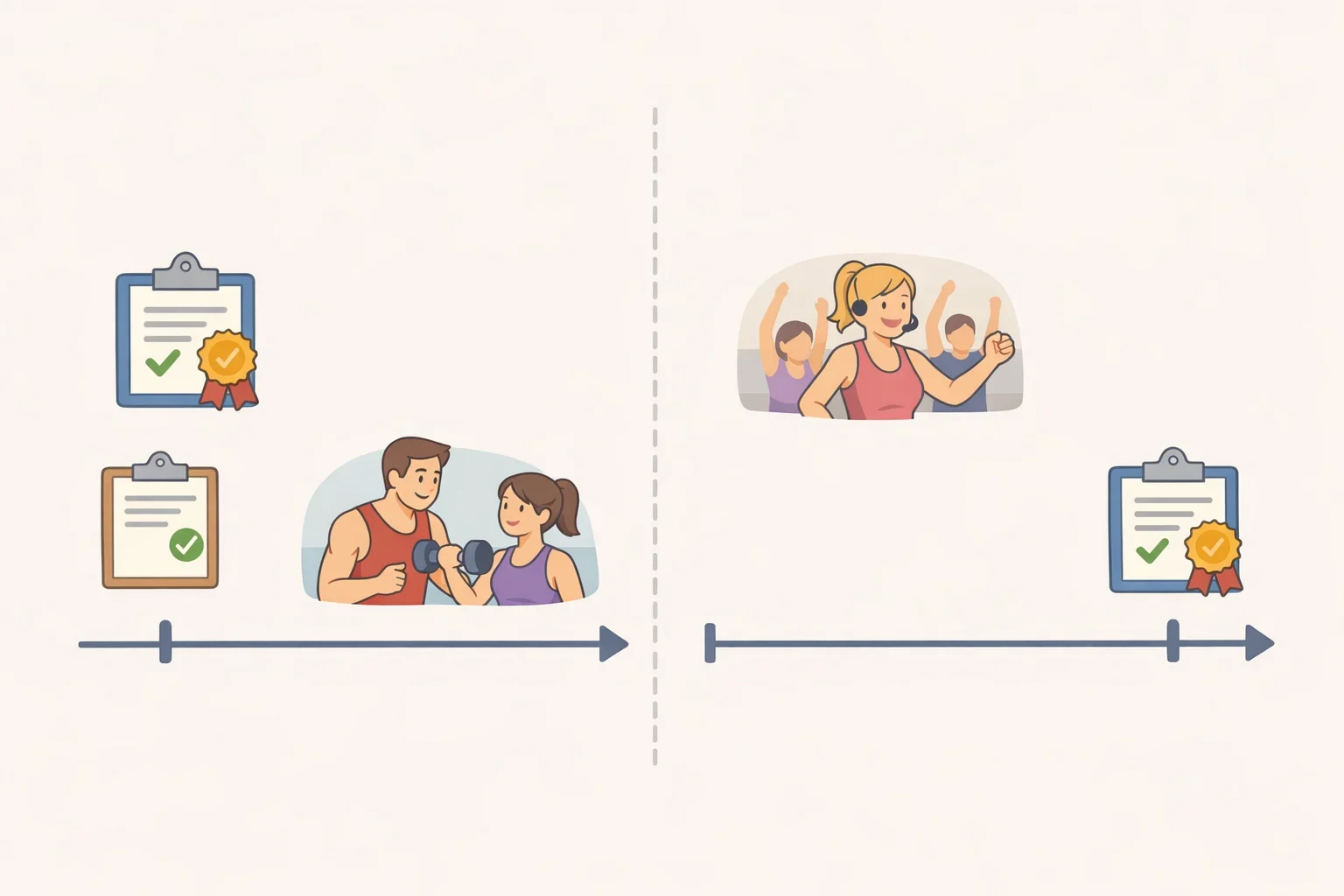
BLS tracks personal trainers and group fitness instructors under this same combined occupation and growth projection, but certification timing splits along role lines within it. Personal trainers usually need to be certified before they begin working with clients or gym and health club members, per BLS. Group fitness instructors have more flexibility: some start teaching before they're certified, though employers often encourage or require it afterward.
Most instructors end up certified in a specific format, such as yoga, kickboxing, or strength training, rather than holding one general credential. Certification isn't standardized industry-wide, either: many organizations issue broad fitness certifications, while some private studios only certify instructors in the classes those studios run, so "certified" doesn't mean the same thing at every employer, BLS notes.
BLS duty data for the occupation describes what the work actually involves: demonstrating technique and form, observing participants, explaining corrective measures, and building individualized exercise approaches for clients, according to BLS. Those duties describe the occupation broadly. Whether a specific certification program actually teaches them is worth checking before enrolling, rather than assumed.
Readers set on coaching a specific sport, rather than leading general fitness sessions, are looking at a different occupation. Coaches and scouts typically need a bachelor's degree, and certification for that role often requires being at least 18 years old and trained in CPR and first aid, per the BLS coaches and scouts profile. That occupation is projected to grow 6% through 2034, with a median wage of $45,920 and about 41,800 annual openings, BLS reports. Those numbers aren't a direct comparison to fitness training, since the two occupations cover different work settings and education requirements, but the gap is reason enough to check the coaches-and-scouts profile separately rather than assume a fitness certification covers it.
Fitness trainer salary and job outlook: what the pay data shows

The median annual wage for fitness trainers and instructors was $46,180, or $22.20 an hour, in May 2024, the most current BLS figure for the occupation. Many trainers and instructors work variable or part-time schedules that may include nights, weekends, or holidays.
A separate BLS wage survey using 2023 data reported a mean annual wage of $51,270 for the same occupation. That figure annualizes hourly pay across 2,080 full-time hours and excludes self-employed workers entirely, so it isn't directly comparable to the 2024 median and shouldn't be read as pay growth between the two reports.
Neither figure says whether a specific job pays as an employee, an independent contractor, on commission, or per session, and that classification affects take-home pay more than the credential itself does. Asking a prospective employer directly how a role is classified and paid is the only way to get an answer that applies to a specific job.
Fitness trainer certification requirements: what to verify before enrolling

The growth and pay data above answer whether the field is expanding nationally. They don't say which certification a specific gym will accept, whether a role starts with client contact on day one, or how a trainer at that location actually gets paid. Employers usually prefer certified candidates, but BLS notes that exact requirements vary by facility.
Working through a short list of questions with real employers before enrolling in any certification program does more than researching the field in the abstract:
- Decide on the target role first: personal training, group instruction, or a specific format like yoga or strength training. Certification timing differs between them.
- Identify two or three local employers worth working for, whether a gym chain, an independent studio, or a recreation center.
- Ask each one which certification they require or prefer for that role, and whether it's needed before any client contact.
- Ask how the role is classified and paid: hourly, salaried, commission, or per session, and what a typical week looks like on the schedule.
This sequence won't rank certifying organizations against each other. It will keep anyone from paying for a certification before confirming that a specific employer actually recognizes it.
The 12% growth projection is a reason to take this field seriously, not a reason to enroll in the first certification program that turns up in a search. Verify the credential, the employment classification, and the pay structure with two or three target employers first, then pick a certification program that matches what those employers actually require.