
- Sports Supplement Safety Checklist for Athletes Explained
- What the training teaches
- Checking for supplement contamination risks for athletes
- Does the evidence support the label's claims?
- Third-party tested supplements for athletes and the legality question
- Bringing in a professional, and running the checklist
Sports Supplement Safety Checklist for Athletes Explained
A continuing-education course from the National Athletic Trainers' Association, available since two weeks ago, gives athletic trainers a structured way to evaluate the safety, effectiveness, and legality of dietary supplements before athletes use them, according to NATA's course description. The course responds to a gap NATA describes as common in sports medicine: athletic trainers field frequent supplement questions from athletes but many report uncertainty judging safety, efficacy, and legality on their own, per NATA.
That three-part screen, covering safety, effectiveness, and legality, doubles as a sports supplement safety checklist for athletes trying to work through the same questions on their own. It matters most for anyone competing under a drug-testing policy, and for the coaches, parents, and trainers who help them make that call. The course itself is built for clinicians working directly with athletes, not as a self-diagnosis tool, so the framework below is a reported interpretation of that structure, not a substitute for reviewing a product with a qualified professional.
Katie Knappenberger, a registered dietitian and board-certified athletic trainer who directs performance nutrition at Northwestern Medicine and Northwestern University Athletics, presents the course alongside Floris Wardenaar, an associate professor at Arizona State University who spent years working as a sports dietitian for the Dutch Olympic Committee, according to NATA. That pairing of clinical athletic training and applied sports nutrition experience lines up with the course's stated goal: helping trainers reduce risk while knowing when a question belongs with a sports dietitian instead.
What the training teaches
Poor supplement regulation, contamination risk, and evolving anti-doping rules make this decision harder than it used to be, NATA's course materials state. The course trains participants to identify supplement-related health and eligibility risks, including contamination, mislabeling, and banned substances, and to apply that screening process during pre-participation exams and athlete consultations.
It also teaches trainers to distinguish higher-risk products from lower-risk ones using third-party testing and regulatory tools, and to recognize when a question is outside their scope and belongs with a sports dietitian, per the course objectives.
Checking for supplement contamination risks for athletes
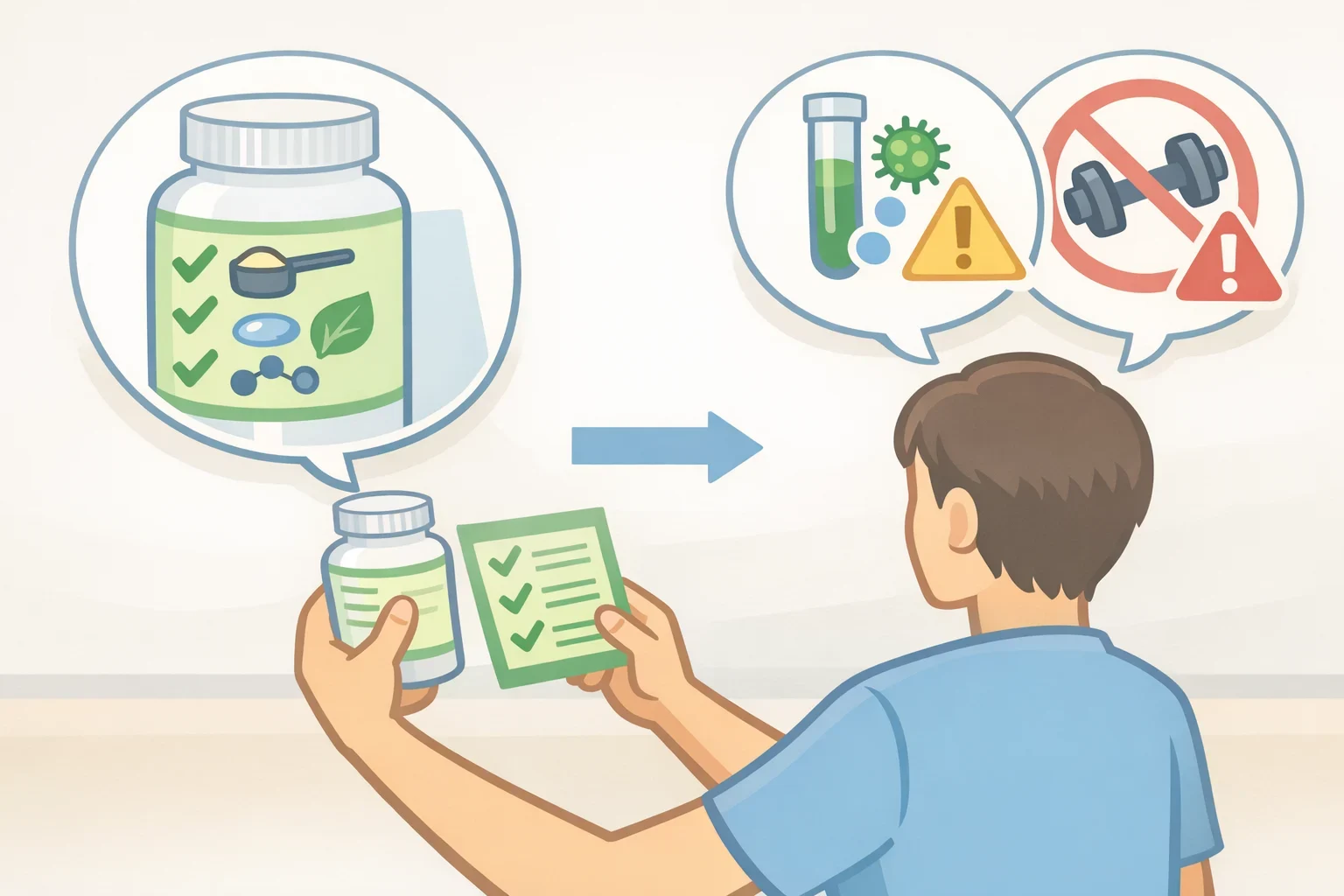
Dietary supplements reach store shelves without premarket FDA approval, which puts manufacturers on the hook for accurate labeling and product safety, OPSS explains. Mislabeled and contaminated products are "not uncommon," and some contain substances not allowed in dietary supplements at all, according to OPSS.
Personal health history changes that risk calculation. OPSS's guidance on yohimbe and yohimbine, an ingredient found in products marketed for energy, fat burning, and weight loss, specifically advises people with anxiety, depression, hypertension, hypotension, or PTSD to avoid it, per OPSS. That guidance was written primarily for military service members, but the underlying point applies to any athlete: a product tolerated by most people isn't automatically safe for someone with a specific condition or a medication already in place. OPSS recommends consulting a qualified healthcare provider before combining yohimbe products with other supplements or with over-the-counter or prescription medications.
Does the evidence support the label's claims?
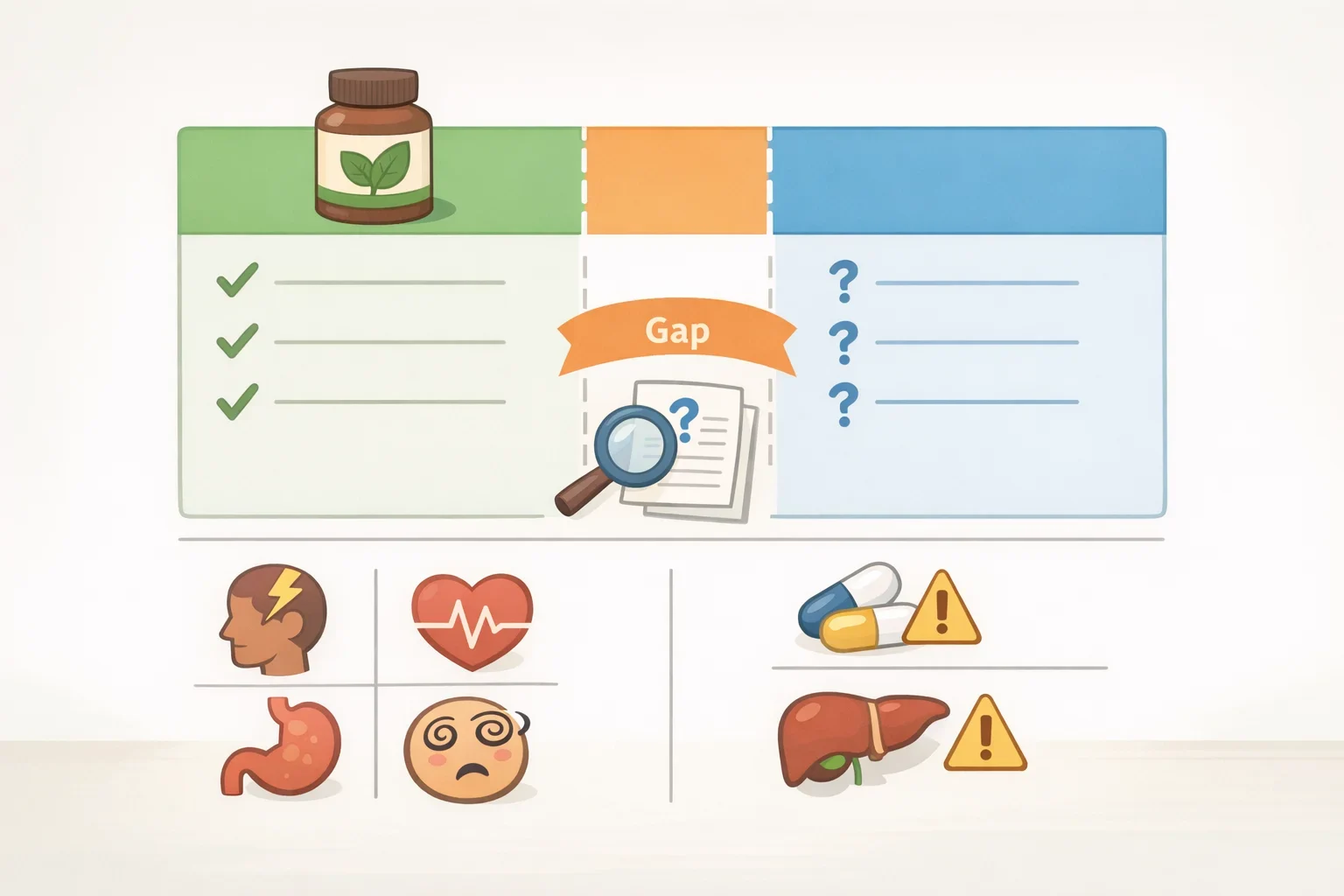
A marketing claim and a proven effect aren't the same thing, and yohimbe is a useful case study in that gap. Yohimbe and yohimbine-containing supplements are marketed for energy, fat burning, weight loss, body composition, and sexual wellness, according to OPSS.
OPSS says evidence is insufficient for athletic performance and weight loss; it also reports that current evidence does not support using these products to boost sex drive, according to OPSS. Studies on athletic performance are described as limited, small, and inconsistent. Yohimbine hydrochloride was once an FDA-approved prescription treatment for certain cases of erectile dysfunction, with moderate results, but it's rarely used for that purpose now because more effective drugs with fewer side effects exist, per OPSS.
Weak evidence doesn't mean low risk. Reported adverse events tied to yohimbine include rapid heart rate, high blood pressure, flushing, sweating, nausea, headaches, anxiety, and restlessness, and combining it with stimulants such as caffeine, rauwolscine, ephedrine, or synephrine can raise heart rate further and add cardiovascular strain, OPSS notes. Overdose or combining yohimbine with certain medications has been linked to brain damage, panic attacks, and death, according to the same source.
Dosing adds another layer of unpredictability. A 2015 study of 49 yohimbine-containing products found actual yohimbine content ranging from zero to more than 12 milligrams per product, higher than the usual recommended dose, per OPSS. The label alone cannot establish the actual ingredients or amounts in a bottle before it's opened.
Yohimbe and yohimbine were not on the Department of Defense's Prohibited Dietary Supplement Ingredients List as of OPSS's guidance, last updated in March 2025. Products containing yohimbe bark, bark preparations, or yohimbine are banned or restricted in Canada, Australia, the Netherlands, and the United Kingdom because of potential health effects, OPSS reports. That status is a snapshot from last year, not a current guarantee, and it says nothing about any individual sport's anti-doping rules, which is exactly the gap the next check is meant to close.
Third-party tested supplements for athletes and the legality question
An ingredient's legal status for sale and its status under a sport's anti-doping code are two separate questions. NATA's course flags evolving anti-doping rules as one factor that adds complexity for trainers and athletes, according to NATA, which means checking a product against whichever prohibited list actually governs an athlete's own competition matters more than a general search.
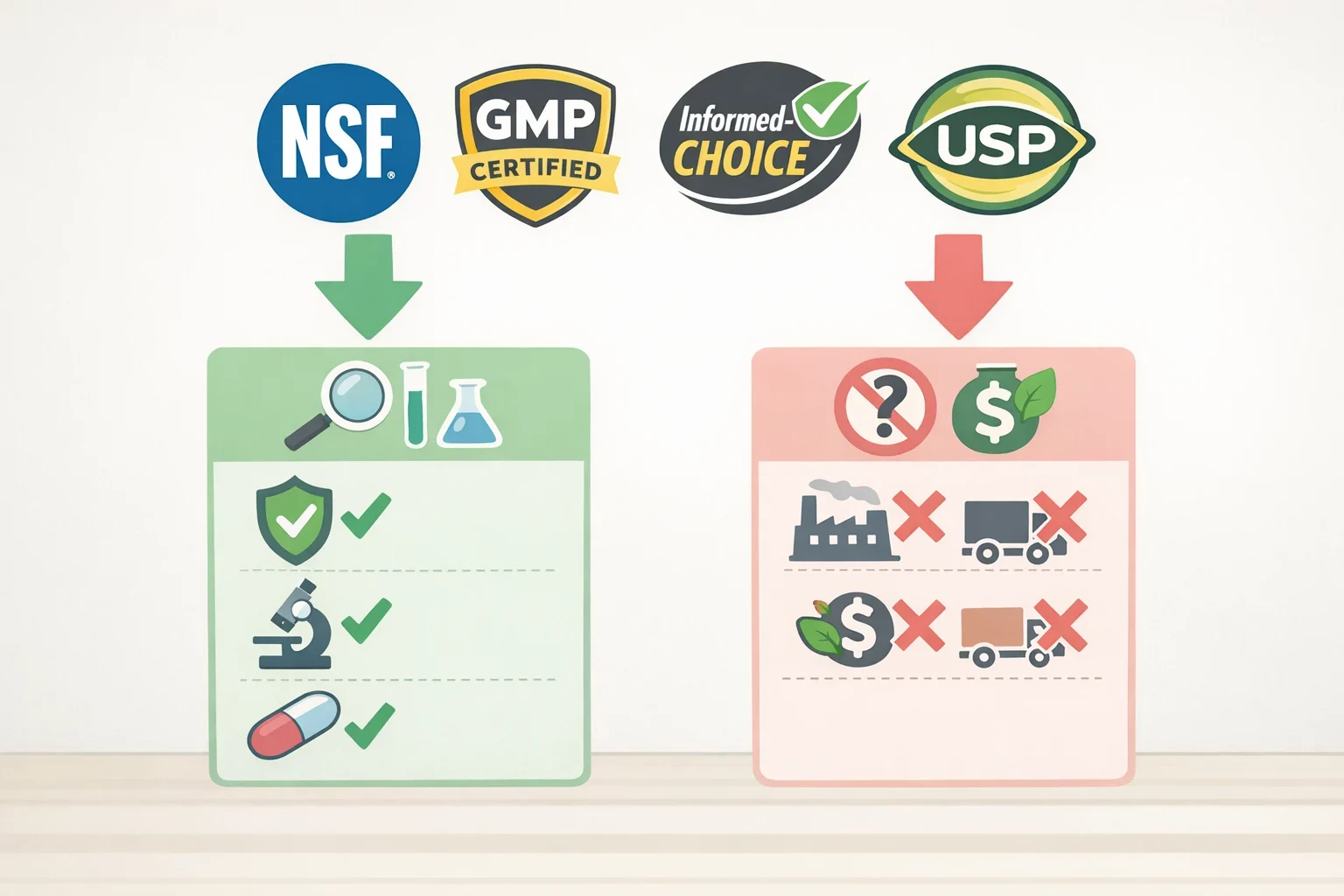
Third-party certification helps confirm that what's on the label matches what's in the bottle, but it doesn't establish that a product is safe or that it works, OPSS explains. Independent laboratory testing is what verifies actual ingredients and amounts; certification programs build on top of that testing, and a seal from one program does not automatically clear an athlete for every competition or testing authority.
Programs vary in scope. Three well-vetted certification programs, NSF Certified for Sport, Informed Sport, and BSCG Certified Drug Free, test for substances prohibited in sport, such as anabolic agents, stimulants, and SARMs, while USP Verified confirms ingredient accuracy and screens for contaminants without checking against a sport-banned substances list, per OPSS. A USP seal alone doesn't rule out an ingredient that would trigger a positive drug test.
There's also only one published certification standard, NSF/ANSI 173-2021, according to OPSS's 2024 explainer, so not every organization offering a "certified" seal is working from the same benchmark. For a drug-tested athlete, the specific seal on the label matters more than the presence of a seal alone.
Bringing in a professional, and running the checklist
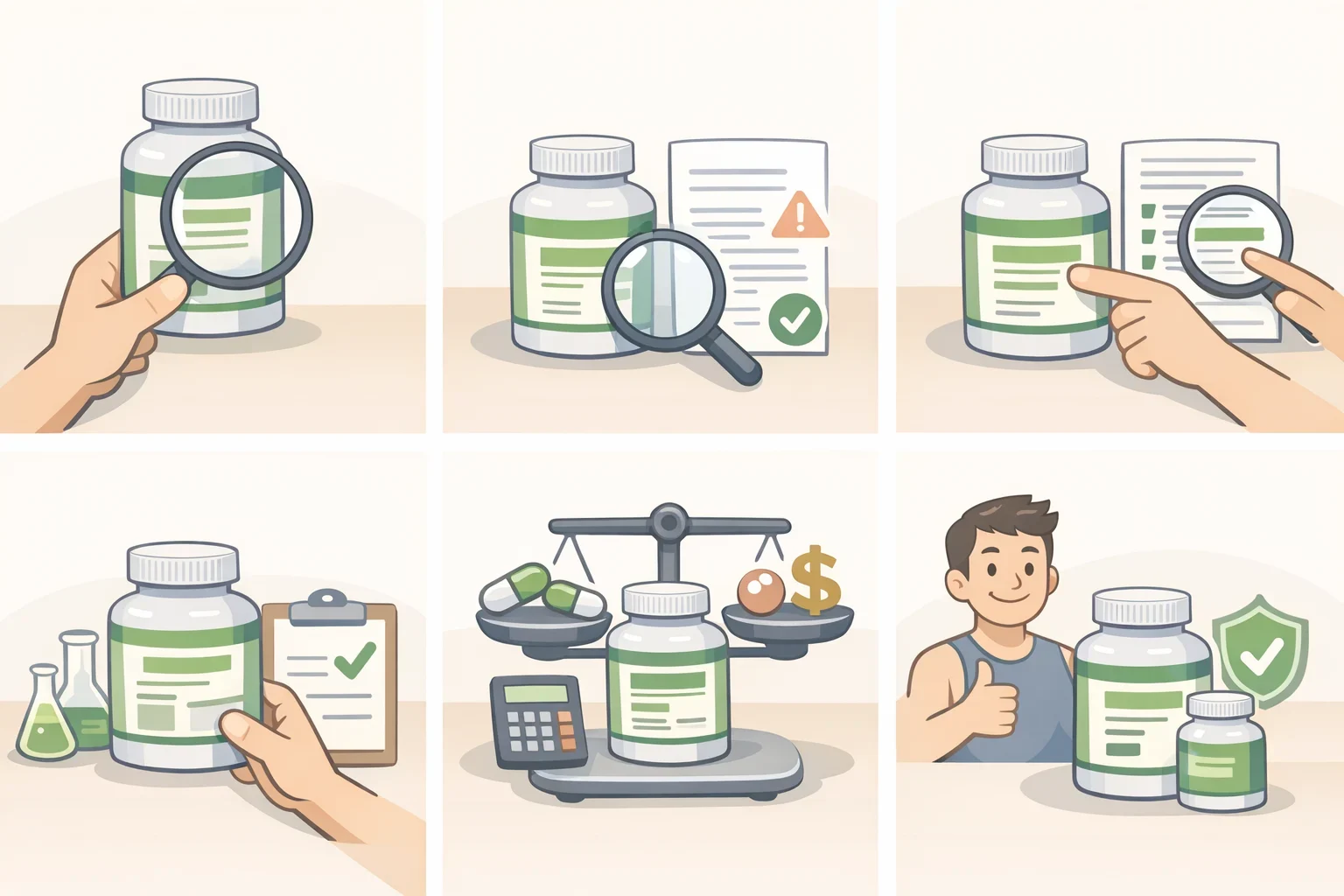
NATA's course builds supplement review into pre-participation exams and athlete consultations, and trains participants to recognize when a question sits outside their scope and belongs with a sports dietitian or other qualified professional, per NATA. OPSS's guidance points to a concrete version of that same trigger: consult a qualified healthcare provider before combining yohimbe or yohimbine products with other supplements or with medications, OPSS advises. Bringing the full product label to that conversation, not just the product name, gives the professional the information needed for that review.
The three questions the course applies translate into a practical starting point for an athlete's own screen, though verifying eligibility still requires checking with the governing body and a qualified professional:
- Pull the full label and list every ingredient and dose, not just the headline ingredient.
- Compare that list against the prohibited-substance list of whichever organization actually governs the competition.
- Note whether a certification seal is present, and which one. NSF Certified for Sport, Informed Sport, and BSCG Certified Drug Free screen for substances banned in sport; USP Verified does not.
- Ask what evidence supports the claimed benefit for the specific goal in mind, rather than trusting the marketing language on the label.
- Flag any existing health conditions, medications, or other supplements already in use, and raise them with a trainer, dietitian, or physician.
Yohimbe illustrates why none of these steps can be skipped: a widely marketed ingredient with thin evidence and unpredictable dosing, absent from one country's prohibited list while restricted in several others. NATA's course formalizes that kind of review for athletic trainers working with athletes day to day. The athlete's own governing body, not a certification seal or a marketing claim, remains the final word on whether a product is permitted, and that status is worth confirming directly before any new supplement gets used.