
How Does the 2026 NBA Cup Work? Format, Rules Explained
The biggest change to the 2026 Emirates NBA Cup has nothing to do with who's playing and everything to do with where. For the first time since the tournament launched, the semifinal round will be played at the home arena of the higher-seeded team instead of a single neutral-site venue, a shift from every previous NBA Cup format (ESPN, NBA.com).
That's the headline, but understanding how the 2026 NBA Cup works means walking through the whole structure first. The fourth-annual competition runs from Oct. 30 through Dec. 11, split into Group Play and the Knockout Rounds, and it's still built directly into the 82-game regular season rather than staged as a separate event (NBA.com). All 30 teams have already been sorted into six five-team groups by conference, with 60 Group Play games scheduled mostly on Fridays between Oct. 30 and Nov. 27 (NBA.com).
This guide breaks down how the group stage works, how eight teams qualify for the knockout bracket, why point differential can decide who advances, and exactly how the new semifinal rule changes the road to the Dec. 11 championship at Hinkle Fieldhouse in Indianapolis (NBA.com).
How does the 2026 NBA Cup format work?
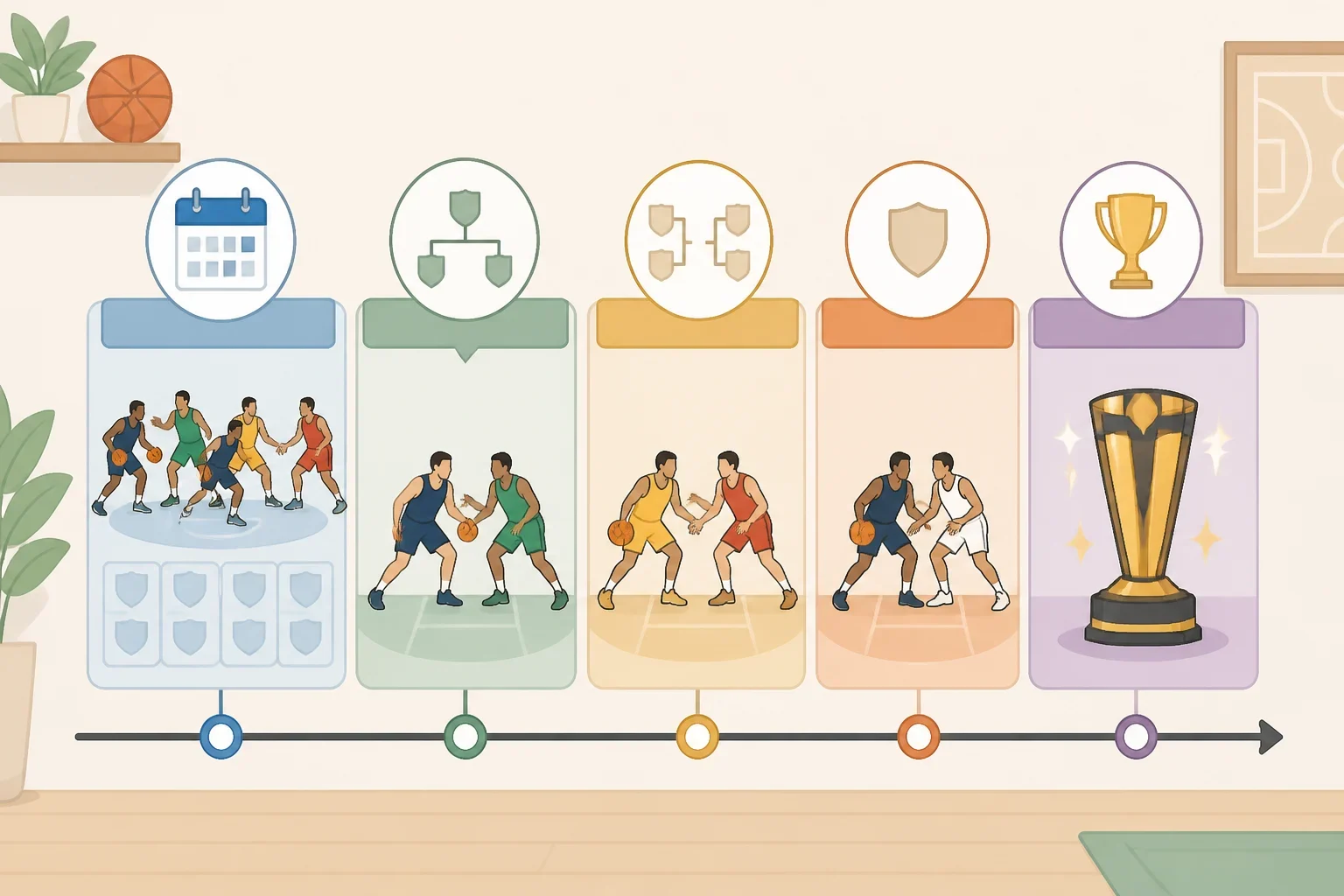
The 2026 NBA Cup format has two stages: Group Play, then single-elimination Knockout Rounds. Every game counts toward the regular-season standings except the championship (NBA.com).
Groups were built by sorting each conference's 15 teams into five pots based on where they finished in the 2025-26 regular season. Pot 1 held the top three finishers in each conference, Pot 5 held the bottom three, and teams were then randomly drawn into groups from those pots (ESPN).
Each team plays its four group opponents once, two at home and two on the road, adding up to 60 Group Play games between Oct. 30 and Nov. 27 (NBA.com). Most of that slate falls on Fridays, but Thanksgiving week breaks the pattern: Tuesday, Nov. 24 brings a Cup doubleheader, and Wednesday, Nov. 25 is a tripleheader (NBA.com).
There's a scheduling mechanic behind all of this that explains why full season schedules feel incomplete when they're released. The league puts out only an 80-game slate in mid-August, then fills in each team's remaining games once Group Play results determine who's still alive (ESPN). In other words, the NBA Cup group play format isn't a bonus tournament tacked onto the calendar; it's a restructured chunk of the existing season, which is exactly why the tiebreakers and hosting rules below carry real standings weight.
2026 NBA Cup group play and knockout round explained
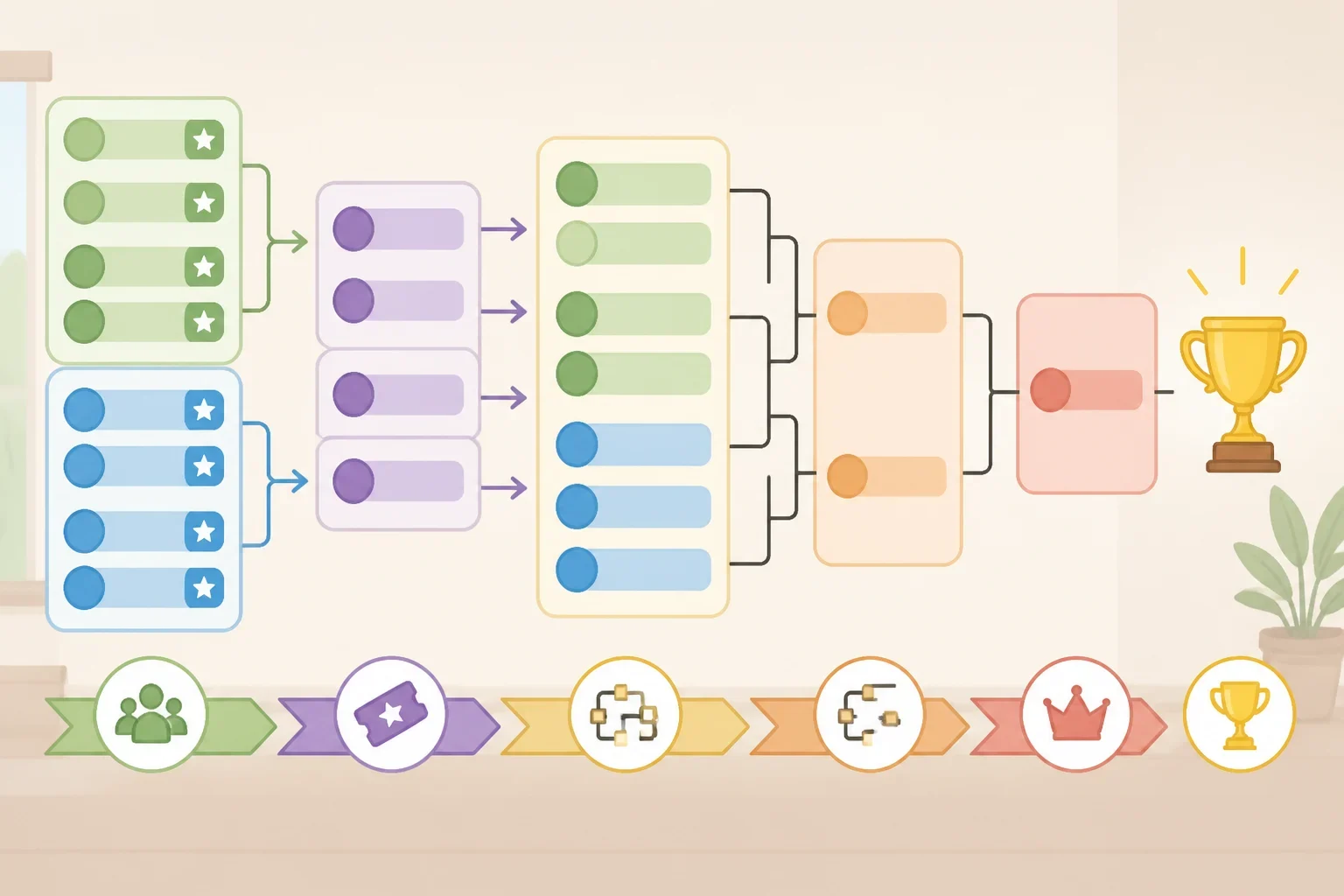
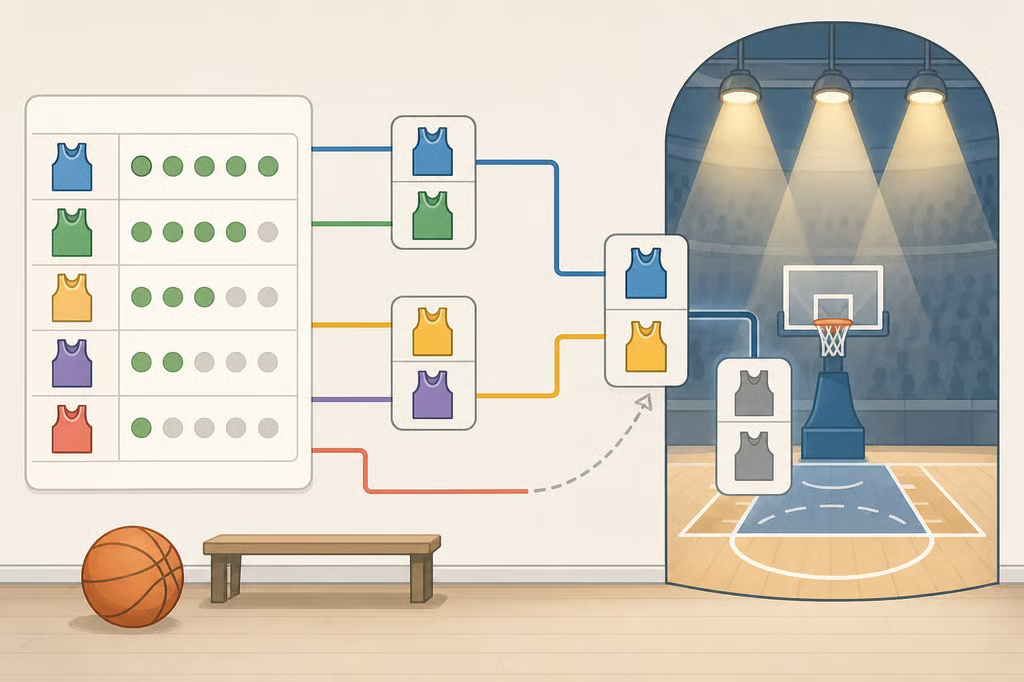
Eight teams reach the Knockout Rounds: the winner of each of the six groups, plus one wild card per conference, awarded to the second-place team in Group Play with the best overall record in its conference (NBA.com).
Two real groups help ground this. East Group B contains the Knicks, Cavaliers, 76ers, Heat and Pacers. West Group C contains the Spurs, Lakers, Trail Blazers, Warriors and Kings (ESPN). Each of those five teams plays the other four once before the group standings settle.
The Knockout Round calendar runs tight: Quarterfinals on Dec. 4-5, Semifinals on Dec. 8 and/or Dec. 9, and the Championship on Dec. 11 (NBA.com).
Teams that miss the knockout bracket don't just disappear from the calendar. The 22 eliminated teams get their final two regular-season games, one home and one away, scheduled during the Dec. 6-7 and Dec. 9-10 windows, and the four Quarterfinal losers are paired against each other for a game on Dec. 7, 9 or 10 (NBA.com). That backbone matters because it's what makes the tiebreaker rules and the new hosting format actually consequential.
What are the 2026 NBA Cup tiebreakers?
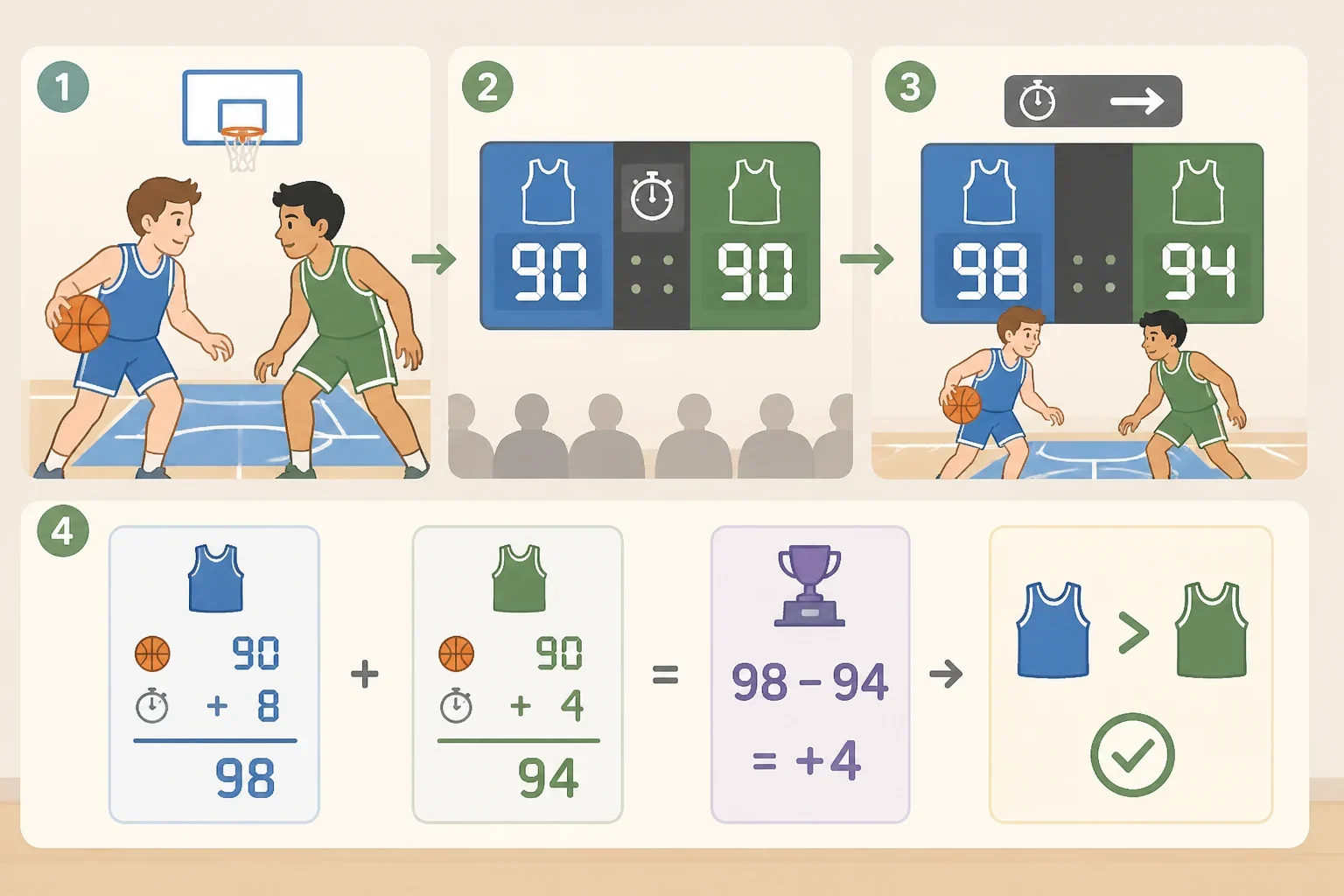
Group ties are broken in a fixed order: head-to-head Group Play record first, then point differential, then total Group Play points, then 2025-26 regular-season record, and finally a random drawing if everything else is still even (NBA.com).
Wild-card ties follow the same sequence with one exception: head-to-head record is skipped, since tied teams from different groups may not have played each other at all (NBA.com).
There's a wrinkle that trips up casual fans every year. A Group Play game that goes to overtime is recorded as a "0" point differential for tiebreaker purposes, and any points scored in overtime don't count toward the total-points tiebreaker either (NBA.com).
Here's why that math actually matters on the floor. Imagine two Eastern Conference teams finish Group Play at 3-1 apiece, tied for a wild-card spot, with no head-to-head matchup to separate them. Point differential becomes the deciding number, and every basket from the fourth quarter of a blowout suddenly counts toward it.
That's the exact incentive the NBA's own rules created last season. After Minnesota beat Utah by 40 in a Cup game, Timberwolves coach Chris Finch defended his team for still hunting buckets late: "If you get a chance to put 40 points in the bank, you should do it," he said (NBA.com). At the time, at least 25 of the 30 teams still had a mathematical path to the Knockout Rounds once that Friday's full slate of games wrapped (NBA.com). With that many teams still in contention, margin of victory wasn't a courtesy anyone was extending.
What is the new 2026 NBA Cup semifinal rule?
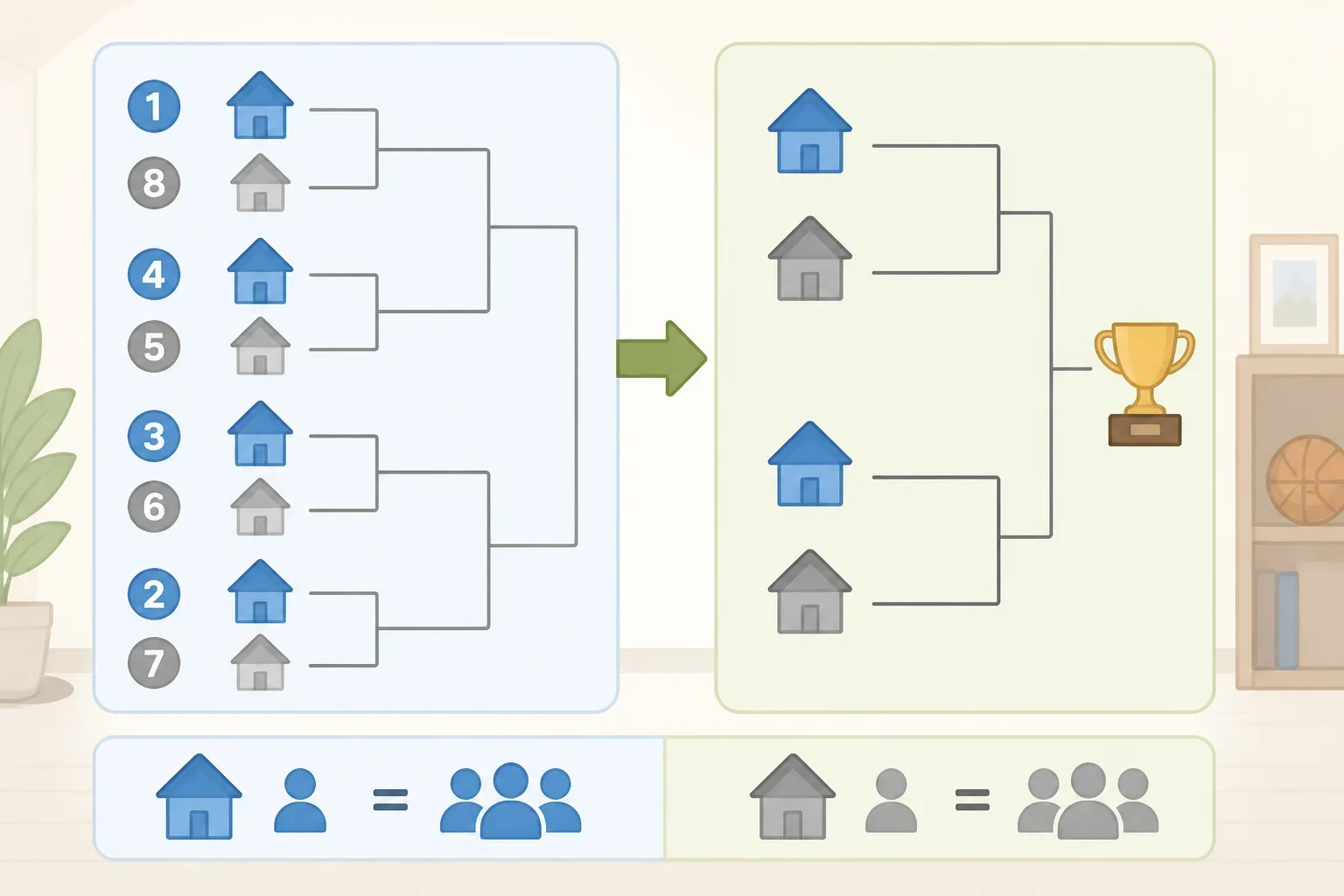
Here's the change that separates this year from every prior NBA Cup. In past tournaments, the semifinals moved to a single neutral site. Starting this year, both the Quarterfinals and Semifinals will be played in NBA team markets, at the home arena of the higher seed (NBA.com; ESPN).
Hosting follows a clear hierarchy within each conference. The two teams with the best Group Play record host the Quarterfinals, and the top Group Play team in the conference hosts the wild-card entrant (NBA.com).
Teams that advance deep into the bracket get a scheduling break, too. Any team reaching the Semifinals has that game moved later on the calendar to avoid a back-to-back (ESPN).
The Championship is the one round that stays neutral. It moves from Las Vegas to Hinkle Fieldhouse in Indianapolis for the Dec. 11 title game (NBA.com). Put together, these Emirates NBA Cup 2026 rules reward strong Group Play performance with two full rounds of home-court advantage, something the format never offered before.
What to remember next
The standings math resolves most of the confusion around this format. Of the 67 total Cup games, 60 in Group Play, four Quarterfinals, two Semifinals and one Championship, 66 count toward the regular-season standings. Only the Championship doesn't (NBA.com).
That creates one odd quirk for the two teams that reach the final. They end up playing an 83rd game that doesn't touch their record or their statistics, while every other team's season stays at exactly 82 games (ESPN).
The Cup's DNA traces back to commissioner Adam Silver's longstanding interest in European soccer, where competitions like England's FA Cup run alongside league play. The NBA borrowed the cup concept but built it into the regular-season schedule instead of running it separately, the opposite of how those European leagues operate (ESPN).
For fans tracking a specific team, the practical move is simple: find that team's group, note its four Group Play opponents, and mark the Cup Night dates, Oct. 30, Nov. 6, 13, 20, 24, 25 and 27 (NBA.com). Those are the nights when point differential starts piling up, and by late November, it might be the number that decides who's still playing in December.