
MLS Playoffs 2026 Format: How Round One Really Works
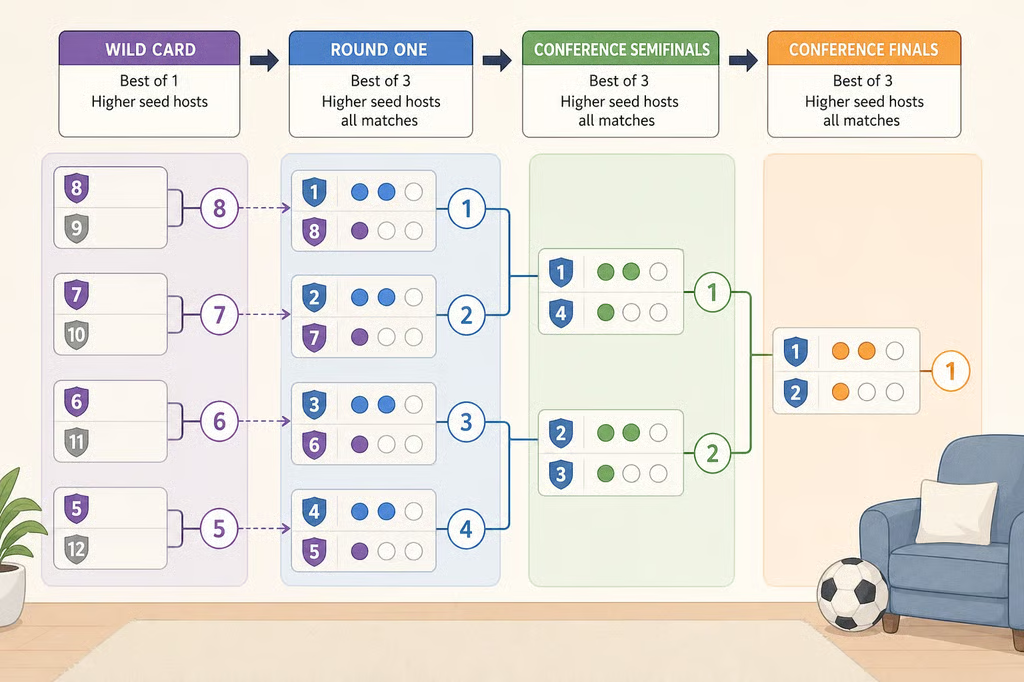
The 2026 MLS Cup Playoffs format cycles through three stages with different rules before crowning a champion: a single-elimination Wild Card round, a best-of-three Round One, then straight knockout soccer the rest of the way to MLS Cup, according to MLSSoccer.com. That matters for any fan trying to figure out what a team actually needs to do to survive the postseason, since the rules for winning a series change depending on which round it's playing.
Eighteen teams make the field this year, the top nine from each conference, out of a 34-game regular season for all 30 clubs that kicked off on MLS is Back weekend, Feb. 21-22, per MLSSoccer.com.
Decision Day, the regular-season finale, lands on Nov. 7. From there the playoffs run from the Nov. 18 Wild Card matches through MLS Cup on Dec. 18, according to MLSSoccer.com. Here's how the MLS Playoffs 2026 format breaks down round by round, and what a team's seed determines about its path.
How do the 2026 MLS playoffs work?
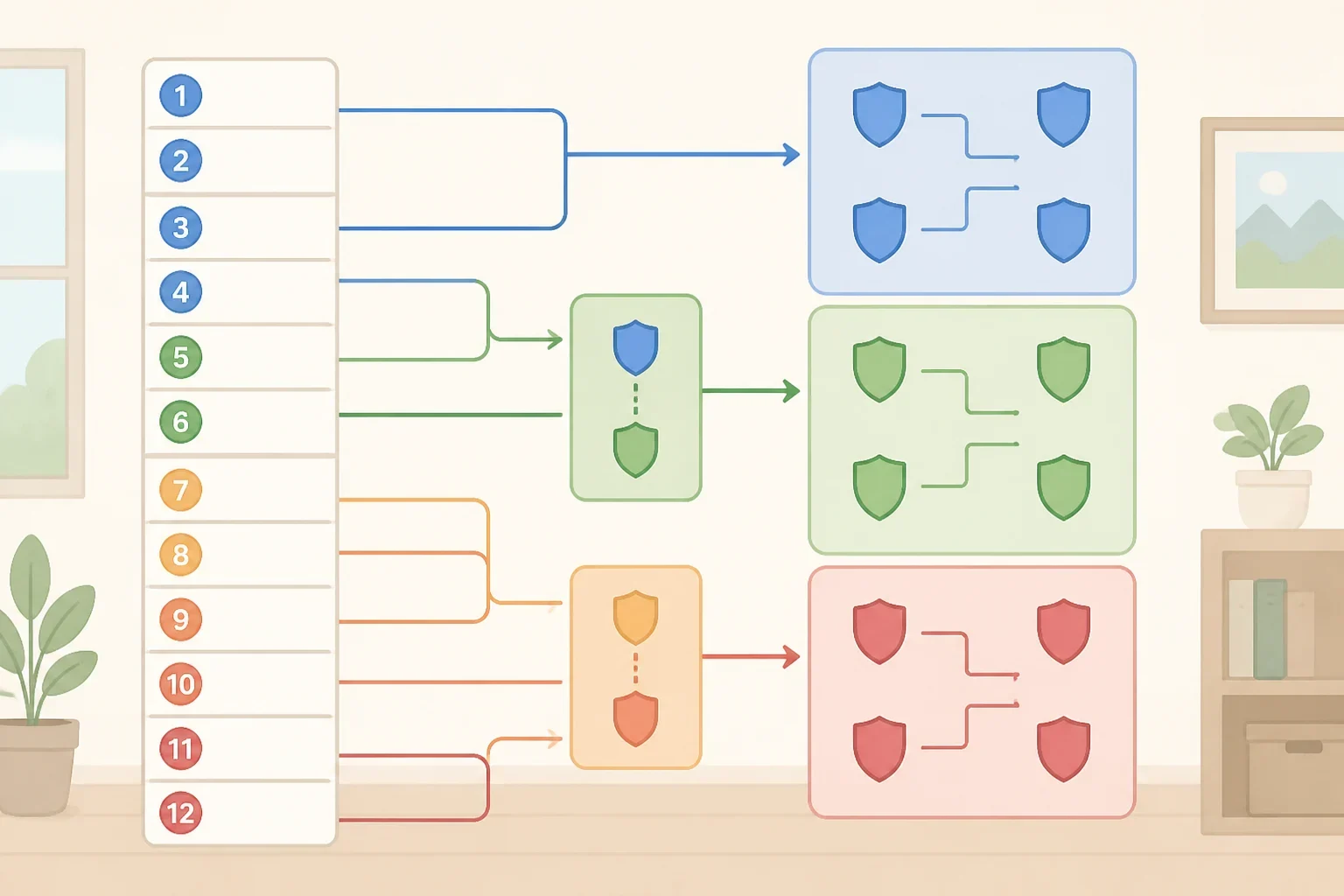
Seeds 1 through 7 in each conference qualify automatically for the Round One best-of-three series. Seeds 8 and 9 must first win a single-elimination Wild Card match on Nov. 18, hosted by the higher-seeded No. 8 team, to reach Round One, according to MLSSoccer.com.
The Wild Card winner then faces its conference's No. 1 seed in Round One, per MLSSoccer.com. Seeds 1-7 go straight into the best-of-three series; seeds 8-9 play a Wild Card match first.
That structure means each conference sends eight teams into Round One: the seven automatic qualifiers plus the Wild Card winner. Those eight teams form four best-of-three series per conference, eight series total across the bracket. Four winners from each conference, eight total, advance to the Conference Semifinals, according to MLSSoccer.com.
Across all eight series, MLS's 2026 competition rules put Round One's total game count between 16 and 24, depending on how many series need a decisive Game 3, per MLSSoccer.com. A team that qualifies directly needs to win four rounds, Round One, Conference Semifinal, Conference Final and MLS Cup, to lift the trophy. A Wild Card qualifier needs to win five, starting with that opening elimination match.
MLS Cup Playoffs Round One format: the best-of-three breakdown
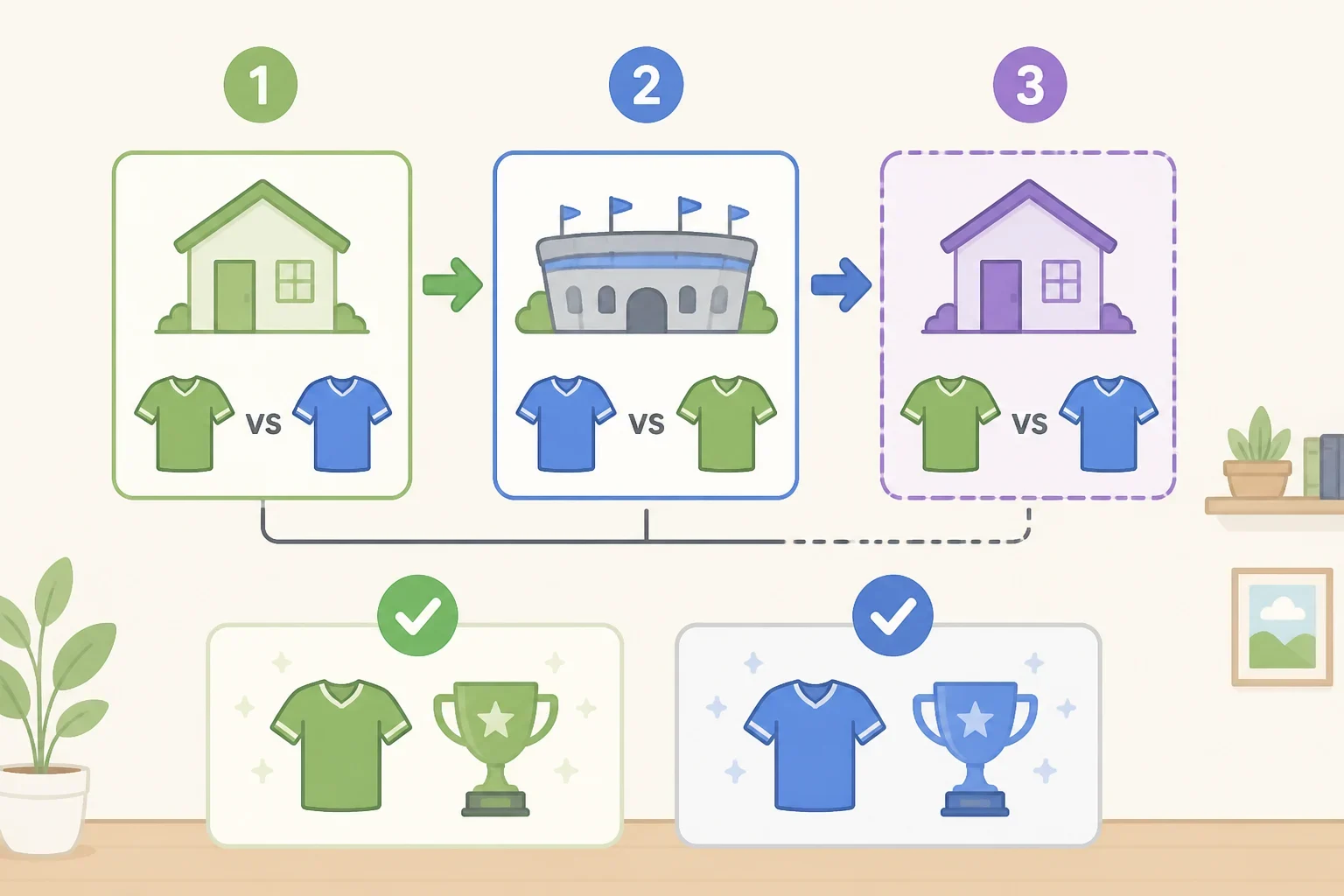
Round One is where the MLS Playoffs best-of-three series looks nothing like the two-leg, aggregate-goal format common in other soccer competitions. Every individual game needs a winner. There's no adding up goals across games: the first team to win two games advances, according to MLSSoccer.com.
If a game is tied after regulation, there's no extra time. It goes straight to a penalty-kick shootout, the same rule used in the Wild Card round, and that applies to every game in the series, not just a decisive Game 3.
Hosting follows a fixed home-away-home order. The higher seed hosts Game 1 and, if the series goes the distance, the deciding Game 3. The lower seed hosts only Game 2, according to MLSSoccer.com. That structure guarantees all 16 Round One clubs at least one home playoff game, confirmed in the league's schedule announcement from earlier this year (MLSSoccer.com).
The series needs real calendar room to play out: Game 1 runs Nov. 20-24, Game 2 runs Nov. 27-28, and a decisive Game 3 would be played Dec. 1-2, per MLSSoccer.com. The published schedule gives Round One the longest multi-game window of any round in the bracket.
From Wild Card to MLS Cup: format, hosting and tiebreakers by round
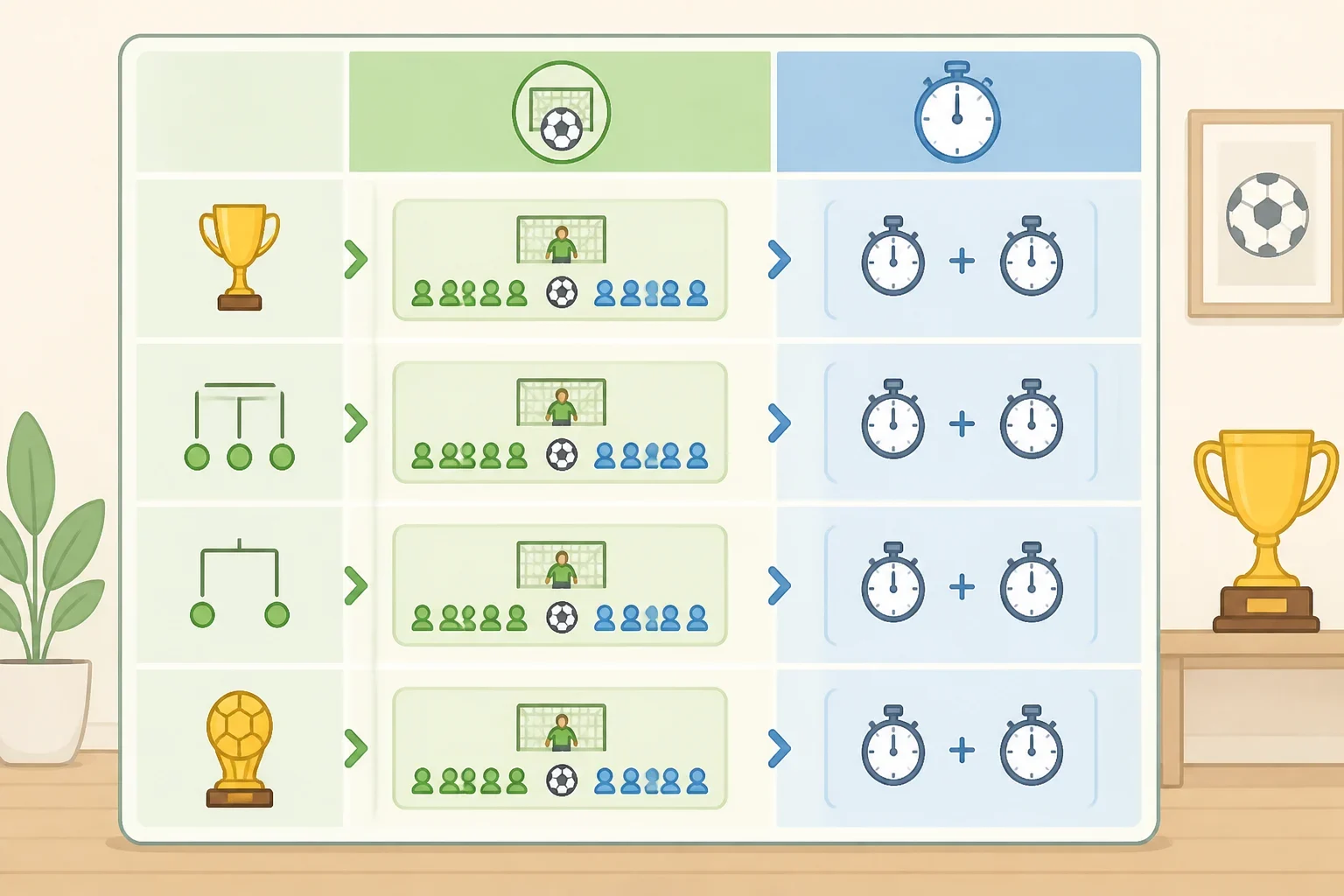
Once Round One ends, single elimination takes over for the rest of the postseason, though hosting rules and tiebreaker procedures shift as the field narrows. Here's how the 2026 MLS Cup Playoffs format compares round by round:
Round Format Hosting Tied-game procedure Dates Source Wild Card Single elimination No. 8 seed hosts Straight to penalty kicks Nov. 18 MLSSoccer.com Round One Best-of-three series Higher seed hosts Games 1 & 3; lower seed hosts Game 2 Straight to penalty kicks each game Nov. 20 - Dec. 2 MLSSoccer.com Conference Semifinals Single elimination Highest remaining seed hosts Two 15-minute overtime periods, then penalties Dec. 5-6 MLSSoccer.com Conference Finals Single elimination Sources conflict (see below) Two 15-minute overtime periods, then penalties Dec. 11-12 MLSSoccer.com, MLSSoccer.com MLS Cup Single match Better regular-season record Two 15-minute overtime periods, then penalties Dec. 18 MLSSoccer.com
Starting with the Conference Semifinals, tied games no longer skip straight to penalties. Teams play two complete 15-minute extra-time periods first, and only go to a shootout if the score is still level, according to MLSSoccer.com. That's a different procedure than the Wild Card round and Round One, where every tied game goes directly to kicks.
MLS's own published materials disagree on who hosts the Conference Finals. The league's format explainer from two weeks ago lists the higher seed as host, per MLSSoccer.com. An earlier schedule release, published in March, says hosting goes to whichever finalist has the better regular-season record based on Supporters' Shield standings, according to MLSSoccer.com. That discrepancy sits in the league's own materials and hasn't been reconciled as of this week.
MLS Cup hosting is unambiguous, at least: the finalist with the better regular-season record gets the game, per MLSSoccer.com.
Comparing a No. 1 seed's path to a No. 8 seed's path

Seeding changes more than bracket position. It changes how many games a team has to win and how many of those games it gets to play at home.
A conference's No. 1 seed skips the Wild Card round and opens Round One at home in Game 1, hosting again in Game 3 if the series goes the distance, according to MLSSoccer.com.
A conference's No. 8 seed has a longer road. It must first host a single-elimination Wild Card game against the No. 9 seed on Nov. 18, with any tie going directly to penalties. Lose that game and the season ends immediately, according to MLSSoccer.com. Win it, and the next step is an immediate Round One series against the conference's No. 1 seed, opening on the road in Game 1 since the Wild Card winner enters as the lower seed in that matchup.
Both paths converge at the Conference Semifinals, where hosting resets to whichever surviving team holds the highest remaining seed, according to MLSSoccer.com. A Wild Card qualifier that knocks out a higher seed doesn't automatically earn a home game in the next round; it still depends on who else is left in the bracket and how those teams were originally seeded.
What to remember next
Only Round One uses a best-of-three series. The Wild Card round, Conference Semifinals, Conference Finals and MLS Cup are all single elimination, and the rules for ties shift with the format: every Round One game needs a winner, with ties going straight to penalties, while the later rounds play two full 15-minute extra-time periods before any shootout.
Hosting shifts by round too, and the Conference Finals are the one spot where MLS's own materials don't agree, listing both the higher seed and the better regular-season record as host.
Once Decision Day wraps up on Nov. 7, check your team's conference seed. That number determines whether it heads into the Wild Card round or straight into the Round One best-of-three series, and which of those early games it's scheduled to host.