
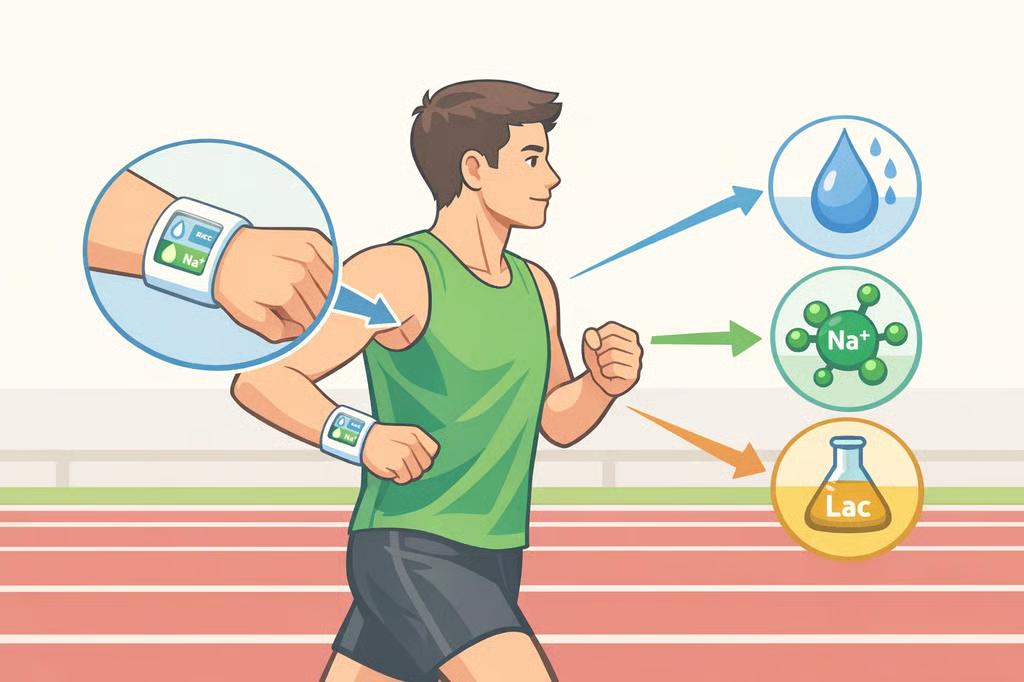
Wearable sweat sensors for athletes: not blood tests yet
Wearable sweat sensors for athletes can already flag hydration status and pick up biochemical signals like lactate, glucose, pH, and cortisol mid-workout. That's not the same as a blood test, and researchers say it shouldn't be treated that way yet. A peer-reviewed review published last year found the correlation between sweat lactate and blood lactate is often weak or inconsistent, a gap that matters for anyone using a wearable to guide pacing, hydration, or recovery decisions (PubMed, 2025).
Sweat has become the most studied noninvasive biofluid for sports monitoring because it's easy to collect mid-activity and carries several biomarkers linked to hydration, energy use, and stress, according to a peer-reviewed review of wearable sweat-monitoring devices (PMC review). Those signals show up in devices built as patches, bands, and sensor-embedded fabric that rely on electrochemical or colorimetric sensing.
This is worth working through if you're an endurance athlete, coach, or fitness enthusiast weighing whether a sweat-analysis wearable belongs in a training or hydration plan. What follows breaks down how these sensors work, what they can measure, and where the evidence is still thin.
How wearable sweat sensors for athletes work
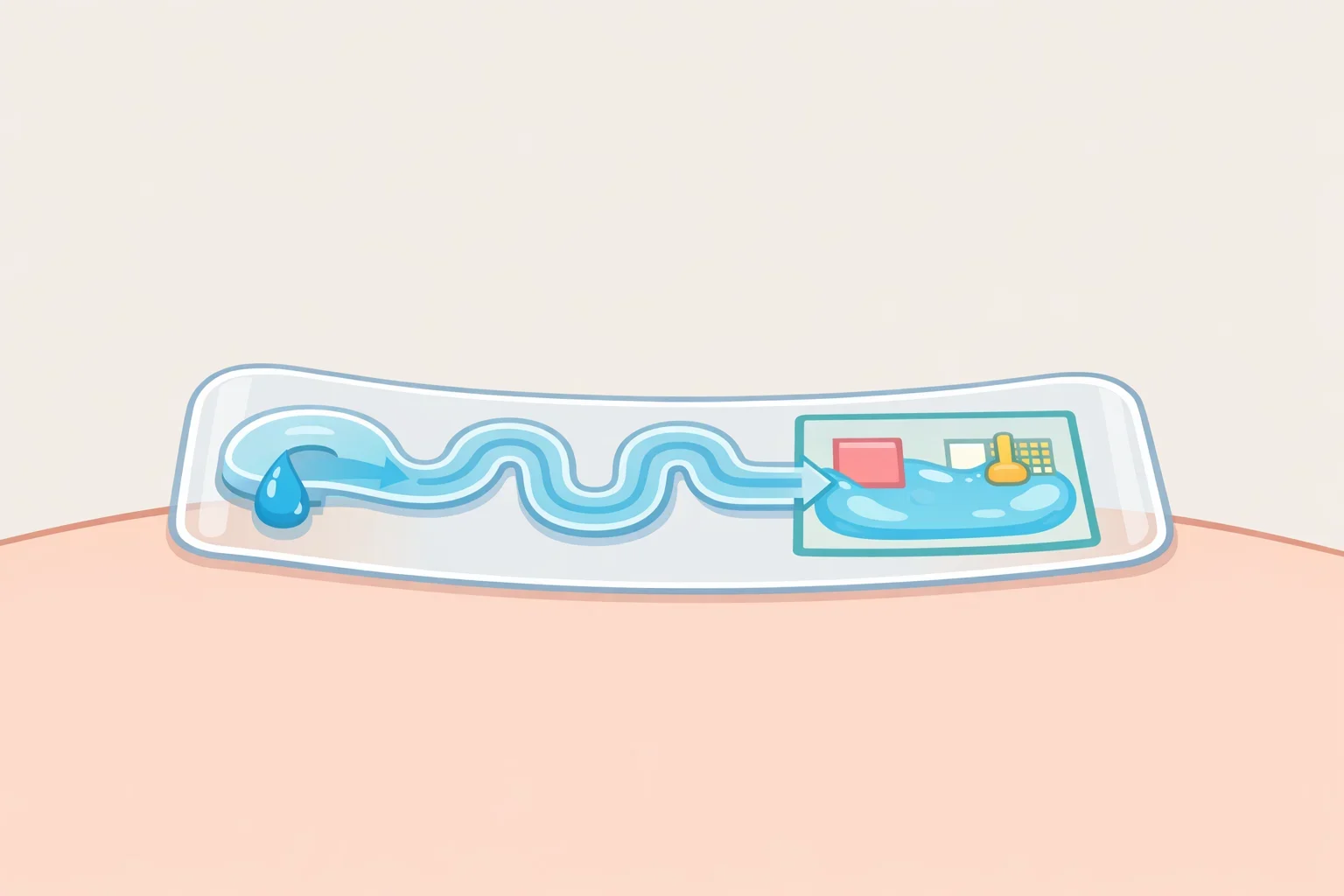
Common formats include epidermal patches, temporary tattoos, fabric-based sensors, and microfluidic bands that channel sweat past a sensing zone and transmit results to a phone or laptop, according to a peer-reviewed review of wearable sweat-monitoring devices and a study on dynamic sweat biochemistry during exercise (PMC review; PubMed, 2024).
Two sensing methods dominate the field. Electrochemical sensors detect biomarkers through a chemical reaction and offer higher precision, though they can suffer signal interference. Colorimetric methods change color to indicate biomarker concentration and appear in some research and reference devices (PMC review).
A study titled "Demonstration of a Validated Direct Current Wearable Device for Monitoring Sweat Rate in Sports," published in late 2024, illustrates the engineering approach. It runs a direct-current protocol through a microfluidic track roughly 600 micrometers wide to measure sweat rate between 1.0 and 5.0 microliters per minute, a range the authors say covers typical human values (PubMed, 2024). The researchers chose direct current over the more common AC signal design because it simplifies the circuit and cuts power draw, making the sensor easier to build into something an athlete can actually wear (PubMed, 2024).
What wearable sweat analysis can measure
Sweat rate is one of the better-supported uses in the available research. The same sweat-rate belt study found that sweat volume can contribute to an athlete's own assessment of fluid loss and can help normalize other numbers already tracked in training, such as the Borg scale for perceived exertion, VO2, and other sweat-chemical concentrations (PubMed, 2024).
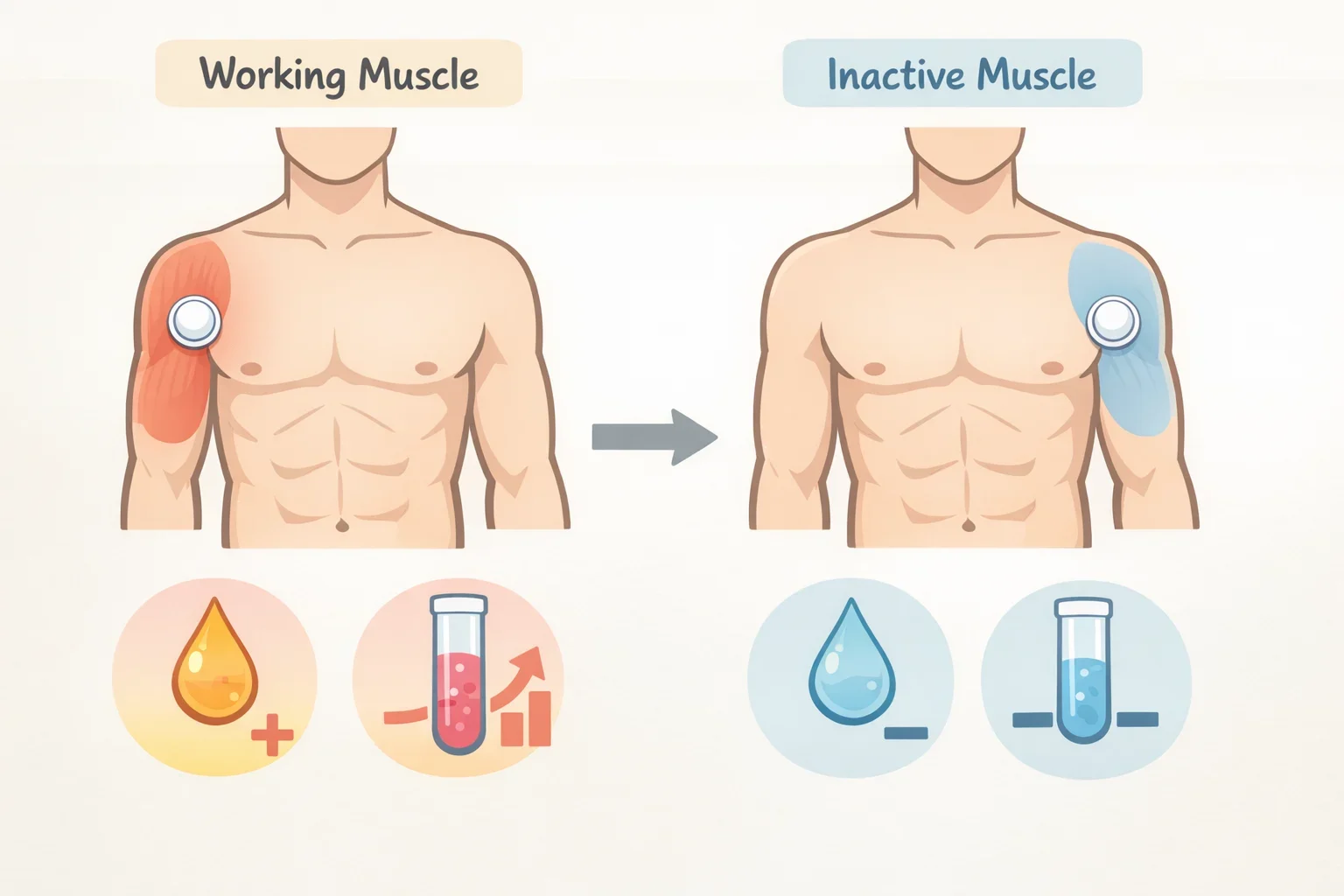
Lactate and pH readings depend heavily on where the sensor sits on the body. A study titled "A skin-interfaced microfluidic platform supports dynamic sweat biochemical analysis during human exercise," published in 2024, tracked cyclists across varying exercise intensity. Sweat pH collected from actively working muscle dropped as heart rate rose and tracked inversely with blood lactate, while sweat pulled from muscle that wasn't doing the work showed no such pattern (PubMed, 2024). That result came from one cycling protocol using colorimetric pH and lactate assays, not from every sport or sensor design, but it makes a practical point: a patch placed over a muscle group that isn't working hard may report numbers unrelated to the effort an athlete is actually putting in.
Glucose readings lag behind blood chemistry. Sweat glucose sits far below blood glucose, roughly 10 to 200 micromolar against much higher blood concentrations, and changes in sweat glucose can trail changes in blood glucose by about 10 minutes (PMC review).
Cortisol shows promise but limited real-world testing. Sweat cortisol, typically 8 to 50 nanograms per milliliter, is reported to correlate strongly with blood cortisol, though only four real-time cortisol-monitoring patches have been developed so far (PMC review).
None of this means a device reading "lactate" or "cortisol" is pulling an exact blood number. Sweat and blood levels are related but distinct, and how closely they track depends on the analyte, the collection site on the body, and the study behind the claim (PMC review; PubMed, 2024).
Why sweat readings still don't match blood tests
Researchers behind the skin-interfaced microfluidic band study put it plainly: the relationship between blood lactate and dynamic sweat biochemistry "remains poorly defined" for wearable engineering purposes (PubMed, 2024).
The review of non-invasive lactate detection published last year lists similar unresolved problems from a different angle: weak or inconsistent correlation with blood lactate, sensor biofouling, lag times in interstitial-fluid detection, and a lack of validation in real-world athletic settings (PubMed, 2025).
Fitness level appears to change the concentration or signal a sensor detects. In the same cycling study, pH and blood-lactate shifts showed up in participants who didn't exercise regularly, but not in those who already trained consistently. The researchers link this to physical fitness, though the finding needs replication before it should change how a trained athlete interprets readings (PubMed, 2024).
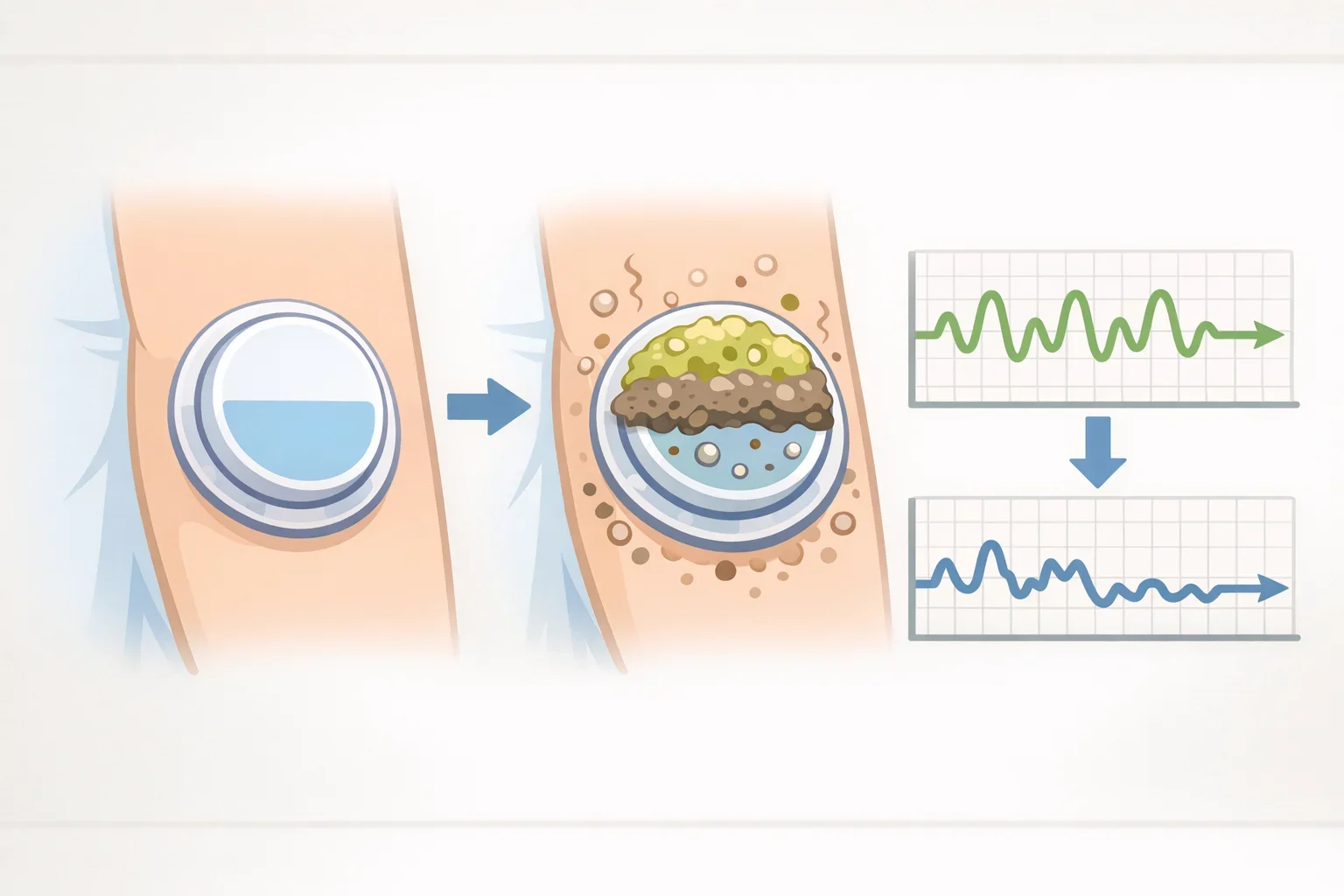
Wear time matters too. In a study titled "Lab on skin: real-time metabolite monitoring with polyphenol film based subdermal wearable patches," published in early 2024, the glucose-monitoring patch was evaluated over three days, the longest reported duration for that type of sensor at the time, while a separate lactate-sensing patch from the same research was worn for the duration of a workout (PubMed, 2024). The authors reported that biofouling, a buildup on the sensor surface that degrades accuracy, became apparent after about 24 hours. That finding doesn't establish a universal wear-time limit for every sweat wearable on the market, but it does show accuracy can shift the longer a sensor stays on the skin.
Barriers still separating wearable sweat analysis from the field
Environment changes both how much athletes sweat and the concentration or signal a sensor detects. Humid conditions increase sweat volume, and swimmers tend to sweat less than athletes in other sports, both of which affect biomarker readings in ways a single number can't sort out on its own (PMC review).
Sample sizes in the underlying research are still small. The sweat-rate belt study reported about 10% variation against a commercial reference collector, drawn from just five on-body tests: encouraging, but too small a group to call the technology broadly proven across body types, sports, or climates (PubMed, 2024).
Before choosing a sweat-sensing wearable, check three things:
- What it actually measures. A device's sweat-rate claim should be evaluated separately from a claim that it measures lactate, glucose, pH, or cortisol.
- Whether the validation is independent. Look for peer-reviewed testing data rather than internal manufacturer claims.
- Whether it's been tested in conditions like yours. Humidity, sport type, and sensor placement all change the concentration or signal detected, based on the research above.
What athletes should do with the data

The strongest current use case is sweat-rate tracking for hydration awareness, since it's the measurement with the clearest independent validation among the sources here (PubMed, 2024). Lactate, glucose, pH, and cortisol readings are being measured in research settings, but their relationship to blood values and their usefulness for field decisions varies by analyte, from pH readings that depend on sensor placement to cortisol patches still limited to a handful of prototypes (PMC review; PubMed, 2024). Treat sweat-rate numbers as hydration context, and bring any biomarker trend to a coach, athletic trainer, or sports dietitian for interpretation rather than acting on a single reading.
Stop exercise and seek qualified medical evaluation for any concerning symptoms during training, rather than waiting for a wearable to confirm a problem. If a sweat-sensing wearable fits your training, start with a device that reports sweat rate and discuss any biomarker readings with a coach or sports dietitian before treating them as a performance verdict. Hold off on drawing firm conclusions from lactate, glucose, pH, or cortisol numbers until larger, independent field studies establish how these readings perform across sports and conditions.