
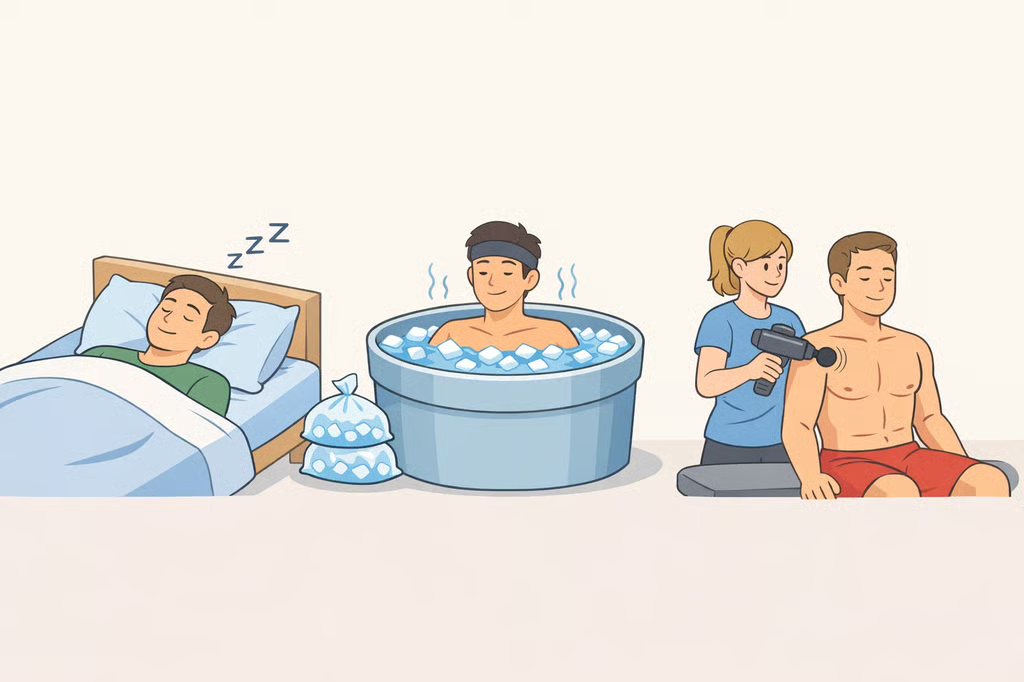
- Best Recovery Methods for Athletes: Sleep, Ice, Massage Guns
- How to judge a recovery claim
- Sleep for athletic recovery has the clearest evidence
- Ice baths for muscle recovery, and where compression fits
- Do recovery gadgets work? What massage guns can and can't do
- Matching post-workout recovery methods to the goal
Best Recovery Methods for Athletes: Sleep, Ice, Massage Guns
Among the best recovery methods for athletes, sleep extension and naps carry the clearest support in the research reviewed here, ahead of cold-water immersion, sleep hygiene changes, or massage guns. The authors of a 2023 systematic review of 25 intervention studies found sleep extension and naps were the most represented and effective strategies for improving athletic performance (2023 systematic review).
That doesn't settle the question so much as narrow it. A separate 2024 review focused on endurance athletes found no single recovery strategy, cold-water immersion or compression garments included, showed consistent benefit across studies, though a small number of trials flagged both as promising for training recovery specifically (2024 endurance-recovery review). Separately, a 2024 narrative review linked inadequate sleep to reduced strength, endurance, and cognitive function, plus higher injury risk (narrative review of sleep in athletes).
This piece compares what the research shows about sleep extension and naps, ice baths for muscle recovery, and massage guns, for three situations: recovering between training sessions, managing a short turnaround between competitions, and easing ordinary post-workout soreness. It skips nutrition and training-load management, and it isn't a ranking of every recovery product on the market.
How to judge a recovery claim
Recovery isn't one outcome. Studies track soreness, range of motion, strength, and next-day performance separately, and a method that helps one doesn't automatically help another (2024 endurance-recovery review).
Most research on endurance athletes has centered on nutrition supplements and compression garments, yet even there, no approach reliably improved outcomes across studies (2024 endurance-recovery review). That same review excluded sleep studies from its endurance-athlete analysis because too few trials met its criteria, even though sleep was identified as the most popular recovery strategy among the studies it drew from (2024 endurance-recovery review). The most popular recovery habit in that population turns out to be one of the least formally tested.
Sleep for athletic recovery has the clearest evidence
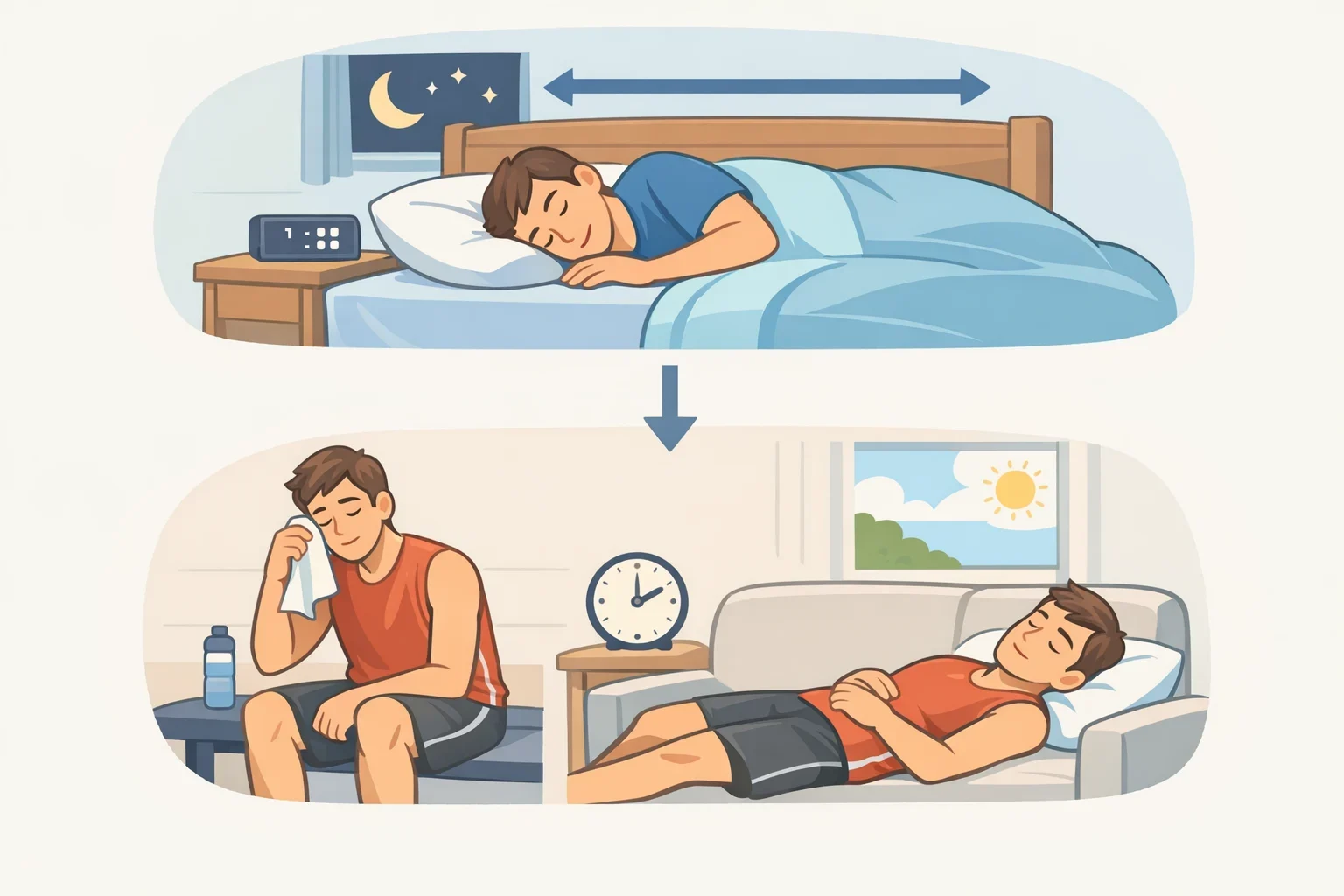
The 25-study review covered athletes ages 13 to 33, drawing on trials published between 2011 and 2021, and found sleep extension and naps stood out as the most represented and effective strategies for improving physical or cognitive performance (2023 systematic review).
Extending nightly sleep by 46 to 113 minutes over 3 to 49 nights improved performance in athletes who habitually slept around seven hours. Most studies got there by pushing time in bed to 9 or 10 hours, but the target was more actual sleep, not more time lying awake. Sample sizes were small, ranging from 9 to 31 athletes per study (2023 systematic review).
Naps of 20 to 90 minutes improved performance after a normal night's sleep and helped restore performance toward baseline following partial sleep restriction (2023 systematic review). That range is what the research actually tested, so it's the one with evidence behind it rather than a hard boundary.
Light manipulation and mindfulness showed promising early results in the same body of research, but the authors flagged that more studies are needed before drawing firm conclusions, leaving both a step behind sleep extension for now (same review).
The number worth checking isn't a fixed nine or ten hours in bed. It's whether sleep opportunity, meaning time actually available to sleep, matches what an athlete needs to feel rested. One study inside the review found elite athletes reported needing about 8.3 hours to feel rested, yet only 3% of them actually got that much (2023 systematic review). Closing that gap, through earlier bedtimes or more protected time in bed, is what the 46-to-113-minute extension findings above are aimed at.
Not everything sleep-related panned out. Sleep hygiene practices and removing electronics at night showed no measurable effect on performance or recovery in the reviewed studies, though that's based on very few trials, not proof these habits never help (2023 systematic review).
Ice baths for muscle recovery, and where compression fits
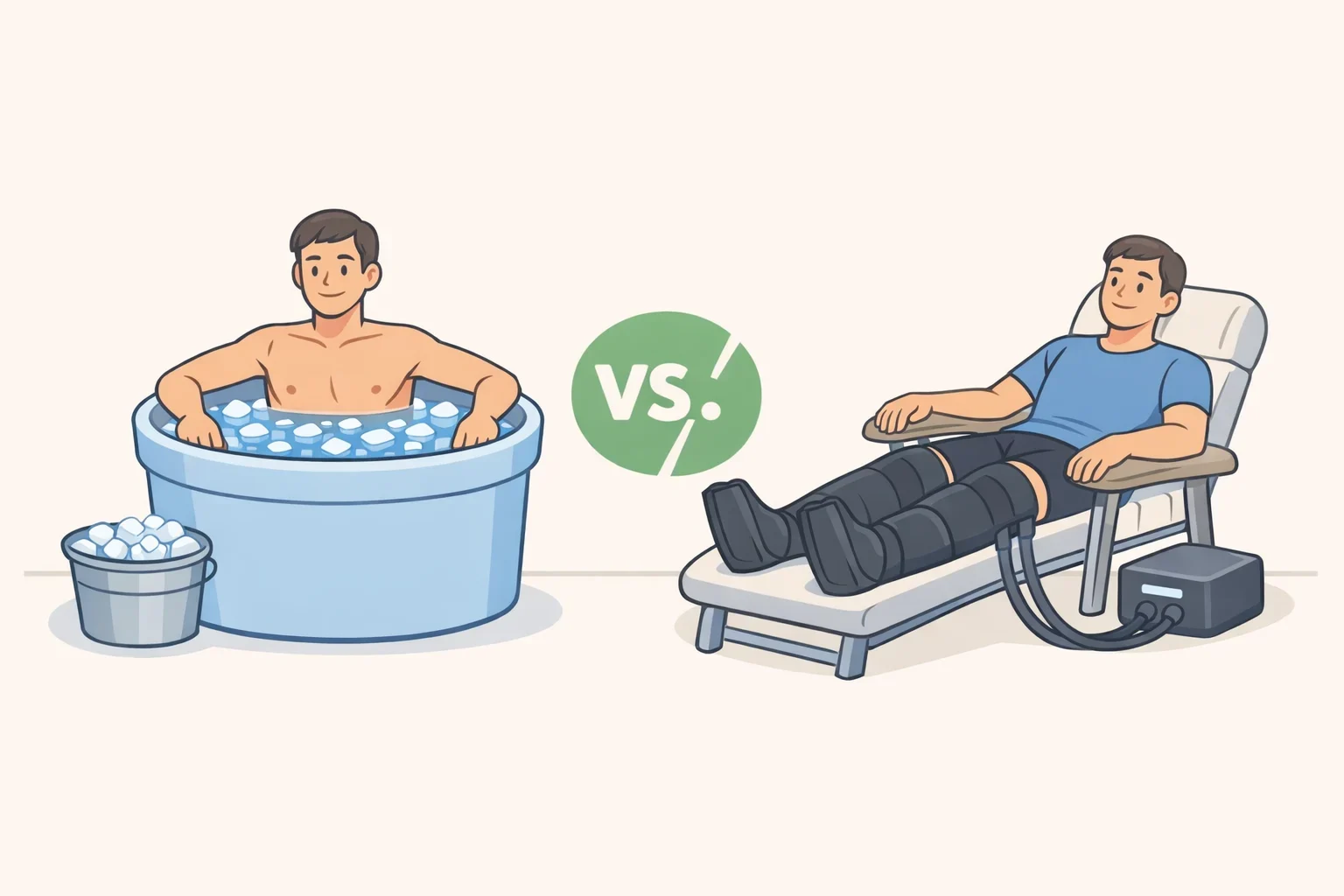
The main source here on cold-water immersion is the 2024 endurance-athlete review, which found a small number of studies flagged both cold-water immersion and compression garments as promising specifically for training recovery (2024 endurance-recovery review). Compression shows up here because the same review studied it alongside cold-water immersion, not because this article is built around compression gear.
"Promising" needs a qualifier. That review's overall conclusion was that no recovery strategy, cold-water immersion included, showed consistent benefit across studies or outcomes in endurance athletes (2024 endurance-recovery review). Compression garments produced mixed signals within individual trials: one study found cross-country runners had lower lactate concentration while wearing compression sleeves, yet those same runners had a shorter time to fatigue than the non-compression group in that comparison (2024 endurance-recovery review). A lower lactate reading, in that trial, didn't translate into better endurance performance.
As additional context, the 2023 sleep-intervention review found cold-water immersion had no measurable effect on sleep or subsequent performance and recovery, though that came from very few studies inside a sleep-focused analysis rather than a dedicated cold-therapy review (2023 systematic review). Naps, separately, positively affected muscle damage and inflammation markers in that same review despite showing no effect on heart-rate variability.
One combined intervention did improve muscle and joint soreness: pairing sleep hygiene, cold-water immersion, and full-body compression together produced that result (2023 systematic review). That's useful context for a short-turnaround competition, but because three tools were bundled together, cold water's individual contribution can't be pulled out of the finding. Athletes with circulation issues or other medical conditions should check with a coach or doctor before regular cold-water immersion, since this research doesn't address those situations.
Do recovery gadgets work? What massage guns can and can't do
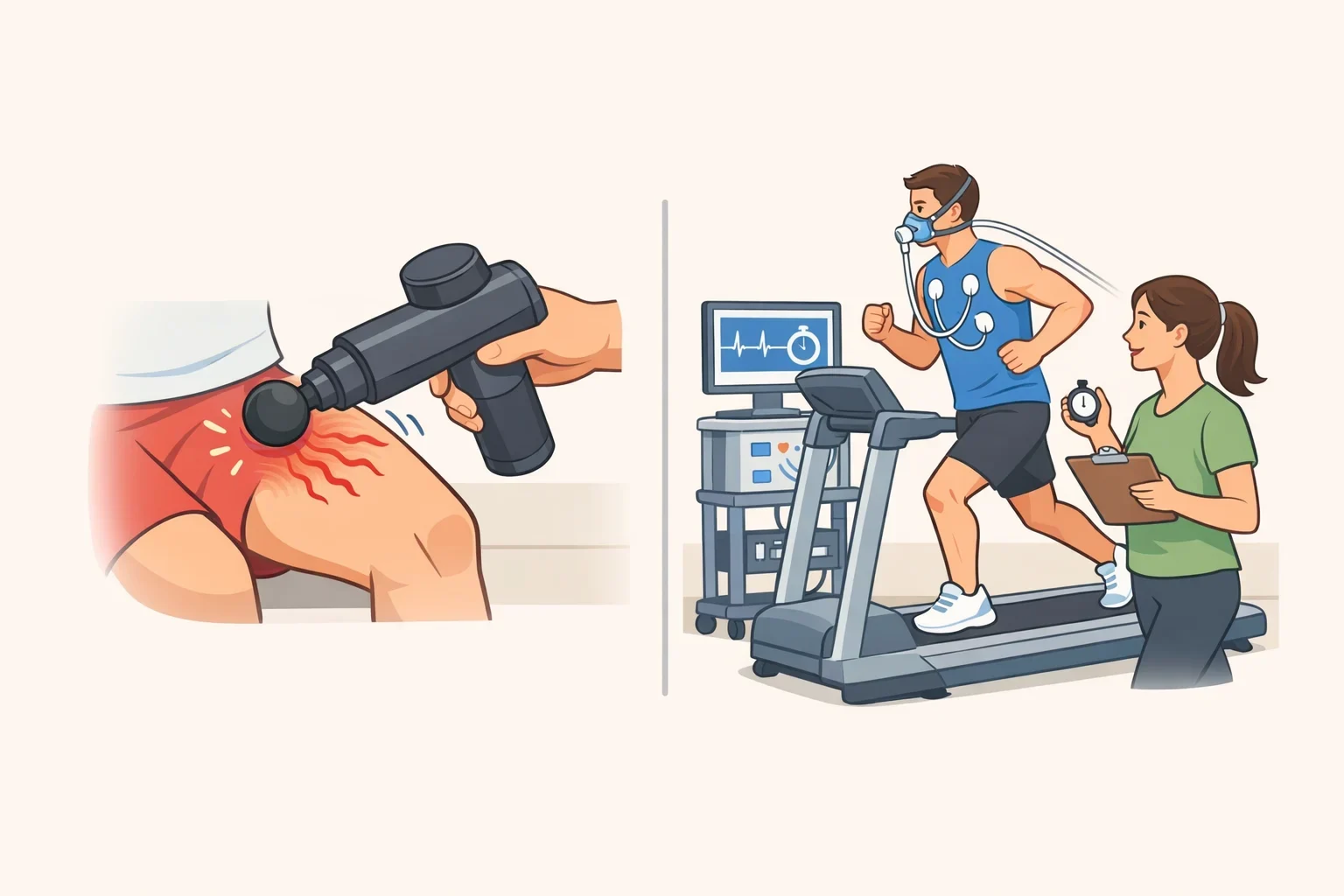
A review of 11 studies, spanning healthy and unhealthy populations rather than athletes exclusively, found massage guns could improve flexibility in muscles like the iliopsoas, hamstrings, and calf muscles, along with short-term range of motion and stiffness reduction (massage-gun review).
Two outcome categories point in different directions, and it matters which one applies to a given goal. Testing done after a fatigue protocol, meaning on a muscle that was already tired, linked massage guns to reduced stiffness, better range of motion, and even strength improvements (massage-gun review). Testing that measured live performance instead, covering strength, balance, acceleration, agility, and explosive movements, either showed no improvement or a decrease with massage-gun use (massage-gun review).
In practice, applying a massage gun to an already-fatigued muscle may ease stiffness and support range of motion, but the review didn't find that it improved acceleration, agility, or explosive output when tested directly. No differences turned up in contraction time, perceived exertion, or lactate concentration either (massage-gun review).
The evidence comes with caveats worth weighing. Ten of the 11 included studies had a moderate risk of bias and one had a high risk, and manufacturers use inconsistent frequencies, amplitudes, and applicator tips with no agreed usage parameters across the industry (massage-gun review).
For ordinary post-workout stiffness, meaning tightness that shows up before or after a session, a massage gun fits as a short-term comfort and mobility tool. The review lists situations where use may not be recommended, including recent scars, open wounds, fractures, blood-clotting concerns, and sensitive areas like the neck and spine, along with long, repeated sessions on one spot, generally over 30 minutes, which raises injury risk (massage-gun review). Athletes with any of those conditions should check with a doctor or physical therapist before using one.
Matching post-workout recovery methods to the goal
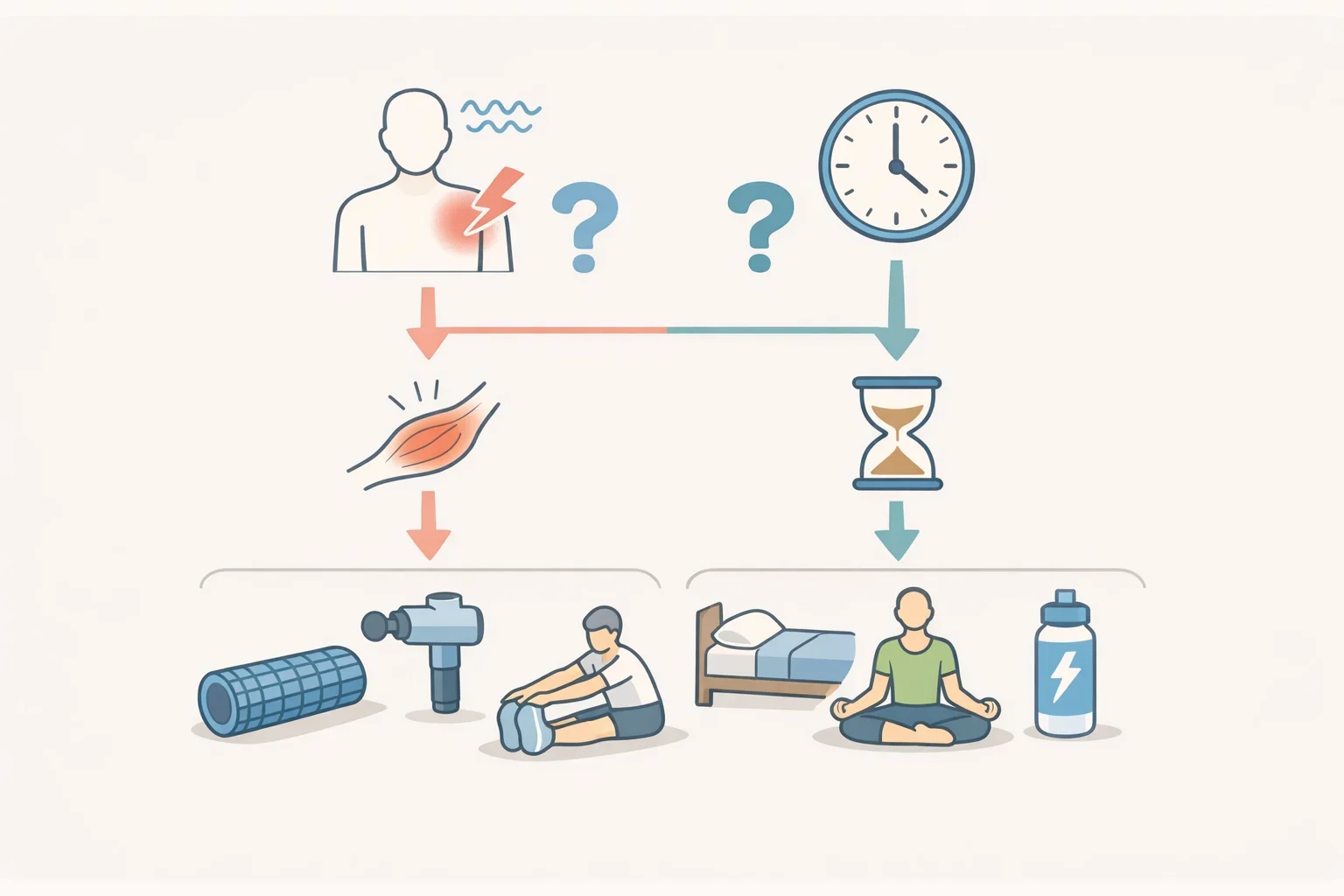
None of this adds up to one ranking to follow every day. It reads better as tools matched to specific problems, starting with whether sleep opportunity is the actual gap. Sleep tracking works as both a diagnostic and practical tool, according to the 2024 narrative review of sleep in athletes (narrative review of sleep in athletes), and comparing hours available for sleep against hours actually used is a reasonable place to start before adding anything else.
- Short sleep or accumulated fatigue: Extending time in bed toward the tested 46-to-113-minute range, or adding a 20-to-90-minute nap, has the broadest support of the methods compared here (2023 systematic review).
- Short turnaround between competitions: Cold-water immersion on its own hasn't shown consistent benefit; the clearest documented result came from combining it with sleep hygiene and compression, not from ice alone (2024 endurance-recovery review; 2023 systematic review).
- Stiffness or limited range of motion: A massage gun may ease a fatigued muscle and support short-term mobility, though it hasn't been shown to restore strength, speed, or agility (massage-gun review).
- Persistent or worsening symptoms: None of these tools are built to manage soreness that keeps building, pain that doesn't ease with rest, or fatigue that lingers beyond a couple of easy training days.
Begin by closing the sleep gap, since that's where the evidence collected here is strongest, and treat cold-water immersion or a massage gun as optional additions for a specific soreness or mobility goal rather than substitutes for sleep. If soreness intensifies, spreads, or doesn't respond to more sleep and lighter training, that's the signal to bring in a coach, athletic trainer, or physician instead of reaching for another recovery gadget.