
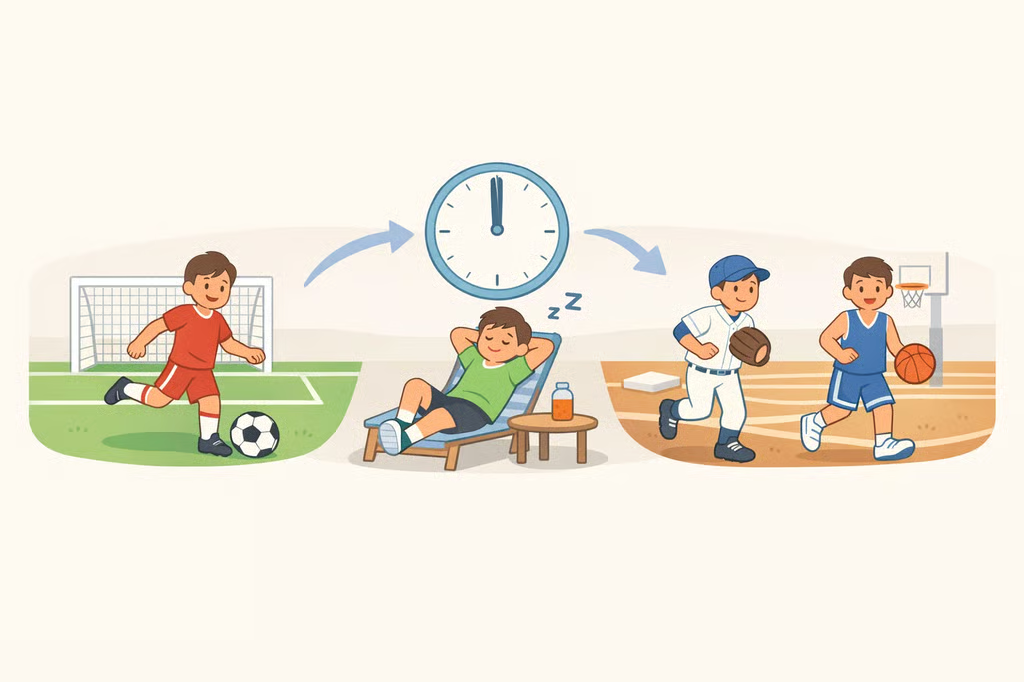
- Does playing multiple sports reduce youth athlete burnout and injury risk?
- Does playing multiple sports prevent youth sports injuries?
- How early sport specialization affects athlete burnout
- Benefits of multi-sport participation for young athletes
- Preventing overuse injuries in young athletes: the rest-and-scheduling rules that matter
- What to do next
Does playing multiple sports reduce youth athlete burnout and injury risk?
Does playing multiple sports reduce youth athlete burnout and injury risk? The evidence leans toward yes, but with a catch most youth sports schedules ignore: sport sampling only protects athletes when it's paired with actual rest. Without that, playing three sports can overload a young body just as easily as playing one.
A rapid review pooling 93 studies and 62,327 athletes found that early sport specialization, intensive training in a single sport for more than eight months a year before puberty, is tied to higher injury risk, worse physical performance, and no clear competitive payoff, according to research published last year. The stakes go beyond any single injury. More than 60 million kids in the U.S. play organized sports, yet 70% quit by age 13, with injury and burnout among the top reasons cited, AAP News reported in 2024.
This piece breaks down what "specialization" and "burnout" actually mean in the research, what the injury and burnout data say about playing multiple sports, and the specific rest-and-scheduling benchmarks pediatric sports medicine groups recommend. It's for parents, coaches, and young athletes trying to decide between committing to one sport year-round and keeping a rotation of activities going. The short answer isn't a clean yes; it depends on what fills the calendar once a kid signs up for more than one team.
Does playing multiple sports prevent youth sports injuries?
Researchers generally define early specialization as intensive training in one sport for more than eight months a year before puberty or age 14, with other sports excluded, according to the rapid review. A 2021 Delphi consensus of 17 experts broadens that definition to focused single-sport participation for most of the year that crowds out other activities, a clinical review notes.
The injury data lines up across multiple study types. In a systematic review of elite, professional, and Olympic athletes, all eight studies that addressed injury risk found lower injury risk among athletes who delayed specialization, according to a 2022 systematic review. A critically appraised topic that focused specifically on prospective studies, rather than retrospective surveys, concluded that specialization is a significant risk factor for overuse injuries across several youth sports, according to a review in the Journal of Athletic Training published last year.
The numbers get specific at the knee. Moderate-specialization athletes showed higher lower-extremity injury rates than low-specialization athletes, with a 95% confidence interval of 1.04 to 2.20, and high-specialization athletes showed an even steeper jump, at 1.12 to 3.06, the clinical review reports.
None of this proves that variety by itself lowers injury risk. It's an association, and researchers point to training volume and recovery time as the more likely drivers behind it, a distinction the AAP's clinical report frames around cumulative training load outpacing recovery. That mechanism matters more than the sport count on a kid's schedule, and it shapes everything in the sections below.
How early sport specialization affects athlete burnout
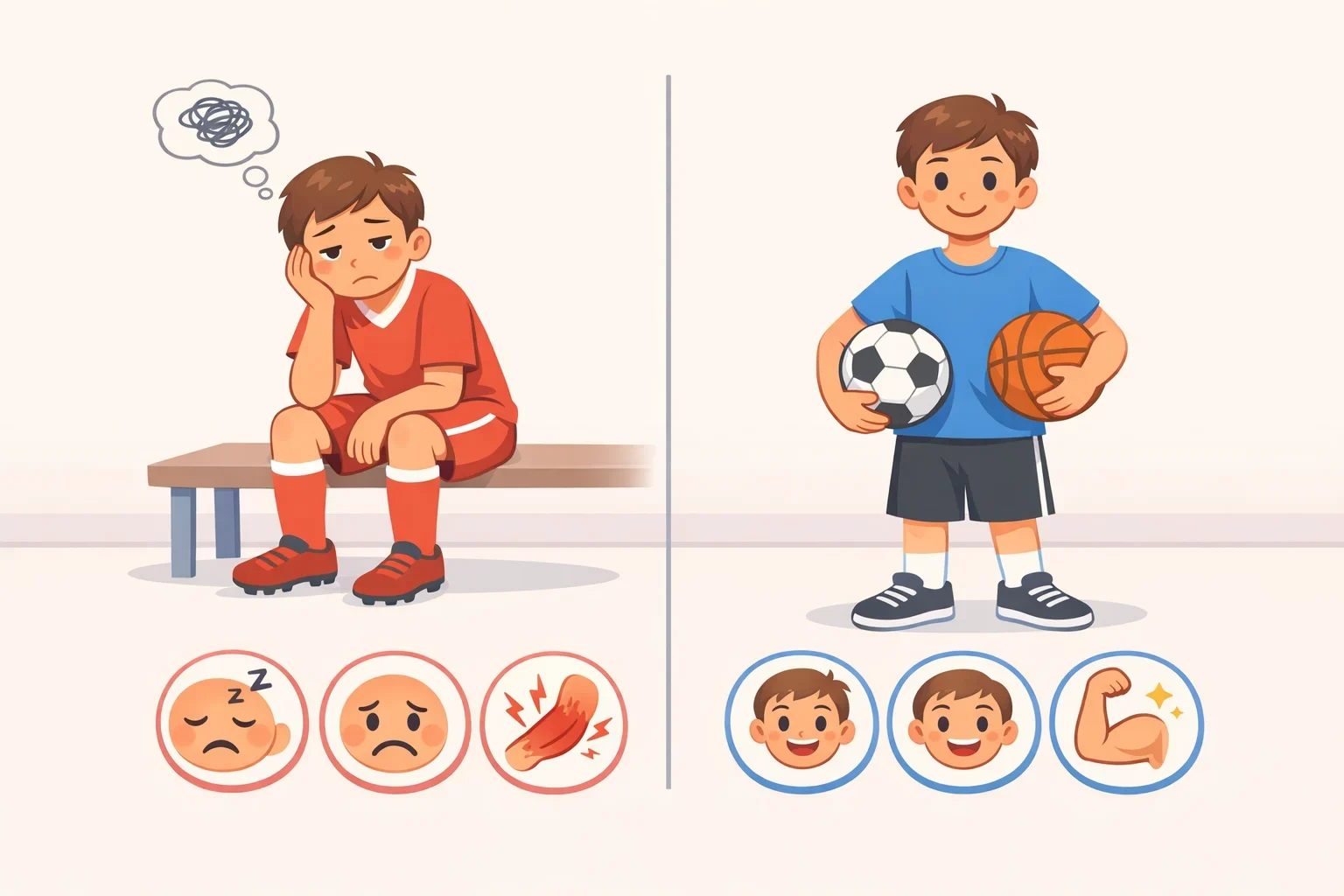
Overtraining and burnout aren't the same problem. Overtraining is the physical piece, and burnout is more the psychosocial piece, sports medicine physician Dr. Rebecca L. Carl told AAP News in 2024.
The two track together in practice. Highly specialized athletes reported worse fatigue, mood, and soreness than their multisport peers, even after researchers controlled for age, sleep, and training load, the clinical review found. Two studies cited in the AAP's clinical report found that athletes who specialized early were more likely to quit specifically because of burnout, not injury or dwindling interest.
Sport choice isn't the whole story, though. Stress that leads to burnout can stack from training load, sleep problems, academic pressure, social dynamics, and family expectations, AAP News reported in 2024. A kid could play a single sport with generous rest and never burn out, or juggle two sports with no downtime and burn out fast. The variable that matters is cumulative stress against recovery time, not the number on the team roster.
Benefits of multi-sport participation for young athletes
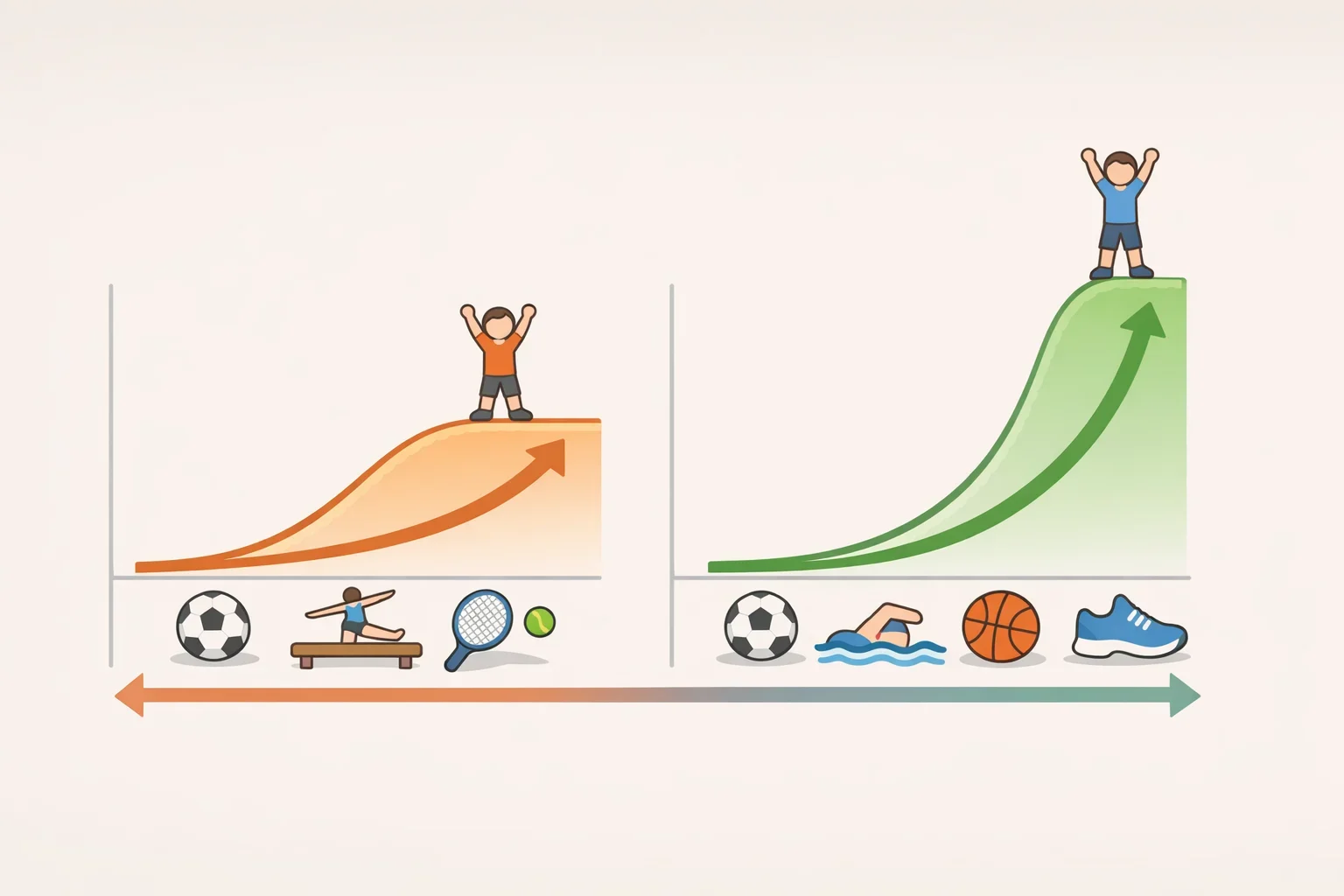
The usual justification for pushing early specialization is that it's the price of future success. That case is thinner than it sounds. The rapid review found no clear sport-success advantage tied to early specialization, according to the review authors.
In the elite-athlete systematic review, seven of nine studies found performance benefits from specializing later, and only marathon running and soccer showed an edge for early specialization, the 2022 review found. That same review found most sports showed better elite-level outcomes tied to youth multisport participation, though the authors caution the evidence relies heavily on retrospective, survey-based data rather than tracking athletes forward in time.
The AAP's clinical report directly challenges the idea that overtraining is the most effective path to elite performance, AAP News reported in 2024, and the accompanying clinical review states that clinicians are "encouraged to support multisport participation in childhood and adolescence," according to the review. Families weighing early commitment against injury and burnout risk should know the performance argument for specializing young holds up for very few sports, with soccer and marathon running as the narrow exceptions.
Preventing overuse injuries in young athletes: the rest-and-scheduling rules that matter
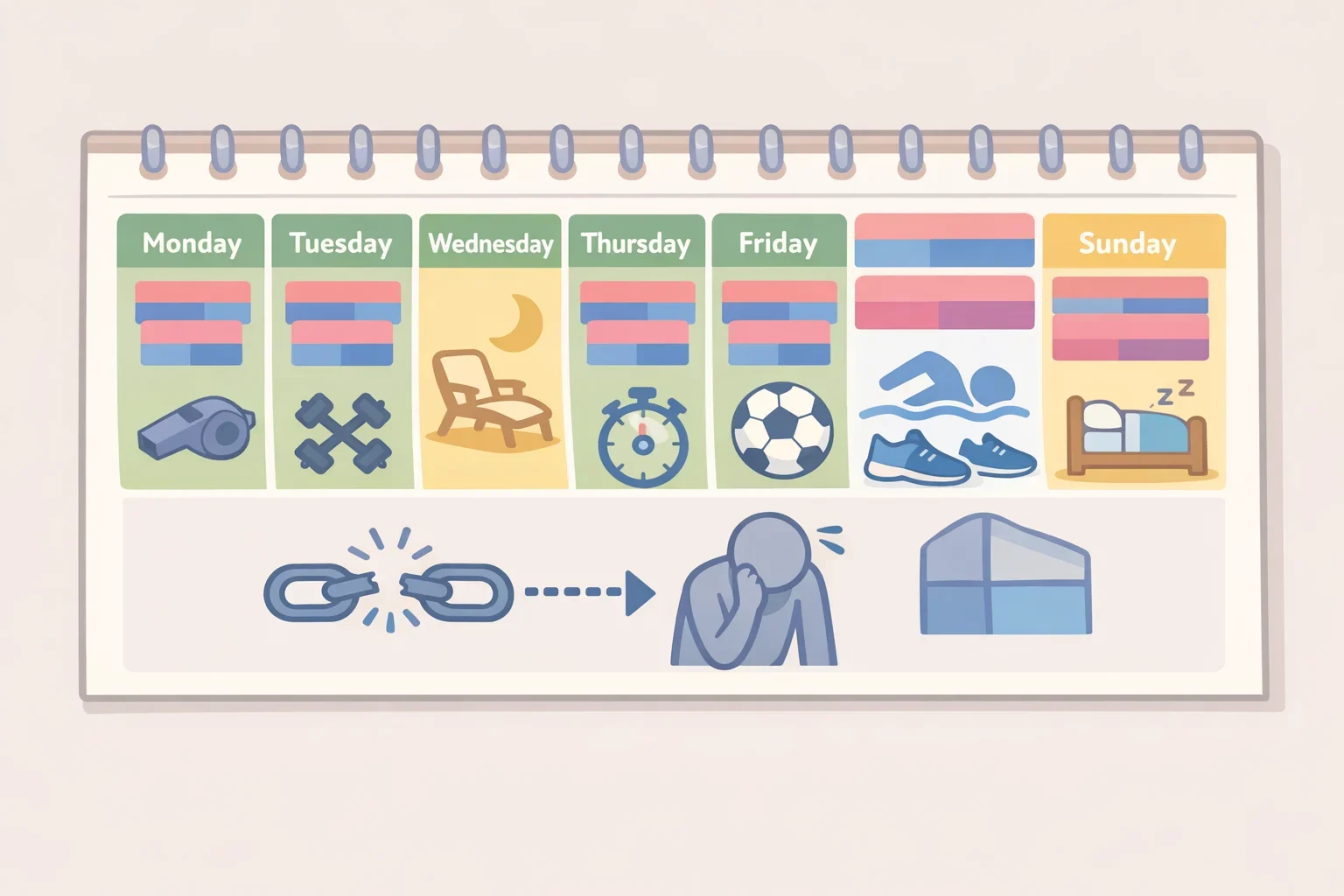
Signing a kid up for two or three sports doesn't automatically protect anything. Playing on multiple teams at the same time may create excessive physical stress if the schedules overlap and wipe out rest days, the AAP's clinical report warns. That report recommends young athletes play no more than one sport per day and take at least one full day off per week from all organized sport activity, plus two to three months away from each specific sport annually.
AAP News, summarizing the same clinical report, frames the weekly rest recommendation slightly differently: pediatricians are encouraged to have athletes take one to two days off per week from competition and sport-specific training, on top of that seasonal two-to-three-month break, AAP News reported in 2024. Either way, the floor is one rest day a week, and going without any is the pattern to watch for.
Training-volume guidelines add a ceiling on top of the rest days. Current recommendations cap primary-sport participation at no more than eight months a year, and weekly organized-activity hours shouldn't exceed the athlete's age in years, with a hard cap at 16 hours a week, according to the rapid review. Practices, games, tournaments, and private lessons or clinics all count toward that weekly total, which is where multisport schedules quietly go wrong. A travel soccer team practicing four evenings a week plus weekend games, layered onto a club volleyball schedule with its own weeknight practices and weekend tournaments, can easily push a 12-year-old past 16 hours without a single day off, even though the kid is technically "playing multiple sports."
Most families aren't tracking any of this. More than 80% of parents don't know these training-volume recommendations exist or understand the risks tied to specialization, the rapid review found. Professionalized youth sports culture gets much of the blame for the pressure to specialize and overtrain in the first place, AAP News reported. AAP guidance points toward a specific protective pattern instead: delayed exclusive specialization, a scheduled rest day every week, gradual increases in training volume, and coordination between parents and coaches so that two team calendars don't quietly erase the athlete's only day off.
What to do next
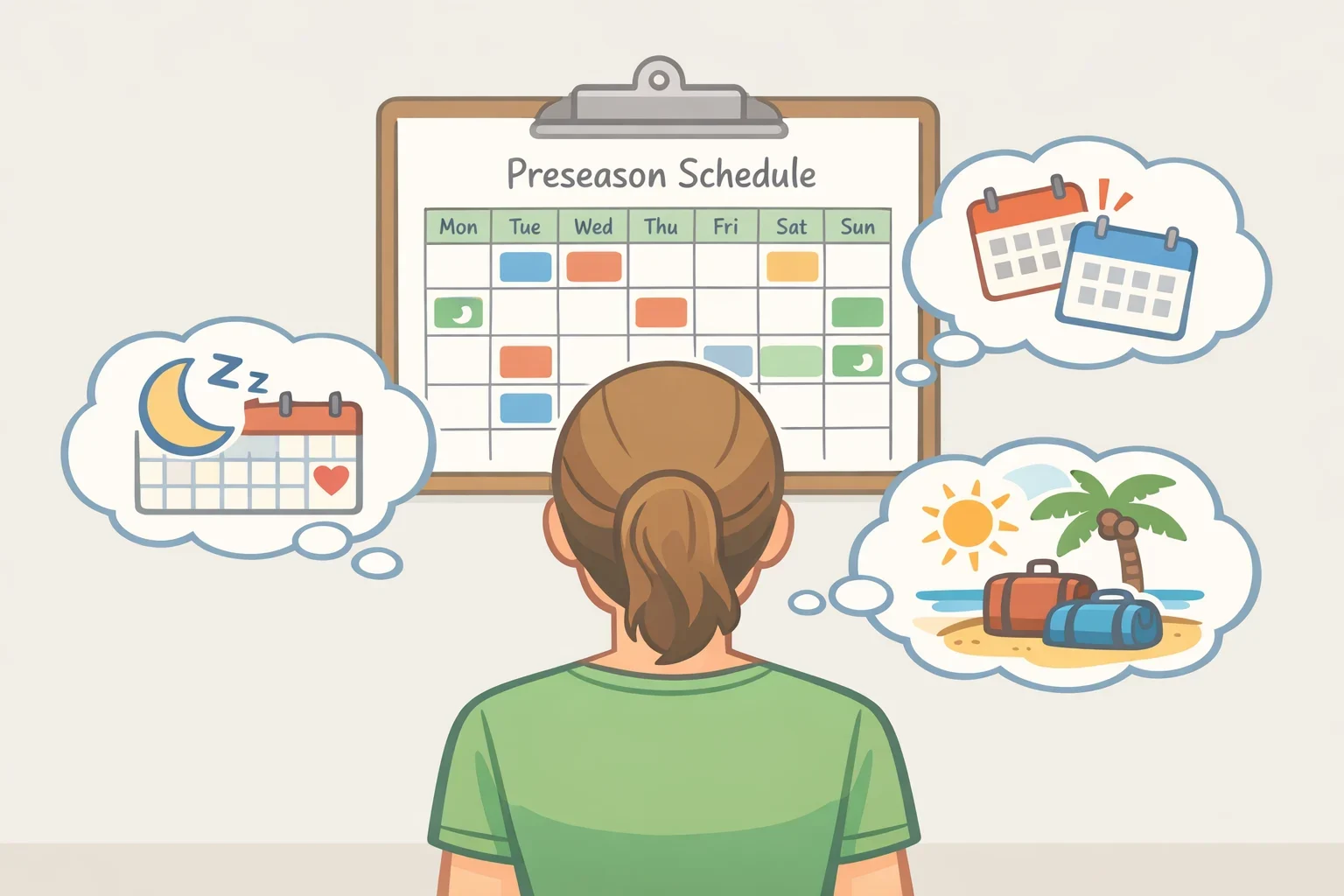
Playing more than one sport doesn't guarantee protection from overuse injury or burnout. Overlapping team schedules that erase every rest day can cancel out whatever benefit sport variety would otherwise offer, no matter how well-rounded the season looks on paper.
If an athlete complains of nonspecific muscle or joint pain, ongoing fatigue, mood changes, or slipping grades, the AAP flags those as signs to watch for overtraining or burnout, not confirmed diagnoses. That's a cue to pause, pull up the week's actual schedule, and check whether practices, games, and travel are stacking without a real rest day anywhere in sight.
Parents and coaches can start with three concrete checks: build in at least one day off per week from all organized sport, avoid letting two teams' schedules overlap on the same days, and plan two to three months away from each individual sport every year. Bring training volume and any burnout symptoms up directly with a pediatrician or athletic trainer at the next preparticipation exam. That conversation, not the number of sports on the schedule, is what actually determines whether multisport participation is protecting the athlete or quietly overloading one.