
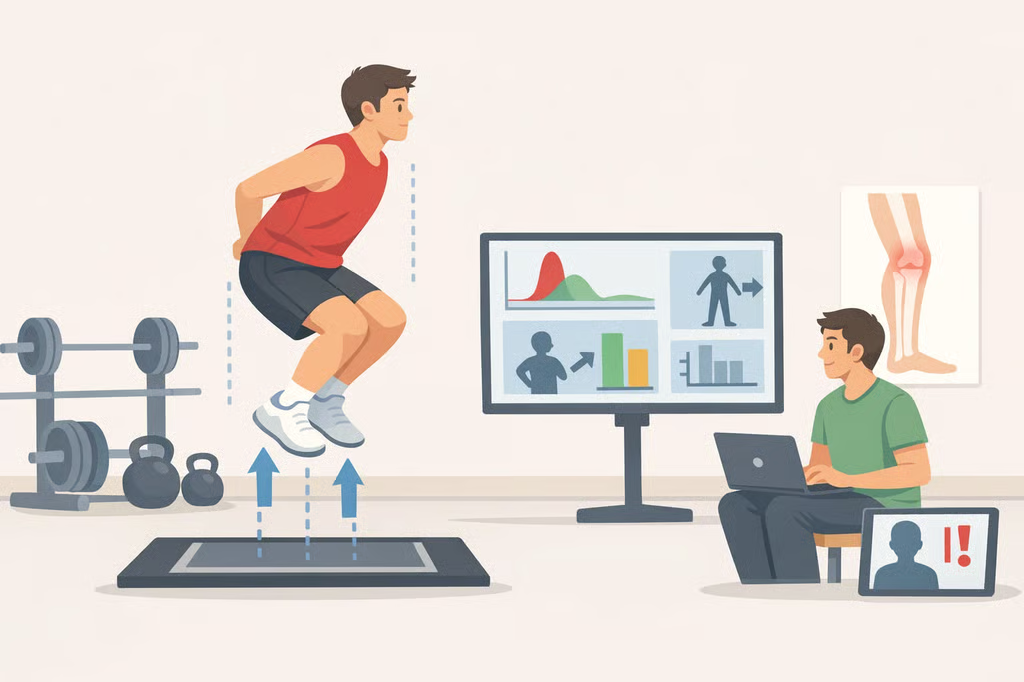
Vertical Jump Test Injury Risk: What Yale's Study Found
A new study from Yale Sports Medicine found that a quick vertical jump on a force plate produced data that closely tracked results from two long-standing injury-risk screens in more than 100 NCAA Division I athletes. The research, published in the Journal of Strength and Conditioning Research, does not show that the jump test can identify which athletes will actually get hurt, Yale School of Medicine reported two weeks ago. It shows the test lines up with tools clinicians already trust, which matters because those older screens are slow.
The stakes are real. Between 100,000 and 200,000 athletes in the United States tear an ACL every year, and recovery often means up to a year of rehab, according to Yale School of Medicine. That's why sports medicine researchers keep chasing a faster way to flag risky movement patterns before an injury happens rather than after.
This matters for athletic trainers, coaches, physical therapists, and any athlete rehabbing an ACL who might see a force plate show up at practice or in a follow-up appointment this season. The rest of this piece breaks down what the Yale data actually shows, how it compares to what the broader research says about jump testing and ACL risk, and where the evidence draws a hard line between correlation and prediction.
How force plate jump tests screen for risky landing mechanics
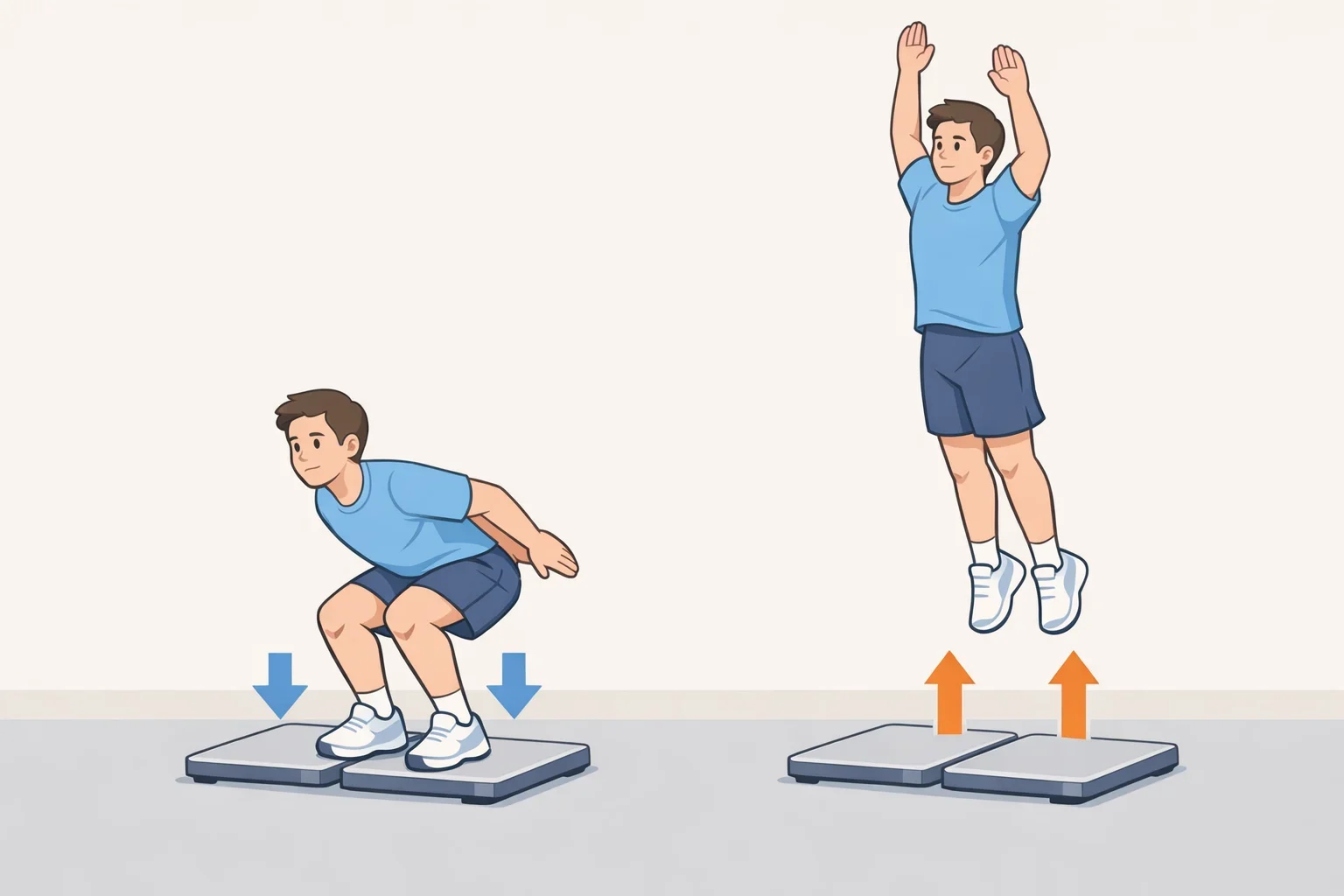
The test itself is simple. An athlete stands on a portable dual force plate, essentially an advanced electronic scale, and performs a countermovement jump: a quick dip followed by an explosive vertical leap. The plates capture thousands of data points per second on how each leg loads and unloads, according to Yale School of Medicine. Elite training centers already use this same jump to monitor athlete power and fatigue, so the equipment and skill were nothing new. What Yale wanted to know was whether the data it produced could substitute for two slower, more established screens.
The first of those screens, the Landing Error Scoring System, has an athlete jump off a 30-centimeter box, land, and immediately rebound into another vertical jump while a clinician reviews video footage afterward and scores nine specific movement errors, including whether the knees cave inward on landing, Yale School of Medicine explains. The second, the Y-balance test, has an athlete stand on one leg and reach the opposite foot as far as possible in three directions. A difference of more than 4 centimeters between the left and right legs signals a muscle imbalance tied to a 2.5 times higher injury likelihood in the population Yale studied.
Researchers recruited more than 100 Division I athletes from Yale's football, women's soccer, and women's lacrosse programs, three sports with notably high ACL injury rates, and had them complete the force plate jump alongside both traditional screens during off-season training, per Yale School of Medicine. Athletes who scored worse on the video-based landing assessment also showed significantly higher "landing stiffness" on the force plate data. Landing stiffness describes a body that isn't absorbing impact through the muscles, so the shock of landing travels straight into the bones and joints instead.
The pattern compounded from there. The more movement errors an athlete accumulated on the LESS, the more chaotic and asymmetrical their force plate jump data became, Yale School of Medicine found. That's a meaningful result, but it's worth being precise about what it proves: the force plate jump correlated with two existing screening tools measured at the same point in time. It did not track these athletes forward to see who actually tore an ACL.
Can a vertical jump test predict injury risk? What the broader evidence shows
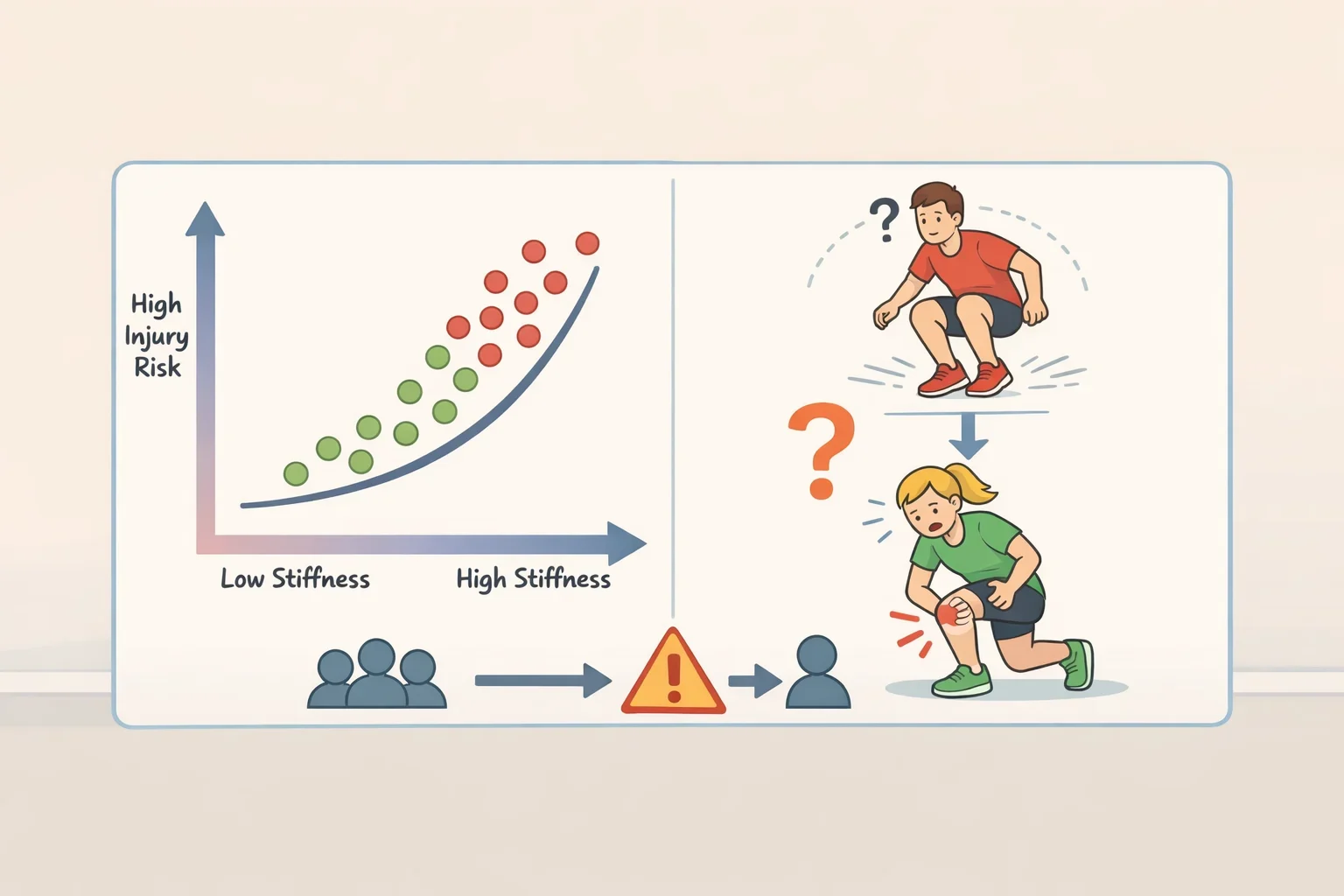
The biomechanical logic behind stiff landings is straightforward. Liz Gardner, MD, an associate professor of orthopedic sports medicine and the study's principal investigator, said stiff landings mean the body isn't using its natural shock absorbers, the hamstrings, glutes, and quadriceps, to dissipate energy, Yale School of Medicine reported. When an athlete lands hard instead of bending softly through the hips and knees, that force transfers directly into the knee joint, loading the ACL.
Prospective research outside Yale offers a more complicated picture of whether that mechanism actually predicts injuries. A study following 264 male youth soccer players found that higher vertical stiffness during a drop jump, a different test than Yale's countermovement jump, was associated with a higher risk of later acute non-contact knee injury, with an odds ratio of 1.68, according to PubMed. But the same researchers reported that vertical stiffness and related variables showed "unusable" to "weak" predictive accuracy on their own, with area-under-curve scores between 0.568 and 0.663. Their conclusion was blunt: these measures aren't sensitive enough to predict which individual player gets hurt, though they can point to useful training targets.
A separate study of 322 elite female Australian football and soccer players tracked for 18 months found something more encouraging, and more limited. Researchers built an internally validated model combining countermovement jump peak take-off force, dynamic knee valgus, and prior ACL injury history that classified injured versus uninjured athletes with 78% accuracy, PubMed reported. That result was based on just 15 ACL injuries across the study group, a small number that limits how far it can generalize. Notably, leg-to-leg asymmetry on the jump test itself, the same kind of asymmetry Yale's study flagged, showed no association with future ACL injury in this cohort.
A scoping review of ACL screening tools puts both findings in context. Predicting a future injury in a complex, dynamic system based on a single screening test is "methodologically challenging," and the literature on jump tests and ACL risk remains "highly controversial," according to PubMed. A separate meta-analysis of biomechanical risk factors in non-elite runners found much the same thing: after testing more than 100 discrete measures, most showed no meaningful link to injury at all, per PubMed. Jump metrics can correlate with risk in specific groups under specific conditions, but nothing in the current research supports treating one jump score as a verdict on an individual athlete's knee.
How jump tests support ACL return-to-sport decisions
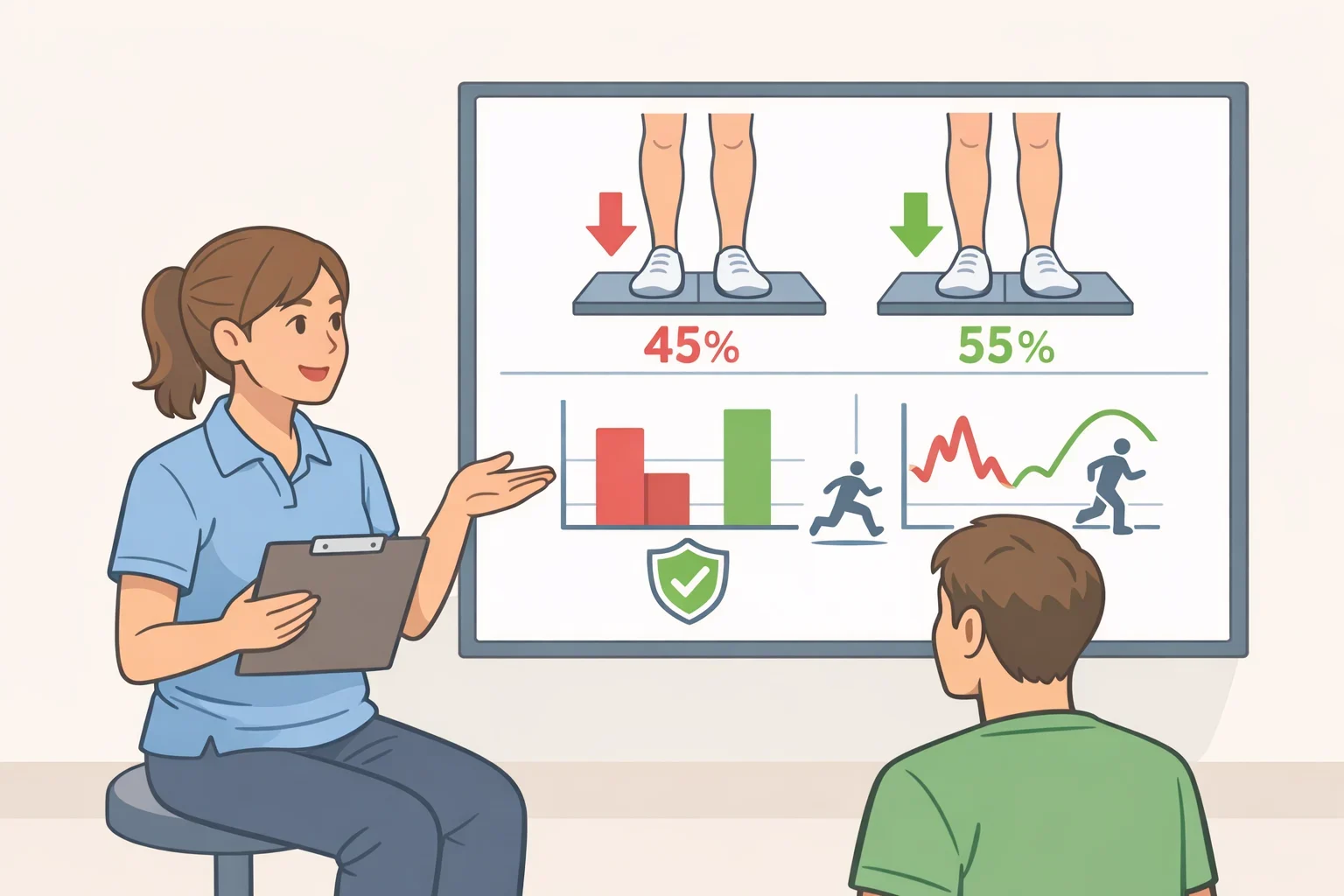
Where force plate testing looks most useful right now is in supporting decisions clinicians are already making, not in forecasting who gets injured next. The equipment has become increasingly common in athletic training rooms, physical therapy clinics, and sports medicine offices, including some at Yale, Yale School of Medicine noted. That matters because standard post-surgery follow-ups are often limited to range-of-motion checks, manual muscle testing, or basic hops and squats, none of which mimic the chaotic, high-force demands of actual competition.
For an athlete recovering from ACL reconstruction, a countermovement jump on a force plate gives a clinician objective, immediate data on strength and left-right symmetry, according to Yale School of Medicine. That data can inform a return-to-sport conversation and reduce the subjective guesswork that sometimes leads to premature clearance and reinjury. Yale researchers were explicit that the test isn't meant to replace a hands-on clinical exam. Its value, as described, is sorting large groups of athletes quickly so clinicians can flag who needs closer evaluation.
That's a narrower claim than "predicting injury," and it's the one the current evidence actually supports.
What to do with a jump test result
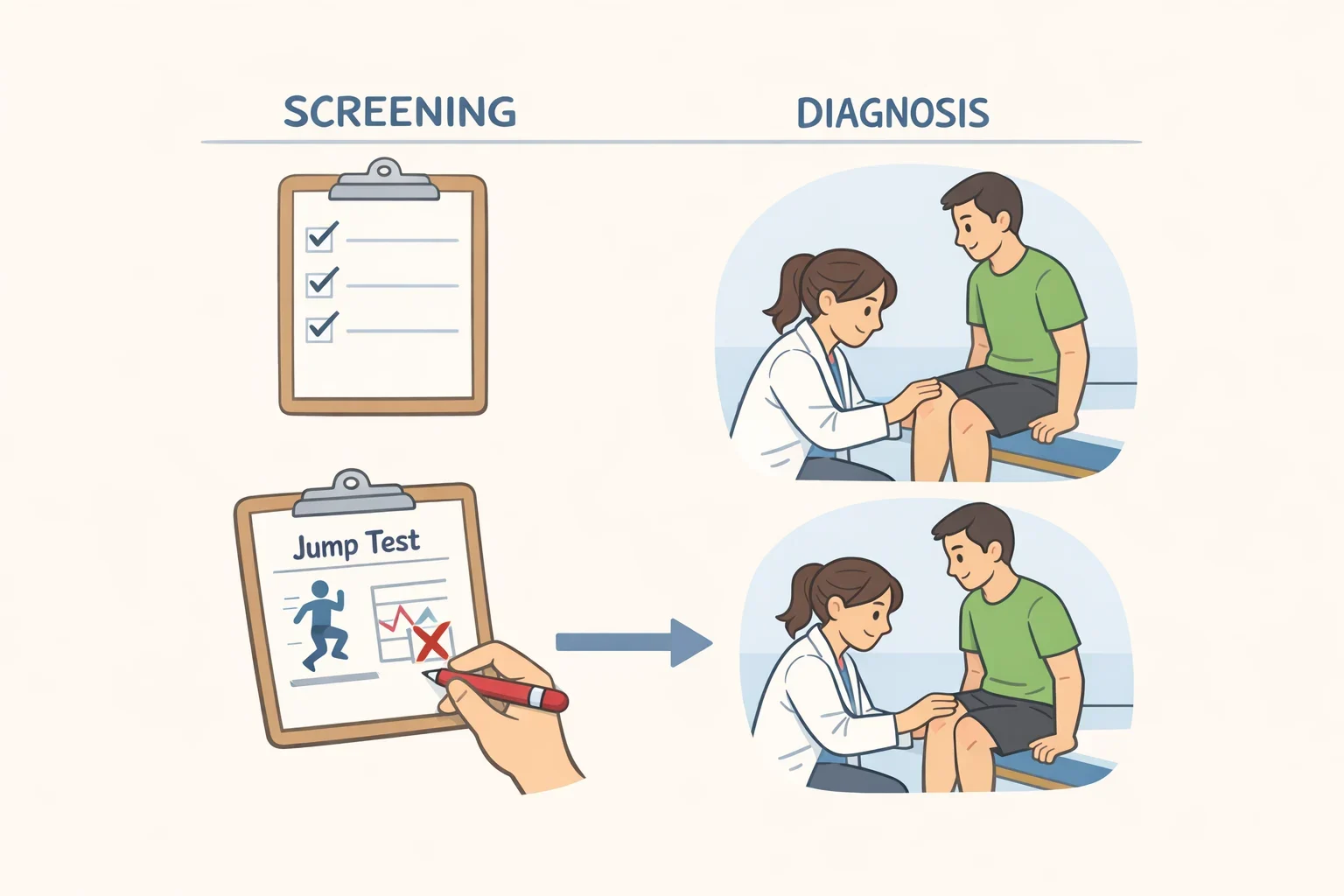
Treat a force plate jump test result as one data point, not a diagnosis. If a coach, athletic trainer, or clinic offers this screening, ask how the results will be used: as a trigger for a closer movement assessment, or as part of ongoing ACL rehab monitoring. Either use is reasonable. Neither should be presented as a forecast of who will or won't get injured.
Anyone dealing with knee pain, swelling, instability, or a prior ACL injury needs a hands-on evaluation from a physical therapist, athletic trainer, or sports medicine physician. A single jump score, however sophisticated the technology behind it, isn't a substitute for that assessment when deciding whether a knee is ready to handle the demands of competition again.