
- When to Stop Running With Achilles Pain: A Safety Guide
- Signs of Achilles tendon injury that mean stop now
- Achilles soreness vs. tendon injury: when a routine evaluation makes sense
- When to stop training with Achilles tendon pain
- What evaluation and treatment usually involve
- Getting back to running after Achilles pain
When to Stop Running With Achilles Pain: A Safety Guide
Pain at the back of the ankle or just above the heel doesn't always mean the same thing, and pain alone can't tell you which one you're dealing with. Because symptoms by themselves can't identify the underlying cause, the safer approach is to use how the pain behaves and how your leg functions to decide whether to stop, modify activity, or get evaluated. Knowing when to stop running with Achilles pain comes down to sorting the symptom into one of three responses: stop and seek prompt medical evaluation, stop the activity and schedule a non-urgent visit, or modify training and monitor closely. Athletes aren't equipped to tell a mild tendon irritation from a partial tear by feel alone, so the goal here isn't self-diagnosis. It's picking the safest next move.
Achilles tendon pain is common in active people, and about 24% of athletes develop an Achilles tendon injury over their lifetimes, according to Cleveland Clinic. Waiting out symptoms tends to make the treatment process longer, the same source notes. Initial treatment for tendon pain short of a full rupture is usually nonoperative, built around activity changes, physical therapy, and progressive strengthening (HSS). The exceptions, and what a longer recovery looks like, come later, once you know which path applies to what you're feeling right now.
Signs of Achilles tendon injury that mean stop now
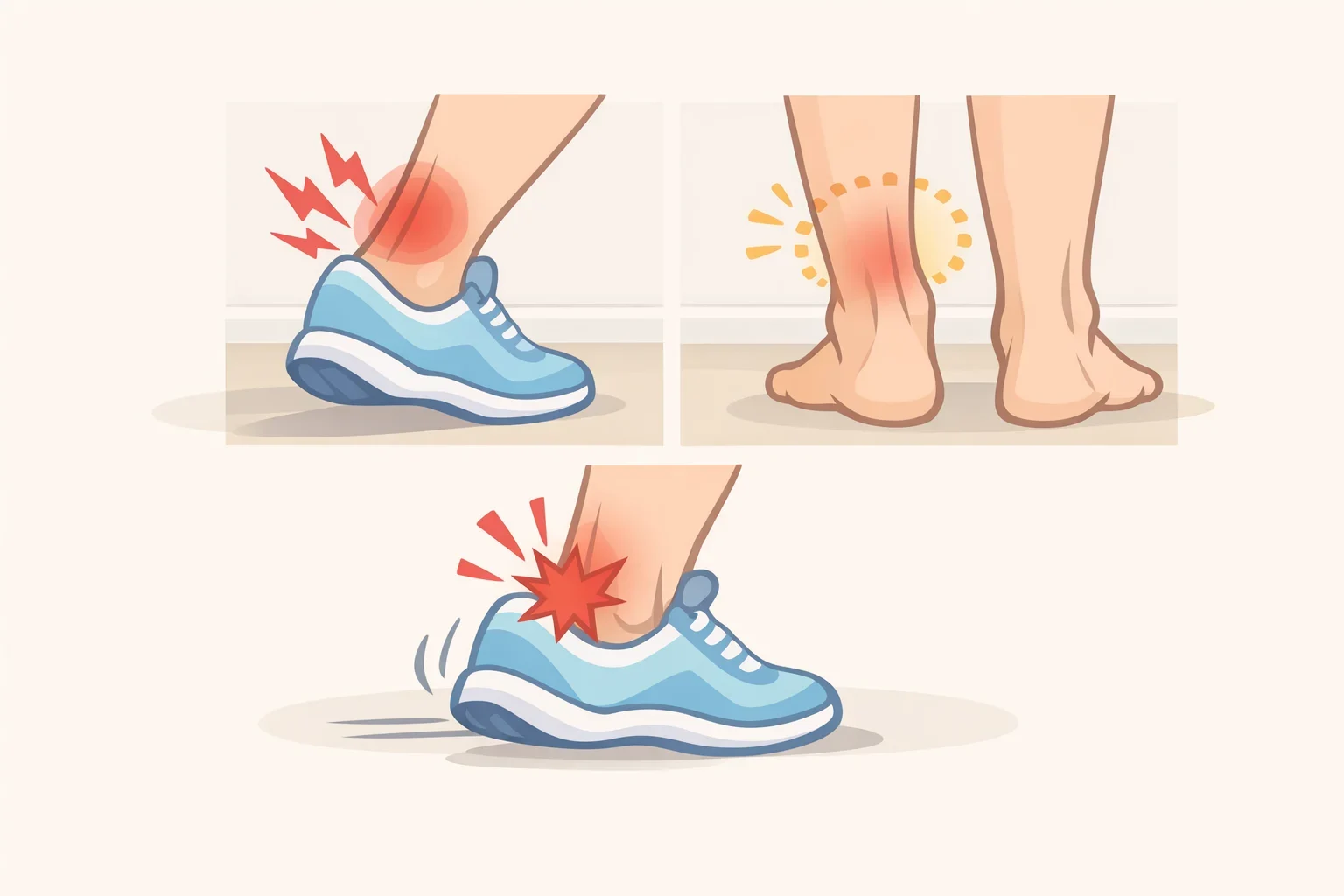
A handful of symptoms point away from ordinary soreness and toward a possible tendon rupture. According to Mass General Brigham, watch for:
- A popping sound at the moment of injury
- A feeling like being kicked in the calf
- Sudden swelling, bruising, or pain at the back of the ankle during activity
- Instability or difficulty walking, especially on an incline or decline
Any one of these calls for stopping activity and seeking prompt medical evaluation. A rupture doesn't automatically mean surgery: treatment can range from rest and immobilization to surgical repair, depending on how badly the tendon is damaged, plus the specifics of the case and medical history, and a qualified clinician needs to grade that severity, not the athlete (Mass General Brigham). A tear can also happen during something as low-key as walking if pre-existing Achilles tendinopathy is already present, so a low-intensity setting doesn't rule out a serious injury (HSS).
Achilles soreness vs. tendon injury: when a routine evaluation makes sense
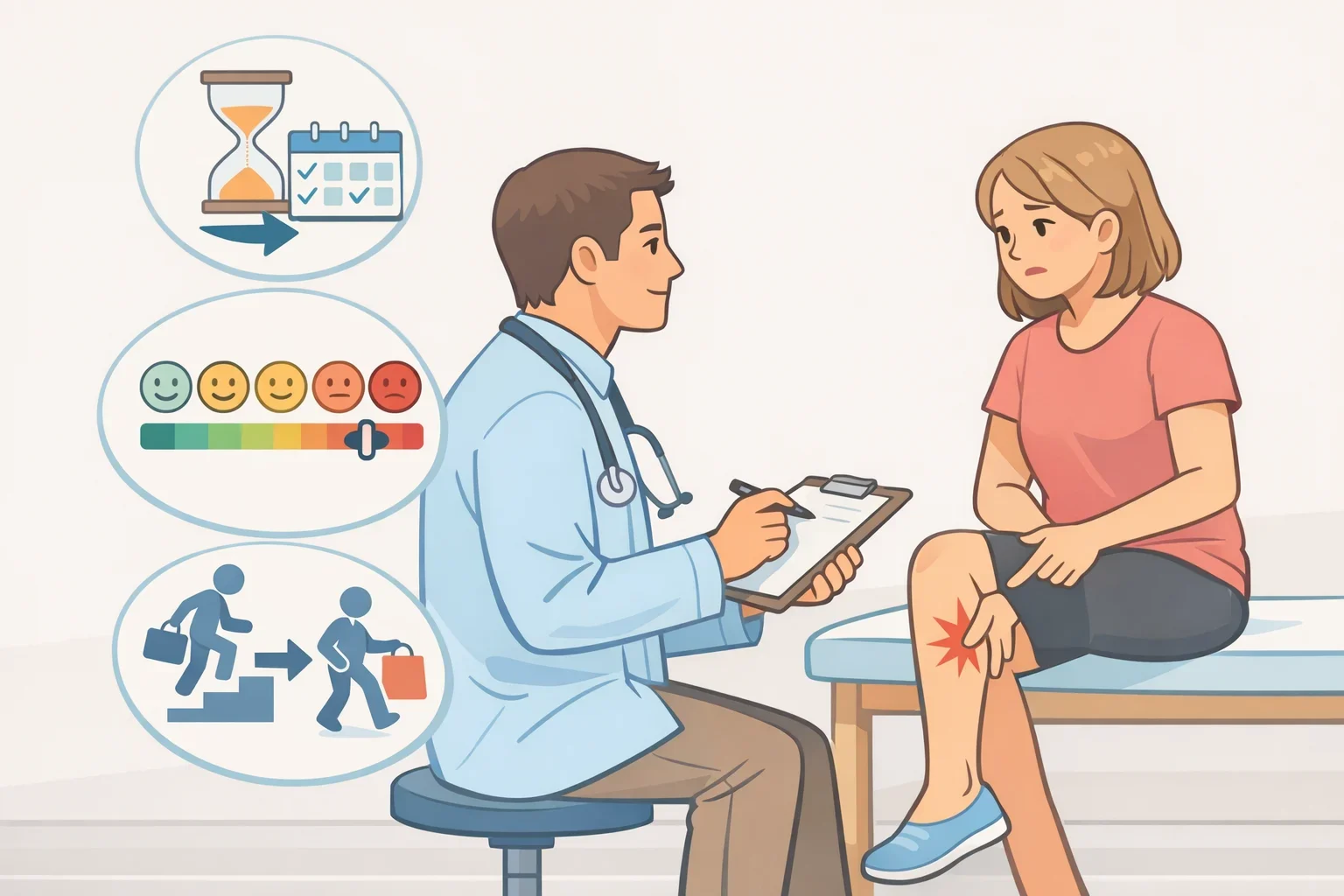
For symptoms without any of those rupture warning signs, this article uses two cautious options: a non-urgent evaluation, or modifying training while monitoring closely. Persistent pain lasting weeks or months that limits activity level is a reason to see a specialist, and pain that's severe from the start or doesn't improve after a few weeks of rest warrants a call to a provider or a visit to urgent care (HSS; Cleveland Clinic).
Foot and ankle orthopedic surgeons and sports medicine physicians, working alongside physical therapists, frequently manage this kind of pain, though a primary care physician can often handle early cases (HSS). There's no need to track down a specialist before a first appointment; any of those providers can start the workup.
When to stop training with Achilles tendon pain
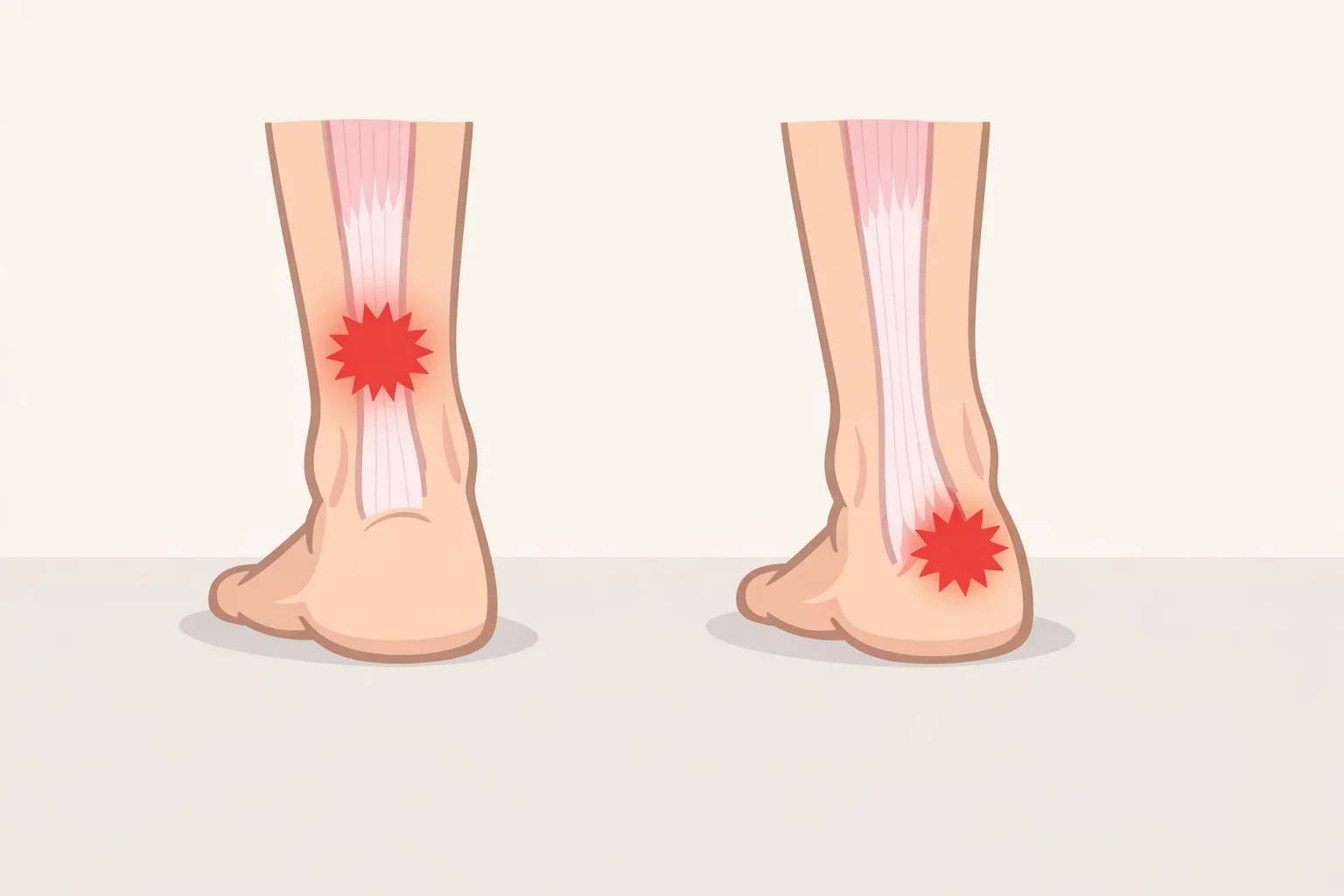
Achilles pain shows up in two different spots, and it's worth knowing which one applies, since not every finding below covers both equally. Pain a few centimeters above where the tendon meets the heel bone is called non-insertional, or midportion, tendinopathy, while pain right at the heel attachment is insertional tendinopathy (HSS). Both get initial nonoperative treatment, but some of the research on exercise programs, covered below, applies specifically to the midportion type.
If you're wondering whether you should run with Achilles tendon pain that shows up only during a specific activity, like running, jumping, or cutting, and eases once that activity stops, modifying training and monitoring closely is a reasonable general approach for mild symptoms. It isn't a clinical diagnosis. Pain that's absent on a normal walk but appears partway through a run is a good example. The safer move is to stop that run entirely rather than slow down and push through, since Cleveland Clinic's rest guidance calls for stopping activities that stress the tendon (Cleveland Clinic).
Certain patterns tend to show up alongside this kind of pain: soreness after activity or the next morning, stiffness that eases as the day goes on, and pain that's worse climbing stairs or going uphill (Cleveland Clinic). These details are useful context for a conversation with a clinician, but they don't rule out a partial tear or confirm which structure is involved. They describe how the pain behaves, not what's causing it.
As general monitoring guidance rather than a formal protocol, it helps to track pain during normal walking, morning stiffness, and any swelling or thickening around the tendon over the following days, watching for a trend instead of judging by a single good or bad day (Cleveland Clinic; Mass General Brigham).
Cross-training isn't automatically safe just because it feels different from running. HSS notes that low-impact options like cycling or swimming may help maintain fitness without aggravating the tendon, but only if they stay genuinely pain-free. If pain shows up during or after a session, stop that activity too and check in with a provider.
Gentle stretching is sometimes suggested for mild soreness, but HSS also notes that stretching a very sore tendon can make pain worse, and stretching a torn tendon can pull the edges farther apart. If symptoms return during daily walking, fail to improve within a few weeks, or a once-comfortable substitute activity starts hurting, that's the point to stop self-managing and book a non-urgent evaluation.
What evaluation and treatment usually involve
Achilles tendinopathy symptoms in athletes can come from more than one structure, including inflamed tendon tissue, degenerated tendon tissue, or the small bursa near the heel bone, which is one reason a clinical exam sorts out the cause better than guesswork (HSS). Diagnosis usually starts with history and a physical exam, and providers sometimes add imaging, such as an X-ray to check for bone spurs, or an ultrasound or MRI for more detail (Cleveland Clinic; HSS).
Initial treatment short of a full rupture is typically nonoperative: physical therapy, activity modification, and progressive strengthening, sometimes alongside anti-inflammatory medication (HSS). A systematic review of 12 randomized trials involving 543 people with midportion Achilles tendinopathy found no single exercise loading protocol was clearly superior for pain or function, a finding limited to that specific form of tendinopathy and a reason to follow a clinician's individualized plan rather than a routine borrowed from a general workout guide (PubMed systematic review).
Recovery timing depends on severity. Mild to moderate tendon pain may improve in roughly 3 to 6 months with appropriate treatment, and HSS notes patients often need at least three months of physical therapy before seeing noticeable change (HSS). Surgery or a full rupture commonly runs 9 to 12 months or longer, and some patients report needing closer to two years to reach every performance goal (HSS; AAOS).
Getting back to running after Achilles pain
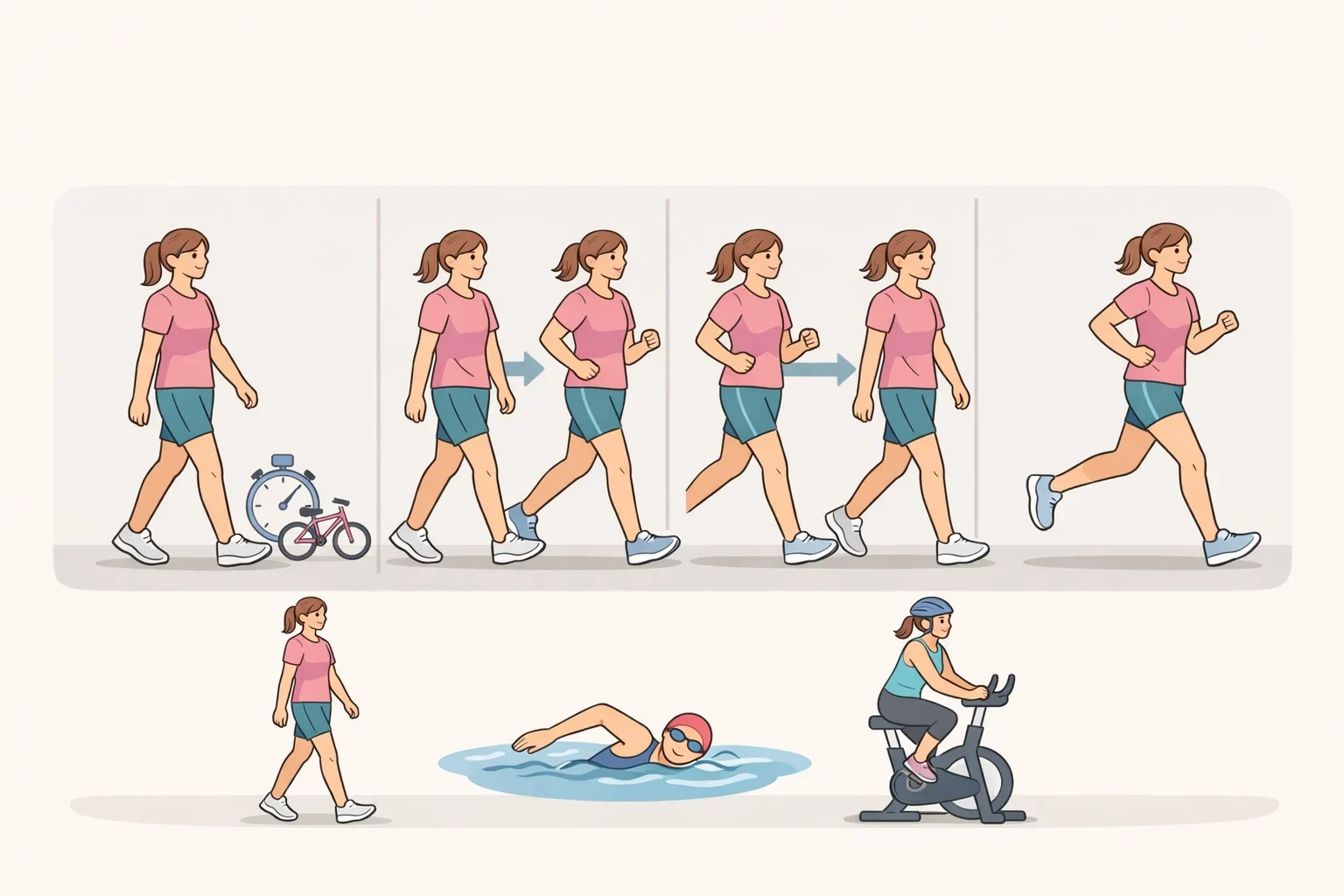
There's no single validated timeline for returning to running after Achilles pain settles, but a conservative approach many athletes discuss with a clinician or physical therapist starts with confirming that symptoms are genuinely settling rather than just quiet on a good day. Normal daily walking should be fully comfortable, and any substitute activity should still be pain-free during, immediately after, and the next morning.
From there, one cautious path is reintroducing running gradually at an easy effort and short duration, saving hills, sprints, jumping, and cutting for later. HSS notes that explosive, high-impact activities like these may lead to a rupture or worsen pain in someone with pre-existing Achilles tendinopathy, though not every athlete with a history of tendon pain will react the same way (HSS). Anyone with lingering symptoms, a suspected partial tear, or competitive return-to-sport goals should get clearance from a physical therapist or sports medicine clinician rather than relying on a general timeline alone. Any return of symptoms during this stretch means backing off the added load, and if it doesn't settle quickly, that's a reason to get evaluated instead of attempting another comeback solo.
Once symptoms have fully resolved, a few habits may help reduce Achilles tendon injury risk: progressive increases in training volume instead of sudden jumps in distance or intensity, calf strengthening, a proper warm-up before activity, and avoiding uphill running or uneven ground (HSS; Cleveland Clinic).
Match the response to how the pain behaves rather than how long you've been dealing with it. Any pop, kicked-in-the-calf sensation, sudden swelling or bruising, or instability at the ankle means stopping activity and getting evaluated promptly. Pain that limits daily walking or hasn't eased after a few weeks belongs with a non-urgent visit to a primary care physician, sports medicine clinician, or physical therapist. Mild pain tied to one specific activity can often be managed by dropping that activity and monitoring closely, but if the trend isn't improving, that's the signal to stop guessing and get it checked.