
- Sports Injury Prevention Exercises: Why Adherence Matters
- What the January 2026 review found about adherence
- Which sports injury prevention exercises were studied in soccer?
- How much frequency actually matters
- Why programs stall before they start
- What the findings suggest for coaches
- What to look for in a protocol, and what to do next
Sports Injury Prevention Exercises: Why Adherence Matters
A systematic review and meta-analysis published in Injury Prevention found that athletes completing fewer than 74% of their prescribed sports injury prevention exercises showed no statistically significant reduction in injury risk, according to research released seven months ago. Athletes who cleared that threshold, whether by a little or a lot, saw injury rates cut by roughly half. That's a pooled result across many sports and injury types, not a soccer-specific finding, but it reframes how two of soccer's better-known prevention trials should be read.
A meta-analysis published a year and a half ago found that soccer warm-up programs including balance training cut ACL injury rates by 58% compared with standard warm-ups (PubMed), and a separate cluster-randomized trial found the FIFA 11+ warm-up cut hamstring strain risk by 63% in men's collegiate soccer (PubMed). Neither study measured how session completion affected its own results. The broader adherence review suggests that how often a program is actually run, not just whether a team owns the exercises, may shape whether those numbers show up on a given roster.
What the January 2026 review found about adherence
Researchers searched six databases, including PubMed, EMBASE, and Cochrane Central, for trials published through the end of May 2023. That search window closed well over two years before the paper itself came out, worth noting since a review's publication date and its evidence cutoff aren't the same thing.
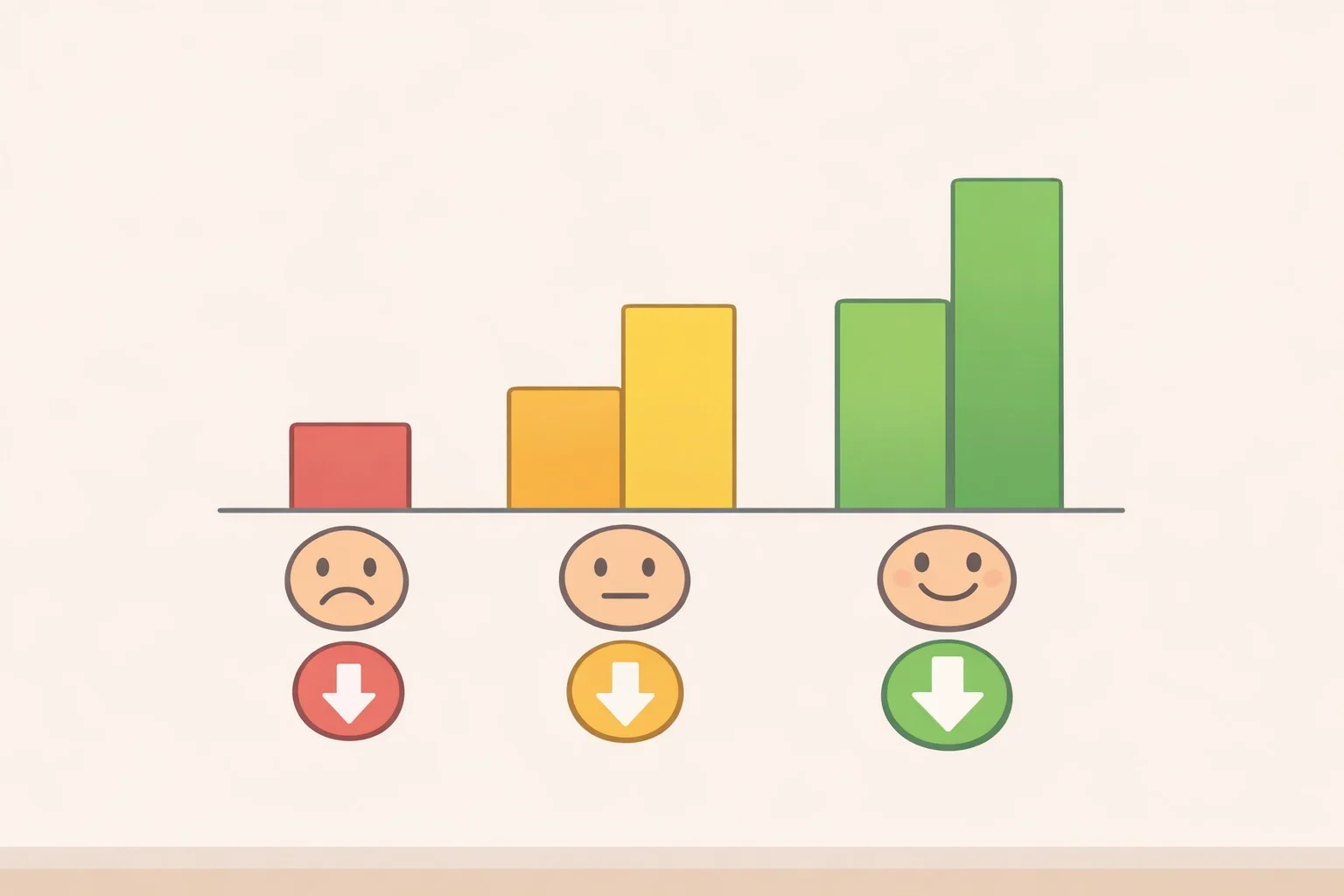
From 2,647 identified reports, 52 studies made it into the systematic review and 35 into the meta-analysis. Athletes were sorted into three adherence tiers by the share of prescribed sessions completed: top (84% or higher), middle (74% to 83%), and bottom (under 74%).
The top tier showed a 47% lower injury rate than controls (RR 0.53, 95% CI 0.42-0.67). The middle tier landed almost identically at 50% lower (RR 0.50, 95% CI 0.39-0.64). The bottom tier's reduction wasn't statistically significant (RR 0.87, p=0.08). A meta-regression confirmed that adherence level significantly moderated the pooled injury rate, and the review's authors concluded that higher adherence reduced injury rates while lower adherence did not produce a significant reduction (PubMed).
Because the top and middle tiers landed in nearly the same range, the pattern points less toward chasing flawless completion and more toward staying above roughly three-quarters of prescribed sessions.
Which sports injury prevention exercises were studied in soccer?
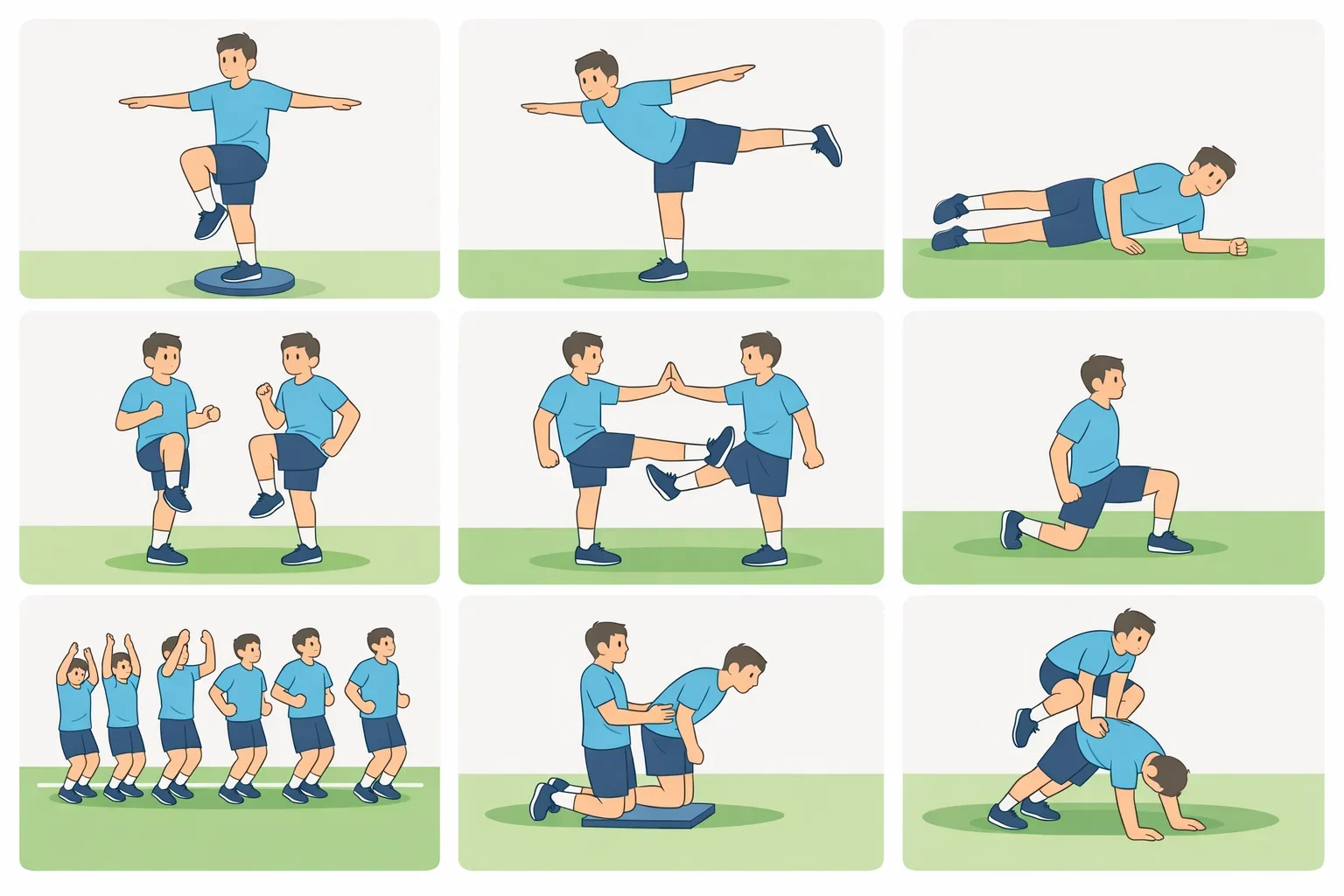
The soccer-specific evidence comes from two separate protocols. The 2025 ACL meta-analysis pooled eight studies covering 20,336 participants and 1.5 million exposure hours, with 190 recorded ACL injuries. Programs that included balance training cut the pooled ACL injury rate by 58% (IRR 0.42), with low heterogeneity between trials (I²=33.3%). The reduction held across sexes: 50% lower in male players, 61% lower in female players (PubMed).
The hamstring finding comes from a secondary analysis of an NCAA cluster-randomized trial involving Division I and II men's soccer teams during the fall 2012 season, published two years ago. Thirty-one teams used the FIFA 11+ as their warm-up while 35 continued their traditional routine. Teams running the 11+ cut hamstring strain risk by 63% (RR 0.37) (PubMed). It didn't shorten recovery time once a strain occurred, 9.4 days for controls versus 10.2 for the intervention group, a difference that wasn't statistically significant (p=0.8) (PubMed). The benefit shows up in prevention, not treatment.
Both trials tested full structured programs. The ACL meta-analysis specifically confirms its eight included programs incorporated balance training, though the data doesn't break out whether every one also paired that with strength or landing-mechanics work. Because these studies evaluated structured injury-prevention programs rather than isolated exercises, they don't show whether a few standalone balance drills would produce the same benefit. Coaches applying this research are adopting a full protocol, not assembling one from a few favorite moves.
How much frequency actually matters
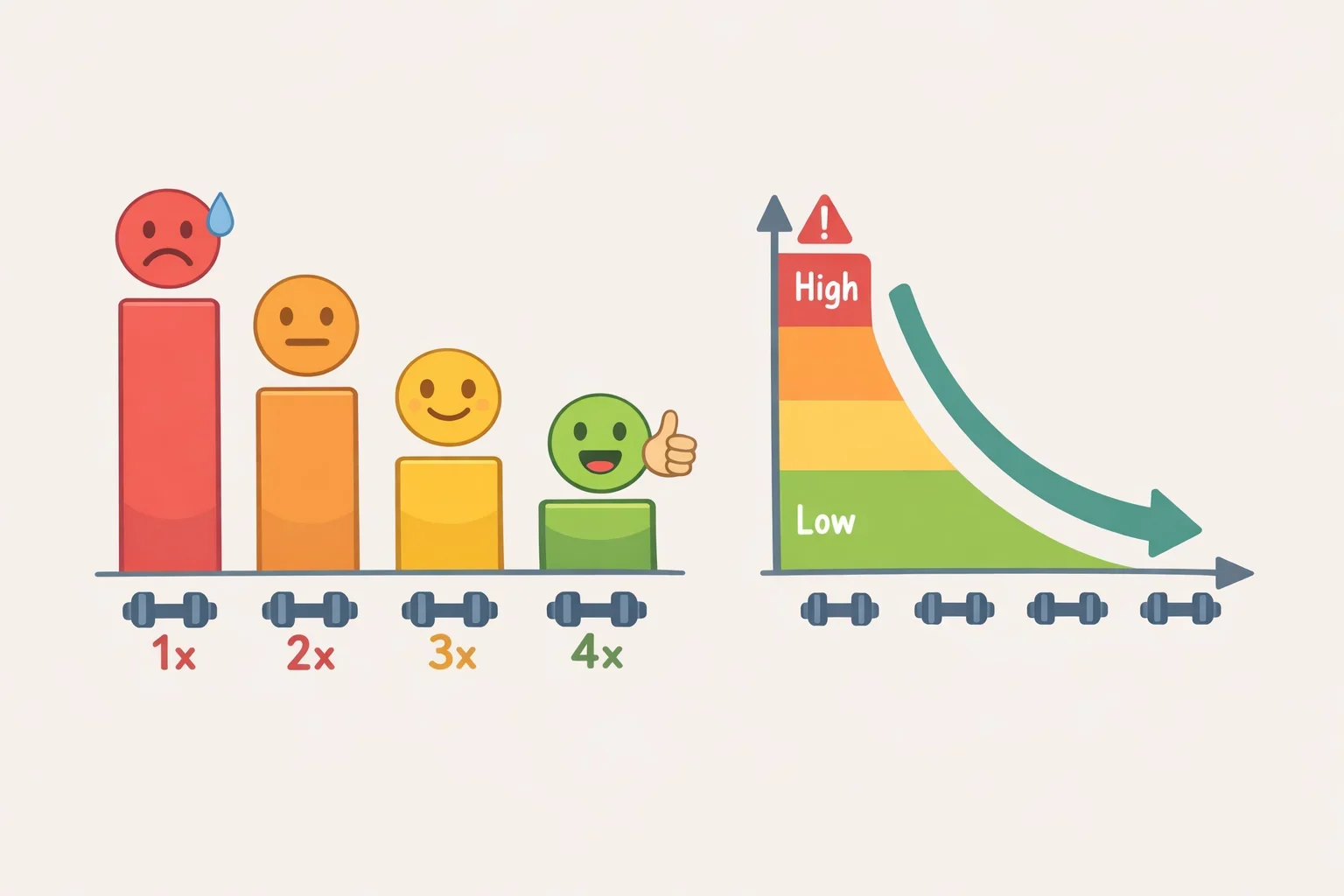
Inside the ACL meta-analysis, both lower-frequency programs (under three sessions weekly) and higher-frequency ones (three or more) produced significant reductions, 43% and 57% respectively. Programs running under 20 minutes weekly and those running 20 minutes or more also both worked, at 46% and 50%. The higher-frequency, longer-duration group showed a somewhat larger effect, though both bands cleared the bar for a meaningful reduction (PubMed).
The FIFA 11+ trial found a related pattern for hamstring injuries. Teams averaging two or more sessions weekly cut risk 78% (RR 0.22), and teams averaging one to under two sessions weekly cut risk 67% (RR 0.33), both against teams doing less than one session a week. The two higher-compliance groups weren't significantly different from each other (PubMed).
A study of amateur girls' youth soccer, published almost two years ago, found something in the same direction: running an ACL-prevention protocol at least twice weekly was linked to substantially lower ACL injury risk than running it once weekly or less (HR 0.15) (PubMed). These three findings come from different study designs comparing different things, one dose-response subgroup, one compliance-tier comparison, one prospective cohort. Two sessions weekly is a practical benchmark supported by pieces of the soccer data, but nothing here establishes a single optimal frequency that applies across programs.
Why programs stall before they start
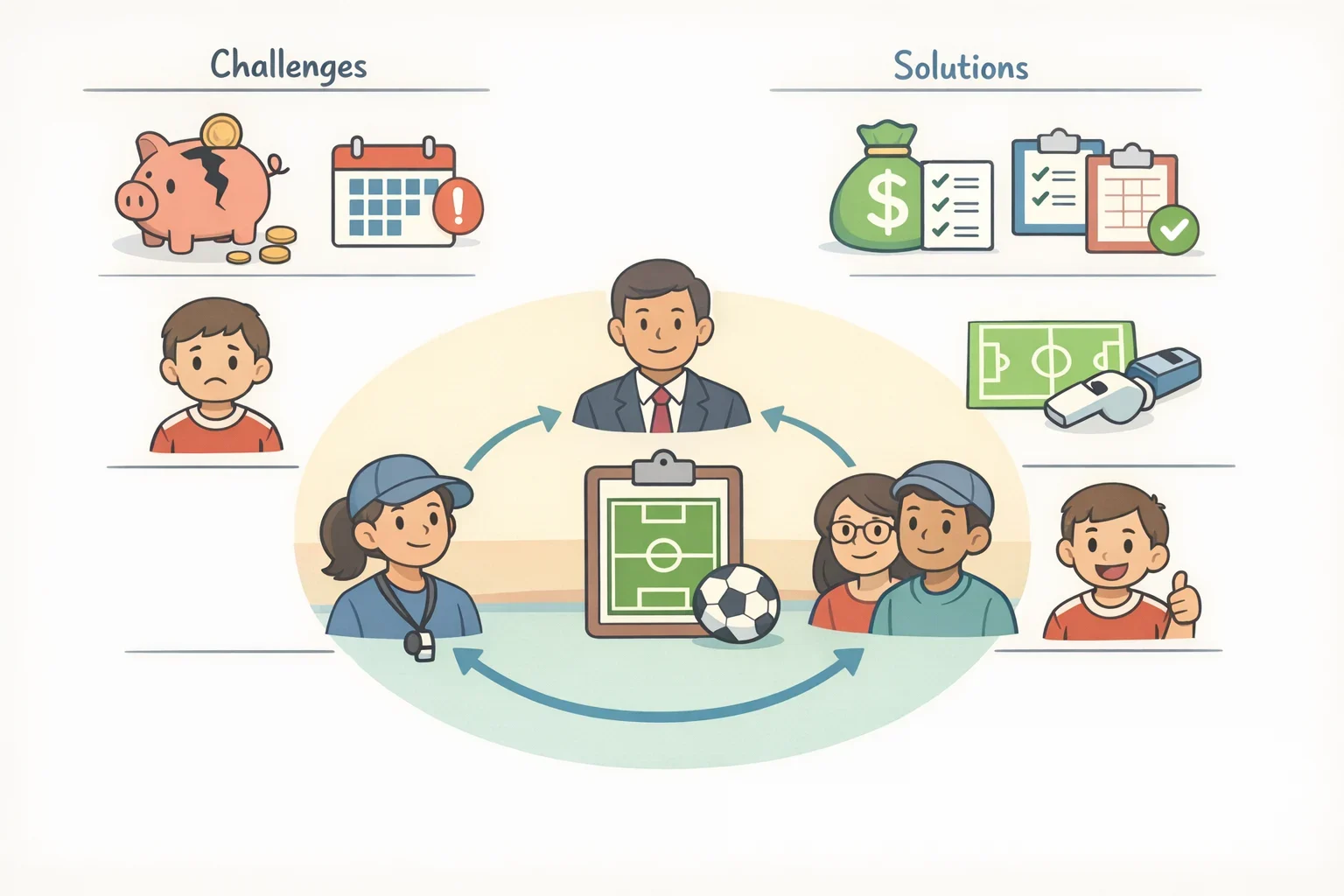
A systematic review of 68 studies on youth neuromuscular warm-ups, published two years ago, identified the leading barriers to consistent use as time restrictions, lack of coach buy-in, and limited awareness of the benefits (PubMed).
The same review found that thorough workshops paired with accessible program resources were the most common facilitators of successful implementation, appearing in strategies (labeled WR and WRP in the review) tied to injury reductions ranging from 36% to 72% across the underlying studies, with higher adherence tracking greater effectiveness. Only 8.3% of the randomized trials reviewed prioritized measuring real-world effectiveness rather than lab-style efficacy, and just two trials tested formal implementation strategies directly. Most existing research answers whether a program works under study conditions, not whether it holds up on an ordinary practice schedule.
The girls' youth soccer study tested that gap directly. A stakeholder-engagement strategy, one that involved coaches and administrators in planning and running the program, significantly increased how often teams actually carried out their ACL-prevention program compared with handing out an educational flyer alone. That engagement strategy wasn't independently tied to a significant drop in ACL injuries (HR 0.39, p=0.191). What was associated with lower injury risk was the higher implementation frequency the strategy produced (PubMed).
What the findings suggest for coaches
None of the studies above tested a specific weekly log, a designated compliance tracker, or a coach walkthrough as a formal intervention. What they do suggest, taken together, is a short list of practical implications.
- Tracking completion may matter. The NCAA trial recorded compliance throughout its season, and the adherence review built its central finding around session-completion rates. A weekly count of sessions actually run, versus what the protocol prescribes, mirrors the measurement these studies relied on.
- A full, established protocol is what the evidence covers. The trials showing large reductions tested complete programs such as the FIFA 11+, not a handful of isolated balance drills.
- Coach training may help close the awareness gap. The implementation review found workshops and accessible resources among the strongest facilitators of consistent use, and the youth soccer study found that engaging coaches directly increased how often a program actually got run compared with a handout alone.
Execution matters too, separate from the research above. A certified coach or athletic trainer checking early sessions for proper landing and cutting mechanics, and pulling any athlete with current pain or a recent injury for evaluation by a qualified clinician rather than pushing through the routine unchanged, reflects standard safety practice rather than a specific study finding.
What to look for in a protocol, and what to do next
This evidence base is concentrated in soccer, and the adherence findings come from pooled sports and injury types rather than a soccer-only sample. A team weighing a program this season should look for a few concrete features: soccer-specific movement preparation rather than generic stretching, a defined weekly schedule the protocol itself prescribes, a coach or athletic trainer trained to run it correctly, and a simple way to log whether sessions actually happen.
Start by adopting an established protocol rather than building one from scratch, track sessions against that protocol's own prescribed schedule, and treat regular use, not perfect attendance, as the target worth defending. Coaches and athletic trainers outside soccer should confirm with a certified strength and conditioning coach or sports medicine professional whether a comparably tested program exists in their sport before assuming these percentages transfer directly.